REVIEW · LUXOR
5-Day Nile Cruise Luxor to Aswan Abu Simbel and Hot-Air Balloon
Book on Viator →Operated by Egypt Nile Trips · Bookable on Viator
Temples meet a floating hotel on the Nile. This 5-day Luxor to Aswan cruise mixes bucket-list sites with real downtime onboard, so the journey feels like part of the adventure. You’ll move between ancient temples by day and return to a comfortable ship at night, with pickup offered and a mobile ticket for simpler check-in.
I especially liked two things: the chance to watch the Nile from the spacious sundeck, and the way the guide experience brings each temple into focus. When your guide is sharing stories with names and context like Mohamed Abd El Menaem, you end up remembering more than just what you saw.
One thing to plan for: many major stops are marked optional and admission tickets aren’t included, so you’ll want to budget extra for entrances. Also, the big add-ons like the hot-air balloon and a Nubian Village day trip are not included in the base package.
In This Review
- Key Highlights You’ll Care About
- Why This Nile Cruise Pace Works Better Than Day Trips
- Day 1 in Luxor: Karnak and Luxor Temple in the Same Big-Scale Mood
- Day 2: Valley of the Kings, Hatshepsut, Colossi of Memnon, and Tut
- Day 3: Horus Temple and Kom Ombo for That Ptolemaic-Era Atmosphere
- Day 4 in Aswan: Philae, the High Dam, and a Sunset Felucca
- Onboard Life: Cabins, Open-Buffet Meals, and Actually Relaxing
- The Included Add-Ons That Change the Trip: Abu Simbel, Papyrus, Alabaster, and Perfume
- Price and Value: What $764.71 Covers (and What You Need to Budget)
- Logistics I’d Handle Before You Lock It In
- Should You Book This Luxor to Aswan Nile Cruise?
- FAQ
- How long is the cruise from Luxor to Aswan?
- What’s included in the price?
- Are admission tickets included for Karnak, the Valley of the Kings, and other temples?
- Is the hot-air balloon ride included?
- Is the Nubian Village day trip included?
- What happens at the end of the cruise?
- Can I cancel for a full refund?
Key Highlights You’ll Care About
- Small group size (max 20) helps the schedule feel organized without feeling rushed.
- Sundeck + Nile nights: you get real time to relax after temple days.
- Major temples included by route, with optional flexibility for your interests.
- Meals and onboard comforts: 4 nights on the ship plus open-buffet meals.
- Abu Simbel is included (sharing, without ticket), which is often the expensive add-on.
Why This Nile Cruise Pace Works Better Than Day Trips
A Luxor-to-Aswan cruise hits differently than doing temples in a single city and then calling it a day. You’re not just visiting sites; you’re also living with the river rhythm—boat to temple, temple back to boat, repeat.
You’ll enjoy the value of built-in logistics. Transfers are included (air-conditioned), and the tour covers the key stops on the route, so you’re not trying to coordinate guides, timing, and transport from scratch. That matters on this specific route, where travel time between stops can add up fast.
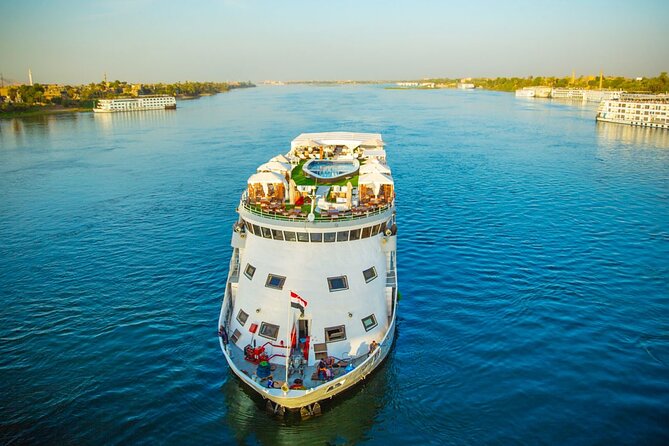
The onboard side is also a big deal. Your ship offers tastefully decorated public spaces, cozy accommodations, and a spacious sundeck where the scenery changes as you get closer to Aswan and the dam area. In short: you’re paying for comfort and simplicity, not just for boat rides.
You can also read our reviews of more tours and experiences in Luxor.



Day 1 in Luxor: Karnak and Luxor Temple in the Same Big-Scale Mood
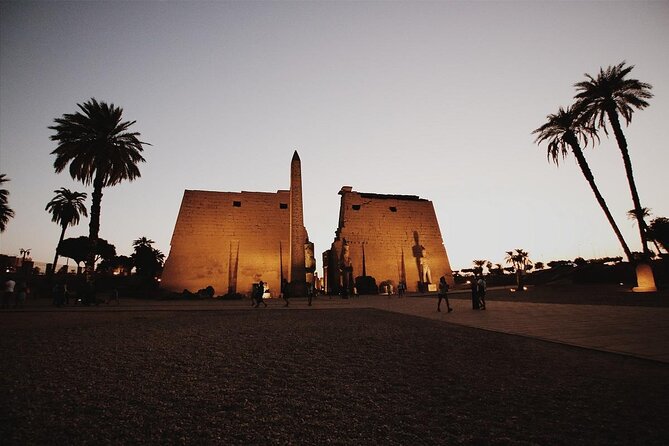
On the first day, you’ll head into Luxor’s temple world right away. Karnak Temple is optional, but it’s the one stop that explains why Egypt built on an epic scale. It’s described as the largest structures ever built in human history, with the principal building connected to Amun Ra, and earlier references reaching back to the Middle Kingdom and even the 3rd Dynasty era.
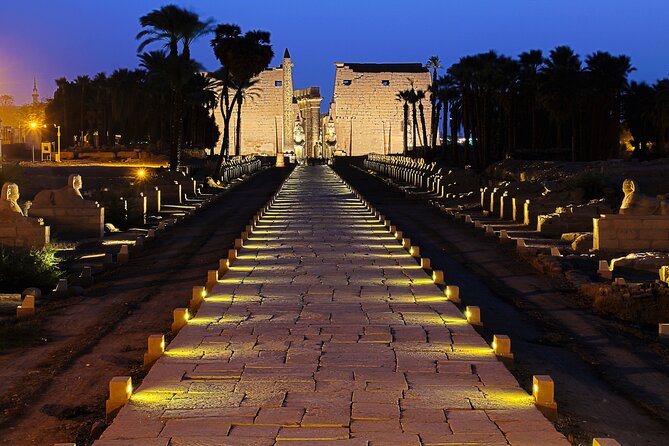
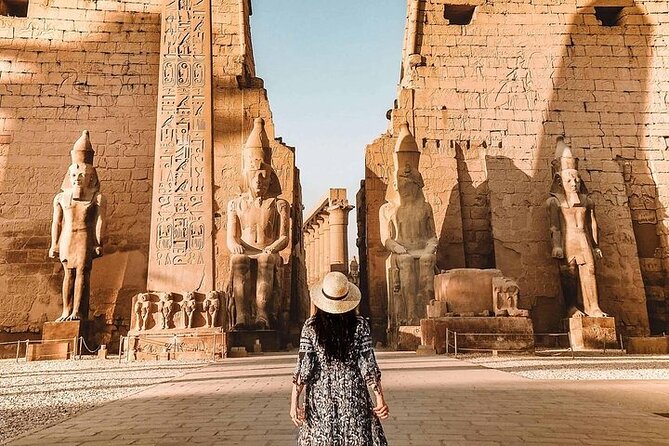
Then you’ll have Luxor Temple as another optional highlight. This one’s tied to early 12th Dynasty origins and completed by Ramses II, and it’s dedicated to Amun Re. What I like about pairing these two is the contrast: Karnak gives you the huge, layered feeling of centuries of building, while Luxor Temple feels more like a focused landmark in the heart of ancient Thebes.
Budget tip: since admission tickets aren’t included for these stops, deciding whether you want both temples (or only one) can help you control costs without sacrificing the experience.
Day 2: Valley of the Kings, Hatshepsut, Colossi of Memnon, and Tut
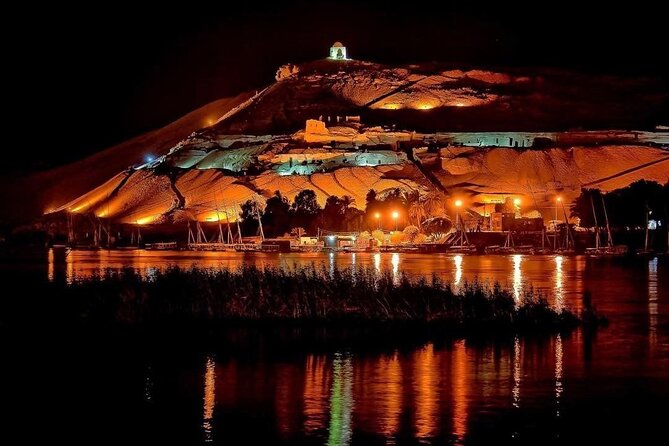
Day 2 is where the route goes from grand temples to royal power and big archaeology moments. Valley of the Kings is optional and described as the royal cemetery of Theban kings and rulers, where pharaohs were buried. It’s not the kind of place you visit for quick photos and move on; even the time you have feels earned.
Next up is the Temple of Hatshepsut at Deir el Bahari, optional and known as a mortuary temple built during Queen Hatshepsut’s reign. It’s called a masterpiece of ancient architecture, and that’s exactly the vibe you get standing there: the design feels intentional and cinematic rather than random stone.
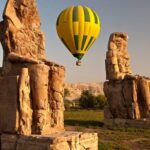
You’ll also stop at the Colossi of Memnon for a shorter visit (about 30 minutes). These are two massive stone statues of Pharaoh Amenhotep III from the 18th Dynasty, dated in the program as reigning around 1350 BCE.
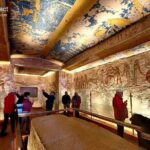
If you want the true headline moment, the Tomb of King Tutankhamun is optional too, with a short visit time noted as about 20 minutes. With such a limited window, I’d treat this as a focused stop: go in knowing what you want to see, and let the rest of the day be about the bigger storyline.
Day 3: Horus Temple and Kom Ombo for That Ptolemaic-Era Atmosphere
Day 3 shifts the feel of the temples. Instead of the earliest royal scenes and famous funerary sites, you get monuments from later periods that look and feel different in structure and atmosphere.
The optional Temple of Horus is one of the most atmospheric stops in the program. Built between 237 and 57 BC during the Ptolemaic era, it’s noted as one of the best-preserved ancient monuments. A key detail here is that desert sand filled the area after the pagan cult was banned, and the roof is said to be intact—so you’re looking at a temple that’s been “kept” by time and conditions.
Then you’ll move to Temple of Kom Ombo, optional and described as an unusual double temple in Kom Ombo. It’s placed in the Ptolemaic dynasty range (180–47 BC), with later Roman additions. Double temples are worth your attention because they usually feel like two concepts housed in one footprint, which makes the architecture easier to compare while you’re there.
Admission tickets aren’t included for these stops, so again: decide what you really want and budget accordingly.
Day 4 in Aswan: Philae, the High Dam, and a Sunset Felucca
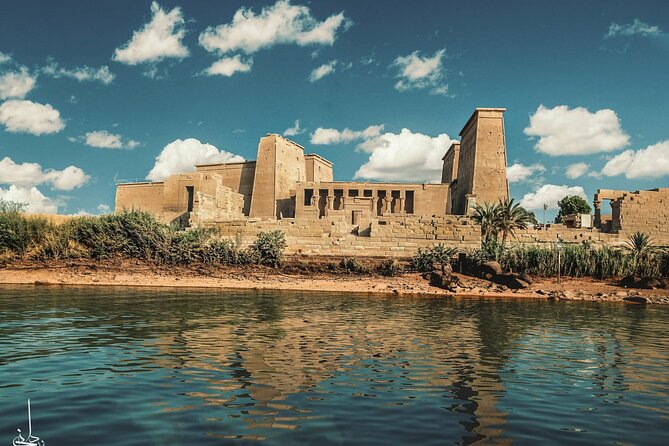
Aswan is where the cruise starts to feel more modern, tied to engineering and the river’s reshaping. The optional Temple of Philae is dedicated to the goddess Isis, and it comes with an important story: the temple was relocated by UNESCO after the building of the Aswan Dam threatened the original site. The program even mentions specific areas like the Trajan & Kiosk and Pharaoh’s Bed, which gives you clear anchors for what to look for.
Then you’ll have the optional Aswan High Dam visit. The description calls it the world’s largest embankment dam, built across the Nile between 1960 and 1970. It also explains why it matters historically: it largely eclipsed the earlier Aswan Low Dam, initially completed in 1902 downstream.
To soften the day after all that stone and engineering, there’s an optional felucca ride at sunset in Aswan. This is listed as about 1 hour and marked as free in the program. For me, that kind of simple river time is the payoff: it’s when the cruise feels like more than a checklist.





Onboard Life: Cabins, Open-Buffet Meals, and Actually Relaxing
The cruise isn’t only about what’s off the boat. It’s also about how you recover between temple days. You get 4 nights accommodation onboard, plus delicious open-buffet meals (4 breakfasts, 4 lunches, and 4 dinners are included).
The ship is described as having tastefully decorated public spaces, plus cozy accommodations that feel like home away from home. I take that to mean you’ll have real places to sit, not just a bare-minimum waiting area between excursions.
Staff support is also a recurring point of praise in the feedback you shared. The crew is repeatedly described as helpful and welcoming, and on this kind of trip that makes a difference. When logistics are handled, you can focus on the sights without constantly chasing the next step.
One more quiet win: the group size is capped at 20 travelers. That’s small enough to keep your day moving, but big enough that you’ll still have a lively shared vibe onboard.
The Included Add-Ons That Change the Trip: Abu Simbel, Papyrus, Alabaster, and Perfume
The program includes an amazing Abu Simbel visit on a sharing basis without a ticket. Even without extra detail on timing here, this matters because Abu Simbel is typically one of those excursions that costs extra and requires planning. Getting it included in the package makes this cruise feel more complete, not just a Luxor and Aswan highlight loop.
Beyond Abu Simbel, you’ll also stop at several culture-and-craft experiences that broaden the trip beyond temples alone:
- a papyrus factory visit
- an alabaster workshop visit
- a Nubian perfume lab in Aswan
I like these because they give you something to connect with while you’re traveling through different regions. Temples tell one story; craft and ingredients tell another, and those small visits often help you remember what the region values day to day, not only what was built for eternity.
Price and Value: What $764.71 Covers (and What You Need to Budget)
At $764.71 per person for about 5 days, the value is strongest when you focus on what’s included: onboard accommodation for 4 nights, multiple meals, air-conditioned transfers, and all sites listed in the program.
The key cost consideration is that admission tickets aren’t included for many of the major stops. Karnak, Luxor Temple, Valley of the Kings, Hatshepsut, Colossi of Memnon, Tutankhamun’s tomb, Horus Temple, Kom Ombo, and Philae are all marked as optional with admission ticket not included. So yes, the cruise price covers the experience and logistics, but you should still plan extra for entrance fees.
Also, not everything optional is included for free. The hot-air balloon ride in Luxor is not included, and a Nubian Village day trip is also not included. If those are must-dos for you, treat them as add-ons when comparing total cost.
If your priority is minimal stress, decent comfort, and guided temple context with a small group, this price can feel fair. If your priority is DIY freedom and you hate paying separate entrance fees, you’ll likely want a different style of Egypt trip.
Logistics I’d Handle Before You Lock It In
First, think about how you get to Luxor in the first place. One piece of practical advice in the feedback you provided is that Cairo to Luxor is far, so booking an air flight or a sleeping train can make the start of your trip much easier.
Second, keep your options open. Several of the biggest sites in the program are marked optional. That doesn’t mean you’re losing out; it means you can control intensity. If you love tombs, you’ll want the Valley of the Kings plus Tutankhamun option. If you’re more into architecture and temple design, you might emphasize Karnak/Hatshepsut/Philae.
Third, plan for tipping. Tipping is listed as recommended for guide, cruise staff, and drivers. No, it’s not glamorous, but it’s part of how this kind of service works.
Lastly, use the mobile ticket. It’s included in the program, and anything that reduces hassle on check-in days is worth its weight.
Should You Book This Luxor to Aswan Nile Cruise?
Book it if you want a 5-day Nile cruise that blends major temples with real onboard downtime, and you like the idea of being guided rather than figuring everything out by yourself. This is especially appealing if you’re traveling with the goal of seeing Luxor and Aswan’s top sites without turning every day into a negotiation with tickets, transport, and timing.
Skip it or reconsider if you already know you want to control every decision and you strongly prefer entrance fees to be fully bundled. The program price does not include admission tickets for many key monuments, and you may end up paying extra anyway if you choose all the optional highlights.
Also consider this: the hot-air balloon ride and the Nubian Village day trip are not included. If those are your top priorities, compare the final total cost before you commit.
If you want one straightforward takeaway, it’s this: this cruise is a practical way to get the big Egypt moments with comfort, structure, and enough room to breathe between them.
FAQ
How long is the cruise from Luxor to Aswan?
It’s listed as 5 days approximately.
What’s included in the price?
The included items listed are air-conditioned transfers, 4 nights accommodation onboard, meals (4 breakfasts, 4 lunches, 4 dinners), all sites mentioned in the program, the Abu Simbel trip on a sharing basis without a ticket, visits to a papyrus factory and an alabaster workshop, a Nubian perfume lab visit, and all fees and taxes.
Are admission tickets included for Karnak, the Valley of the Kings, and other temples?
No. Admission tickets are not included for the listed temple and tomb visits in the program.
Is the hot-air balloon ride included?
No. The hot-air balloon ride in Luxor is listed as not included.
Is the Nubian Village day trip included?
No. A Nubian Village day trip is listed as not included.
What happens at the end of the cruise?
After breakfast on the last day, you check out, and a representative accompanies you to Aswan airport, Aswan train station, or Aswan hotels.
Can I cancel for a full refund?
Yes. You can cancel up to 24 hours in advance for a full refund. If you cancel less than 24 hours before the start time, the amount paid is not refunded.