REVIEW · LUXOR
Hot-Air Balloon Ride Visit 6 Top Highlight sites in Lux west bank
Book on Viator →Operated by Al Sahel Travel · Bookable on Viator
Sunrise over Luxor does something to your brain. This private West Bank day pairs a sunrise hot-air balloon ride with major ancient sites, explained by an Egyptologist guide. You get hotel pickup and a planned route, so you’re not hunting down hours and tickets on your own.
I love the big-picture pacing: you start with the balloon while the light is soft and the city is quiet. From above, you’re treated to sweeping views that connect places you’ll visit later on the ground, including the Valley of the Kings area and the Nile.
I also like how customizable it is. You choose four sites from a menu of West Bank highlights, so you can match your interests and energy level. One thing to consider: some stops list admission as not included, so you’ll want to confirm which site tickets are covered for the exact mix you choose.
In This Review
- Key highlights you’ll feel right away
- Sunrise balloon over Luxor: the view is the point
- Picking four West Bank sites (and keeping the day enjoyable)
- Temple of Hatshepsut at Deir el-Bahari: where control meets ceremony
- Colossi of Memnon: fast, famous, and genuinely worth the photo stop
- Valley of the Kings: the tombs are the reason, but the context is what you remember
- Ramesseum: Ramses II’s temple complex with fewer people
- Valley of the Nobles and Deir el-Medina: the people behind the power
- Valley of the Nobles (about 1 hour)
- Valley of the Artisans / Deir el-Medina (about 1 hour)
- Price and value: what you’re really paying for at $179
- Logistics that affect your comfort more than you think
- Who should book this West Bank balloon-and-monuments combo?
- Should you book it?
- FAQ
- What is the duration of this Luxor West Bank tour?
- How much does it cost per person?
- Do you get hotel pickup and drop-off?
- Is a hot-air balloon ride included?
- Can I choose which sites to visit?
- Which sites are included in the tour option list?
- Are entrance fees included?
- What language is the guide?
- Is this a private tour?
- What is the cancellation policy?
Key highlights you’ll feel right away
- Sunrise balloon time (about 45 minutes) with included admission, plus sky views toward the Valley of the Kings and Nile
- Flexible site selection: pick four out of a set of major West Bank monuments
- Egyptologist guidance included, with strong feedback on the guide’s humor and clarity (like Morey)
- Colossi of Memnon stop listed as free (about 30 minutes)
- Fewer crowds on certain picks, especially the Ramesseum side of the West Bank
Sunrise balloon over Luxor: the view is the point
The day starts early enough that you’ll likely feel like you’re moving before you’re fully awake. That’s part of the magic. The balloon ride is timed for sunrise, when Luxor turns from harsh desert brightness into those gentle pink, orange, and purple tones you only get at the very start of the day.
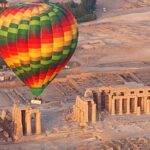
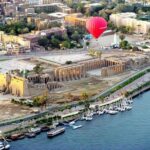
Even before you land, you’ll understand why the West Bank matters. Up in the air, the Nile looks like a ribbon running through the desert, catching the morning light as it curves through the region. The Valley of the Kings area is laid out below you like a story you can read from above: tombs cut into the hills, hidden when you’re on foot, suddenly easier to picture when you’re floating.
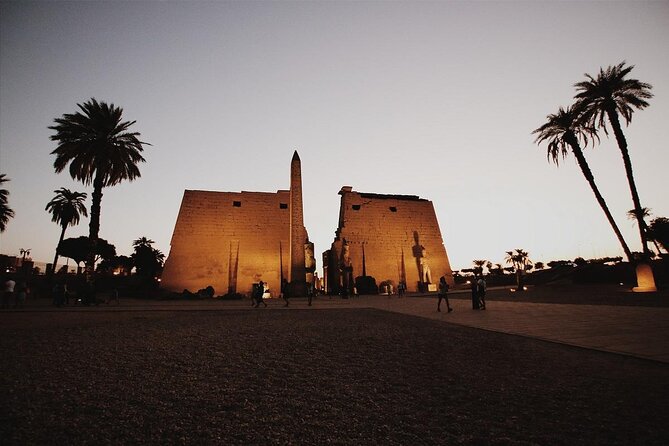
And there’s another detail that sticks. The horizon includes towering columns associated with Karnak Temple. It’s not just a pretty photo moment—it’s a reminder that Luxor’s temples and tombs are part of the same ancient world, just on different sides of the city.
The balloon itself is only about 45 minutes, but it sets the emotional tone for the rest of the day. You’re not rushing to a list of sites; you’re getting oriented to how this whole place connects.
You can also read our reviews of more tours and experiences in Luxor.



Picking four West Bank sites (and keeping the day enjoyable)
This tour is built around choice. You tailor your day by selecting four sites from a set of West Bank highlights, while the balloon ride remains the sunrise anchor. That matters, because the West Bank can feel heavy. When you try to do everything, you burn energy fast, and your brain goes into survival mode instead of curiosity mode.
The itinerary you’re given includes these common choices:
- Temple of Hatshepsut at Deir el-Bahari
- Colossi of Memnon
- Valley of the Kings
- Ramesseum (Mortuary Temple of Ramses II)
- Valley of the Nobles
- Valley of the Artisans (Deir el-Medina)
If you’re choosing for variety, I’d think of it in “types”:
- Royal monuments (Hatshepsut, Ramesseum)
- Burial landscapes (Valley of the Kings, Valley of the Nobles)
- Workmen’s world (Deir el-Medina / Valley of the Artisans)
- Iconic remains you can process fast (Colossi of Memnon)
That mix is what keeps the day from turning into one long stop-and-start shuffle.
One practical note: admission coverage varies by stop in the information you receive. The tour says an entrance fee is included, yet the schedule marks several sites as admission ticket not included. So before you go, check your final confirmation for exactly which site fees are included for your chosen four.
Temple of Hatshepsut at Deir el-Bahari: where control meets ceremony
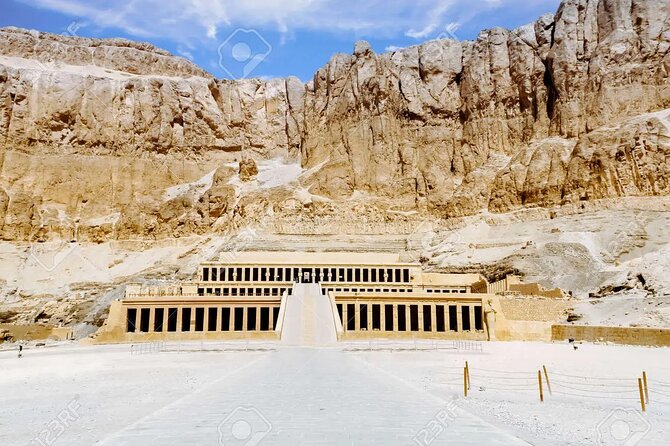
If you want one place that feels both regal and human, the Temple of Hatshepsut is it. The stop is about 2 hours, and the basics are clear: this was built by Queen Hatshepsut, daughter of Thutmosis I, who ruled about 20 years in the 18th Dynasty (around 1490–1469 B.C). She’s the pharaonic woman who reigned in ancient Egypt.
Deir el-Bahari is not just about a name. It’s about the way the temple complex signals authority in stone. Your guide should help you connect why her reign mattered and how her temple design communicated power long after her time.
One thing I appreciate about putting this stop into the middle of the day is that it breaks up the “tomb focus.” After the balloon, you can spend time on a monument that’s meant to be seen—temple architecture you can walk through and take in, not just stare at from a distance.
Admission for this stop is listed as not included, so keep that in mind when budgeting and when you compare options.
Colossi of Memnon: fast, famous, and genuinely worth the photo stop
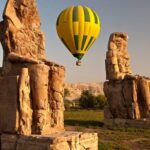
The Colossi of Memnon are short and direct: about 30 minutes, with admission listed as free. These are the remaining portions of the mortuary temple of Amenhotep III.
Even with little background, you’ll feel the scale immediately. Two huge statues rising from the desert edge give you that instant “this was never small” understanding. It’s one of those stops that’s ideal when you don’t want to spend a huge chunk of time but still want something iconic.
Because the stop is brief, it also functions like a palate cleanser between larger sites. You can take photos, listen for a quick story from your guide, then move on with your day still feeling fresh.
Valley of the Kings: the tombs are the reason, but the context is what you remember
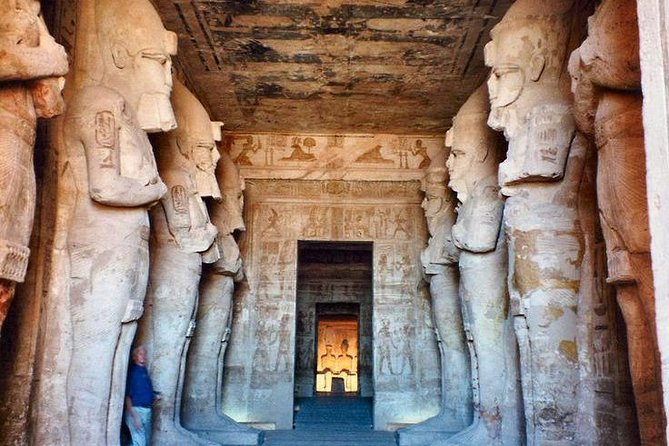
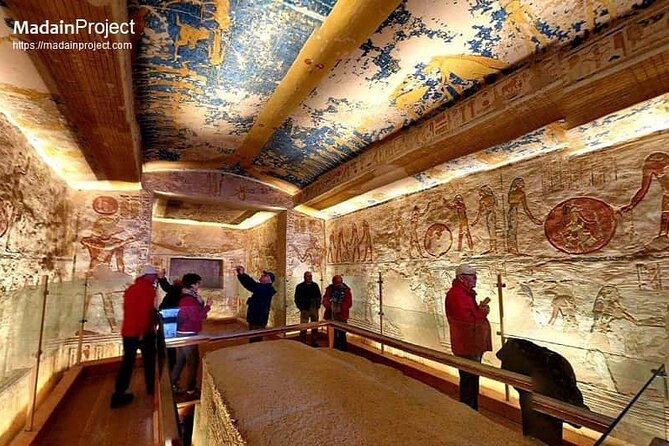
Next comes one of the big names: the Valley of the Kings, scheduled for about 3 hours. This is where burial architecture and belief systems meet in an extreme way. The key idea is straightforward: the valley held tombs for kings, cut into the desert hills.
The names you’ll hear are the kind that follow you through Egypt for years. In the information you’re given, the most known tombs include those tied to Tutmosis I, Tutmosis III, Tut-Ankh-Amon, Ramses VI, Mrenptah, Queen Nefertari, and Amenhotep II.
Here’s what I’d watch for when you’re there: don’t only treat it as a place with famous labels. Focus on what your guide explains about how the valley worked as a system—why secrecy mattered, why placement mattered, and how these choices were connected to royal status.
Admission for the Valley of the Kings is listed as not included, so again: confirm coverage for your personal mix. If you’re trying to keep the day cost-predictable, this is the stop where you should be most careful about ticket questions.




Ramesseum: Ramses II’s temple complex with fewer people
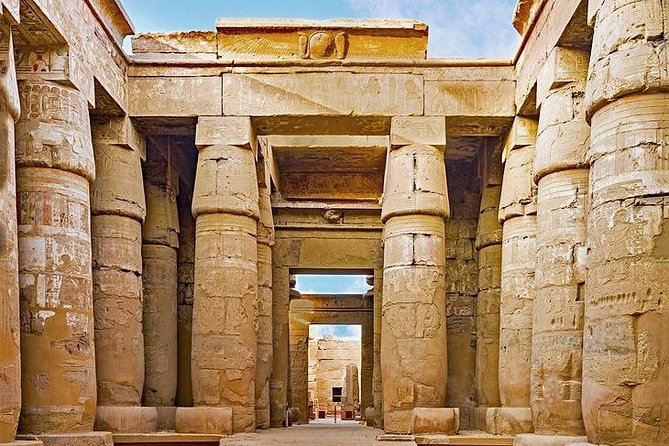
The Ramesseum (Mortuary Temple of Ramses II) is scheduled for about 1 hour. The scene you’re described is unforgettable: towering, headless statues standing watch over the funerary complex.
What I like about adding Ramesseum to your West Bank list is the vibe contrast. It’s part of Ramses II’s temple world, but it doesn’t feel as relentlessly photo-saturated as some of the more famous stops. The result is that you often get an easier pace for walking and listening to your guide’s explanation.
The architectural elements also help you “read” the place even if you’re not an Egyptology student. The hypostyle hall is mentioned, along with surrounding courts, storage rooms, a sanctuary, and some unusual mud-brick structures. That means you can notice how the complex was designed for ritual and function, not only for grandeur.
Admission is listed as not included for this stop, so it’s another good reason to verify what you pay onsite versus what you already have.
Valley of the Nobles and Deir el-Medina: the people behind the power
After the royal tomb focus, the Valley of the Nobles and the Valley of the Artisans (Deir el-Medina) shift the attention toward the elites and workers who helped make the monuments happen.
Valley of the Nobles (about 1 hour)
This stop is about New Kingdom tombs of noblemen—people close to the machinery of the state. You visit three of the most famous tombs in the area, and the emphasis is on intricately carved and colored walls.
This is where you see the “human side” of ancient Egypt’s hierarchy. The information you’re given frames it as a look into the lives and significance of the ancient Egyptian elite. If you’re the type who likes stories—who wants to understand who did what and for whom—this stop can feel like a payoff.
Admission is listed as not included.
Valley of the Artisans / Deir el-Medina (about 1 hour)
Deir el-Medina is the workers’ world. The information you’re given focuses on walking around ancient houses and seeing how workers lived and decorated their own tombs with striking colors.
This is a smart companion to the noble tombs. Together they help you avoid the common mistake in Egypt trips: seeing only pharaohs and temples, then forgetting the broader human network that built and maintained everything.
Admission is listed as not included for this stop.
One small caution: the description you receive mentions tombs in Theban Necropolis and also points toward tombs of nobles, so your exact focus may depend on your selected sites that day. Still, the general goal is clear: workers and their art, right where they lived.
Price and value: what you’re really paying for at $179
At $179 per person, this tour can be a strong value if you care about three things: sunrise balloon time, guided site interpretation, and not having to plan the day yourself.
Here’s the practical way to think about it:
- The sunrise balloon is the headline. You get it for about 45 minutes, timed for the best light, with admission included.
- You also get hotel pickup and drop-off, which is not a small convenience in Luxor.
- You travel with a qualified Egyptologist guide (and English tour guidance is included, with other languages available for extra cost).
The long day (about 8 to 13 hours) also matters. A balloon day plus multiple West Bank stops isn’t a short stroll; it’s a full schedule. If you were to piece it together yourself, you’d likely spend real time coordinating transport and tickets. Here, the planning is done for you.
That said, there’s one value question to ask: which of your chosen sites have admission already included, and which require extra payment. The information you’re given is mixed, so you should confirm your final inclusion details before you assume all ticket costs are covered.
Logistics that affect your comfort more than you think
This tour runs a long chunk of time, so your experience will depend on basic comfort choices.
1) Plan for early starts
Balloon sunrise means you’ll likely be awake before your usual vacation rhythm.
2) Wear good walking shoes
You’ll be moving through multiple sites, including tomb areas and temple complexes.
3) Bring sun protection
Luxor can be bright, and sunrise doesn’t guarantee mild conditions. Hat, sunglasses, and sunscreen make the day easier.
4) Keep cash or payment options ready for any extra admissions
Because some stops are marked as not included, you don’t want to get stuck mid-day with a surprise bill.
One more helpful detail: the tour is described as a private activity, meaning only your group participates. That usually helps with pace and questions, especially on sites where a guide’s stories can make a big difference.
Who should book this West Bank balloon-and-monuments combo?
This is a great fit if you:
- want the West Bank big hitters without doing the hard work of planning
- value a guided explanation from a qualified Egyptologist
- like the idea of combining royal tomb sites with stops that show the lives of nobles and workers
- want the wow factor of a sunrise hot-air balloon added on top
It’s also a reasonable choice for groups who don’t want a public-group scramble. Private tours can be calmer.
You might want to reconsider if you hate long days. At up to 13 hours, it’s not a light schedule, even though individual stops range from 30 minutes to about 3 hours.
And if budget certainty is your top priority, double-check the admission situation for your selected sites before committing. The included information is clear about an entrance fee being part of the package, but the stop-by-stop ticket notes suggest it’s not identical for every monument.
Should you book it?
I’d book this if you’re excited by two specific promises: sunrise from the sky and a guided West Bank day with smart site variety. The price makes sense when you treat the balloon as the anchor and the rest as a guided route across tombs and temples.
I’d pause only to confirm one thing: which admissions are covered for the exact four sites you choose. Once you have that nailed down, this tour is exactly the kind of Luxor day that turns history into something you can actually picture.
FAQ
What is the duration of this Luxor West Bank tour?
The tour duration is about 8 to 13 hours.
How much does it cost per person?
The price is $179.00 per person.
Do you get hotel pickup and drop-off?
Yes, hotel pickup and drop-off are included.
Is a hot-air balloon ride included?
Yes. The sunrise hot-air balloon ride is included and lasts about 45 minutes, with an admission ticket listed as included.
Can I choose which sites to visit?
Yes. You can tailor your adventure by selecting four out of the listed West Bank highlights.
Which sites are included in the tour option list?
The listed option stops are Temple of Hatshepsut at Deir el Bahari, Colossi of Memnon, Valley of the Kings, Ramesseum, Valley of the Nobles, and Valley of the Artisans (Deir el-Medina), plus the hot-air balloon ride.
Are entrance fees included?
Entrance fee is listed as included, but some specific stops in the schedule are marked as admission ticket not included. Check your final confirmation for what’s covered for your chosen sites.
What language is the guide?
An English tour guide is included, and other languages may be available for an extra cost.
Is this a private tour?
Yes. It’s private, and only your group will participate.
What is the cancellation policy?
You can cancel for a full refund up to 24 hours in advance of the experience’s start time. Free cancellation is available, with local-time cutoffs.