Early skies over Luxor set the tone.
This 5-day Upper Egypt trip links the big-name temples with a hot-air balloon ride and a smooth ship-to-ship pace, so your days feel full without feeling chaotic. You’ll start on Luxor’s west bank, move to the east bank highlights, then cruise south through Edfu and Kom Ombo before finishing in Aswan.
What I like most is the mix of guided archaeology and onboard comfort. The 5-star cruise experience is built around full-board days, and that means fewer decisions and less hunting for meals after temple time. I also appreciate the Egyptologist-led excursions, because the sites make more sense when someone connects the details for you.
One consideration: you’ll have very early starts for both the balloon and the Abu Simbel day, and there are also typical extras like tipping plus Abu Simbel admission not being included. If you dislike early mornings or want zero extra costs, this may feel like more “trip management” than you want.
In This Review
- Key highlights at a glance
- Luxor to Aswan in five days: what this trip is really good at
- Day 1 West Bank archaeology: Valley of the Kings, Hatshepsut, and the Colossi
- Day 2 Hot-air balloon over Luxor’s west bank plus Karnak and Luxor Temple
- Day 3 Temple of Horus in Edfu and Kom Ombo’s double temple
- Day 4 Abu Simbel: the early-guided day that feels like a mission
- Day 5 Philae by boat trip and the Aswan High Dam finish
- What’s included onboard: 5-star comfort, full-board pacing, and Egyptologist guidance
- Price and value: how $799.33 stacks up against the real workload
- Comfort and practical tips for temple days
- Should you book this Luxor to Aswan cruise with a hot-air balloon?
- FAQ
- Is pickup and drop-off included?
- Does the itinerary include a hot-air balloon ride?
- Are admission tickets included for all stops?
- What does the cruise include for meals?
- Where do the early-day tours happen?
- What happens if the hot-air balloon ride is canceled?
- Is this a private experience?
- Are dietary restrictions handled?
- What time does the experience start?
Key highlights at a glance
- Hot-air balloon over Luxor’s west bank with a 45 to 55-minute flight time window
- West Bank trio on Day 1: Valley of the Kings, Hatshepsut at Deir el Bahari, and the Colossi of Memnon
- Karnak + Luxor Temple on the east bank for the full Amun-worship contrast
- Edfu and Kom Ombo: Temple of Horus and Kom Ombo’s double-temple layout
- Abu Simbel guided early tour plus ship time afterward in Aswan
- Philae by boat trip paired with the Aswan High Dam visit on Day 5
Luxor to Aswan in five days: what this trip is really good at
This is the kind of itinerary that’s built for people who want the headline sites, but also want the days to run on a schedule. You’re not just “visiting temples.” You’re bouncing between west bank burial grounds, east bank temple complexes, and then a southbound Nile cruise that strings the whole story together.
The value is in the handoffs. You get pickup and drop-off by air-conditioned car, meet-and-greet support around arrival and departure, and Egyptologist guidance during excursions. That matters in Egypt, where planning each transfer day-by-day can quietly eat hours and energy.
If you love ancient Egypt, you’ll like the flow: funerary Luxor first, then the grand temple walls, then the Horus and Kom Ombo regional power centers, then the Aswan area finish. It feels like moving through time, not just ticking boxes.
You can also read our reviews of more tours and experiences in Luxor.



Day 1 West Bank archaeology: Valley of the Kings, Hatshepsut, and the Colossi
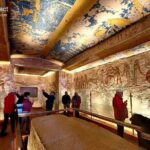
Day 1 focuses on Luxor’s west bank, the side opposite modern Luxor that functioned as a royal and noble burial zone for centuries. The Valley of the Kings alone can swallow a morning, and here you get a proper window: about 2 hours at the Valley of the Kings, with admission included.
This is where you see the logic of the whole area. For roughly 500 years, from the 16th to the 11th centuries BC, pharaohs and nobles were buried here. The tour also places it in context: it’s part of the ancient funerary city of Thebes, across the Nile from the living city.
Next is Temple of Hatshepsut at Deir el Bahari (about 2 hours). Hatshepsut was a major figure of Egypt’s 18th Dynasty, and the temple is designed to feel like a grand entrance into her legacy. Even if you don’t memorize dates, you’ll notice how the place is organized to impress, not just to house carvings.
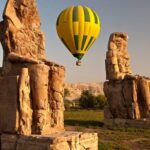
Then comes the Colossi of Memnon (about 30 minutes, admission free). These two giant statues—survivors from a larger complex built in memory of Amenhotep III—are short in time but big in presence. They also work well as a “breather” stop after longer temple visits.
Practical note: west bank days tend to feel warm even when the weather is pleasant. Wear sun protection and plan to hydrate during breaks, because Egypt’s sun doesn’t care about your “just one more photo” moments.
Day 2 Hot-air balloon over Luxor’s west bank plus Karnak and Luxor Temple
Day 2 is the one you’ll remember for the sky.
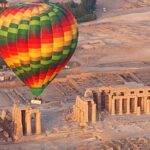
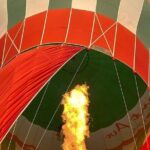
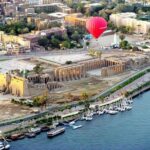
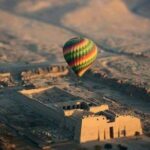
You get picked up early for the hot-air balloon ride over Luxor. The flight is listed at 45 to 55 minutes, with admission included. Expect an open-air view of the city’s temple-scape and the mountains below—exactly the kind of perspective you don’t get from a ground-level tour.
Even if you’re not usually into early mornings, this one tends to be worth it. From above, Luxor’s layout clicks into place: east bank temples, west bank tomb areas, and the Nile acting like the spine through it all.
After you land, the day doubles down on the big temples.
Karnak Temple Complex takes about 2 hours, with admission included. You’ll see the Avenue of Sphinxes, the Hypostyle Hall with its massive forest of columns, and key features like obelisks and the sacred lake. The point of Karnak isn’t just scale; it’s how many reigns and ideas layered into one sacred center. It’s a site that rewards a guide’s explanations because it’s too big to “figure out” quickly on your own.
Then Luxor Temple (about 2 hours, admission included) rounds out the east bank story. It’s built around the ancient concept of a southern sanctuary, and it pairs well with Karnak because it feels more “focused” after the overwhelming grandeur of Karnak’s sprawl.
Day 3 Temple of Horus in Edfu and Kom Ombo’s double temple
On Day 3, you leave Luxor-area intensity and head into the middle stretch of the Nile journey.
First stop: Temple of Horus in Edfu (about 2 hours, admission included). This temple is described as well-preserved and relatively “young” in pharaonic terms, and it’s dedicated to Horus, the falcon-headed god. If you’ve ever wondered why Egypt’s temples look the way they do, Edfu helps. The layout and decoration are clearer here than in many partially ruined sites, and the guide time helps you connect symbols to the story.
After Edfu, the cruise sails with lunch included onboard. Then you stop at Temple of Kom Ombo (about 1 hour 30 minutes, admission included). Kom Ombo is special for one reason: it’s a double temple. You’re not just looking at one worship focus, but two, built into a single complex—shaped during the Ptolemaic period with some later additions from the Roman era.
Then you continue to Aswan and spend the night there. This is a nice rhythm change. You’ve done temples, had a structured lunch, and now you’re switching from land speed to Nile calm.
Day 4 Abu Simbel: the early-guided day that feels like a mission
Abu Simbel is the day that turns this itinerary into a standout.
You embark on a guided Abu Simbel Temple Complex tour early in the morning, listed at about 7 hours total. The timing is long, and that’s the point. This is one of Egypt’s most famous sites for a reason: the scale and artistry are meant to stop you.
What’s notable for your planning is what’s not included. Abu Simbel admission is listed as not included, so you’ll want to budget for that additional ticket cost when you lock in the trip total.
After your guided visit, you transfer back to the cruise ship for lunch. The afternoon is yours—ship activities are available, and you’ll have dinner onboard. Then you sleep on board again in Aswan.
If you’re deciding whether Abu Simbel is worth the effort, think about how many travel days you’d need to do it independently. Here, the structure keeps you from spending your vacation time on logistics.



Day 5 Philae by boat trip and the Aswan High Dam finish
Day 5 keeps the final stretch practical and dramatic.
You check out at 8:00 am, then your guided day tour begins with a boat trip to Temple of Philae, dedicated to Isis (about 2 hours, admission included). The boat element matters because the approach changes how you experience the temple—less of a direct “walk in and look around,” more of a sense of arrival.
After Philae, you head to the High Dam (about 1 hour, admission included). The Aswan High Dam is one of the world’s largest embankment dams, built between 1960 and 1970. Even though this is modern engineering, it fits the Nile theme: the dam changed how the river operates, which reshaped life along its banks.
It’s a strong way to end the cruise: you move from ancient sacred spaces to how the Nile is managed today.
What’s included onboard: 5-star comfort, full-board pacing, and Egyptologist guidance
A Nile cruise only feels like a vacation when the “between moments” are handled. Here, that’s the core value.
You get 4 nights on a 5-star cruise with full-board accommodation. Your meals include breakfast (4), lunch (4), and dinner (4). That matters because temple days are time-heavy, and you don’t want to spend your free hours negotiating meals, menus, or locations.
Onboard service also comes up strongly in the trip feedback: people talk about comfortable rooms and strong day-to-day support. The cruise model here is simple—after guided excursions, you return for meals and relaxation instead of starting over with a new plan every day.
Another included win: Egyptologist speaking tour guide during excursions. A guide’s role isn’t just facts. It’s translating what you’re looking at—especially in places like Karnak’s complex layout or Kom Ombo’s double-temple design.
If you have dietary restrictions, the tour says it can accommodate vegetarian, vegan, gluten-free, and more. That’s important on longer temple days, where food timing can otherwise become stressful.
Price and value: how $799.33 stacks up against the real workload
The listed price is $799.33 per person, and it typically gets booked about 37 days in advance on average. Group discounts are also mentioned, which can help if you’re traveling with people you trust.
So is it good value? In my view, yes—because you’re not just paying for a ride. You’re buying:
- multi-day guided temple access across Luxor and Aswan
- a hot-air balloon experience
- airport arrival/departure meet-and-greet support
- pickup and drop-off by air-conditioned car
- full-board meals for 4 nights on the ship
- Egyptologist-led excursions with included admissions for most stops
The main “watch-outs” for your budget are the extras that are explicitly not included:
- tipping for tour guides, drivers, and Nile cruise crew
- Abu Simbel admission
Also, note the hot-air balloon weather policy. If the balloon ride is canceled due to unfavorable weather, you get a refund of $24 per person. That doesn’t cover every possible expense you might have on your end, but it does reduce the hit on this specific activity.
Bottom line: you’re paying for convenience and coverage. If you’re willing to handle every transfer and ticket yourself, you could spend less. But you’ll also spend more mental energy, and you may lose some of the tight scheduling this itinerary is built around.
Comfort and practical tips for temple days
Temple days in Egypt are not museum-soft. You’ll be walking, standing, and dealing with heat and sun.
A few practical moves that fit this specific schedule:
- Plan for early starts. Day 2 balloon pickup is early, and Abu Simbel is also an early-guided day. Build in a “sleep later if possible” mindset.
- Hydrate like it’s part of the ticket. West bank and east bank days can feel dry quickly.
- Wear light layers and something that covers shoulders and knees when needed. This keeps you comfortable as you move between sites.
- Don’t underestimate the time between stops. Even when a stop is listed as 1.5 hours, you’ll often lose time to moving, waiting for your group, and photo breaks.
If you want the best photos, go with the guide’s timing. The guide knows when certain angles and crowds make life easier.
Should you book this Luxor to Aswan cruise with a hot-air balloon?
If you want a guided “greatest hits” route through Upper Egypt, this is a strong match. It covers the big temples in Luxor and the signature stops toward Aswan, while also adding one of the most memorable add-ons in the whole region: a hot-air balloon ride.
Book it if:
- you want less logistics work and more time focused on sites
- you value having an Egyptologist explain what you’re seeing
- you want a comfortable cruise home base with full-board meals
Skip it or think twice if:
- you strongly dislike early mornings
- you want zero extra costs beyond the headline price (because tipping and Abu Simbel admission are not included)
- you’d rather add Abu Simbel via a different format that you fully control
If you can handle early starts, this trip is a well-paced way to see Luxor, Aswan, and Abu Simbel without turning your vacation into a to-do list.
FAQ
Is pickup and drop-off included?
Yes. The tour includes pickup and drop-off by air-conditioned car, plus meet-and-greet service upon arrival and departure.
Does the itinerary include a hot-air balloon ride?
Yes. The hot-air balloon ride over Luxor’s west bank is included, with a flight time of about 45 to 55 minutes.
Are admission tickets included for all stops?
Most are included: Valley of the Kings, Hatshepsut at Deir el Bahari, Karnak, Luxor Temple, Edfu, Kom Ombo, Philae, and the High Dam are listed as admission included. Abu Simbel admission is listed as not included.
What does the cruise include for meals?
You get full-board meals on the cruise: breakfast (4), lunch (4), and dinner (4), across 4 nights on the 5-star ship.
Where do the early-day tours happen?
The hot-air balloon ride is early in the morning on Day 2. Abu Simbel is also an early morning guided visit on Day 4, and the day lasts about 7 hours.
What happens if the hot-air balloon ride is canceled?
If the balloon is canceled due to unfavorable weather, you will be refunded $24 per person.
Is this a private experience?
Yes. It’s described as private, and only your group will participate.
Are dietary restrictions handled?
The tour says it can accommodate dietary restrictions such as vegetarian, vegan, gluten-free, and more.
What time does the experience start?
The meeting point start time is listed as 12:00 pm.