REVIEW · LUXOR
Hot Air balloon w-guided tour toValley of the Kings king tut tom
Book on Viator →Operated by Luxor Travels · Bookable on Viator
Float above Luxor, then meet King Tut at dawn. This day mixes a sunrise hot-air balloon over the West Bank with an Egyptologist-led walk through the Valley of the Kings, including a chance to see King Tutankhamun’s mummy up close. I like that hotel pickup is handled early so you’re not figuring out transport at 5:30 am, and I like the focused, tomb-by-tomb approach that helps you actually understand what you’re looking at. One drawback to weigh: it’s a tight schedule in the cool morning hours, and the balloon depends on good weather.
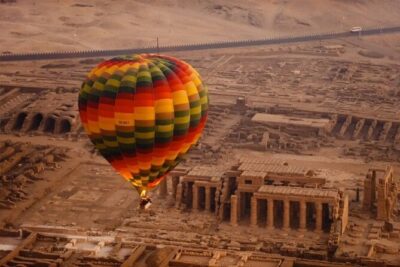
Luxor can feel huge on a first visit, so a balloon gives you quick context fast. From the air, you’ll see how the temples and tomb areas line up across the Nile. Then, on the ground, the Valley of the Kings delivers that classic wow factor—painted corridors, heavy stone, and names tied to New Kingdom royalty.
This tour can also be a bit of a budget trap if you don’t read the fine print. The day includes guides and transport, but entrance fees are listed as not included, so plan for extra payments on top of the $100 price.
In This Review
- Key things to know before you go
- Sunrise balloon over Luxor’s West Bank: why it’s worth the early wake-up
- What your morning timing looks like (and how to use it well)
- Valley of the Kings: a tomb circuit that actually teaches you what you’re seeing
- Standing in King Tut’s tomb (KV62) and seeing what makes it famous
- Ramses III, Merenptah, and Ramses IV: how to tell one royal tomb from another
- Tomb of Ramses III (KV11)
- Tomb of Merenptah (KV8)
- Tomb of Ramses IV
- Colossi of Memnon: a strong ending tied to Amenhotep III
- Why the Egyptologist guide makes or breaks the day
- Price and value: what the $100 covers and what you must plan for
- Comfort tips for tombs, heat, and cameras
- Who should book this balloon + King Tut day
- Should you book this hot-air balloon + Valley of the Kings tour?
- FAQ
- What time does the tour start?
- How long is the experience?
- Is hotel pickup and drop-off included?
- Do I need to pay entrance fees?
- Is an Egyptologist guide included?
- What happens if the balloon can’t fly due to weather?
Key things to know before you go
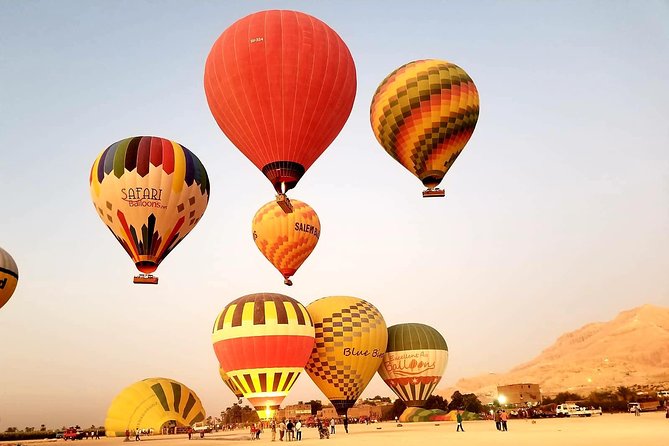
- Sunrise balloon ride from the Luxor takeoff site with a pilot describing what you’re seeing over Thebes
- A guided Valley of the Kings plan that includes multiple royal tombs, not just King Tut
- King Tutankhamun’s tomb time to see his mummy face-to-face in KV62
- Stop variety inside the Valley including Ramses III, Merenptah, and Ramses IV (different art styles and layouts)
- Colossi of Memnon after the tombs for a classic photo stop tied to Amenhotep III
- Small-group feel (max 20), plus hotel pickup and drop-off to keep the morning manageable
Sunrise balloon over Luxor’s West Bank: why it’s worth the early wake-up
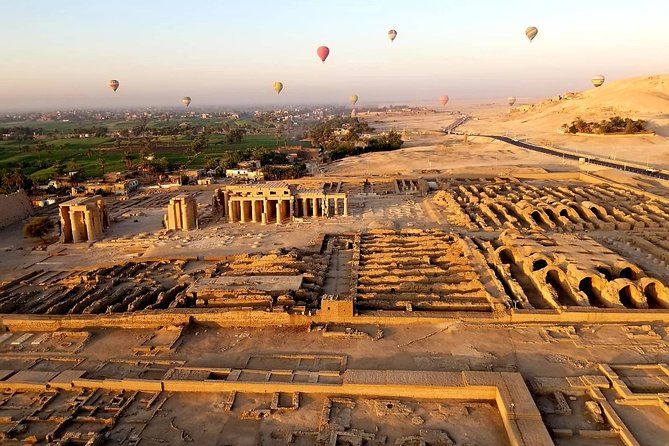
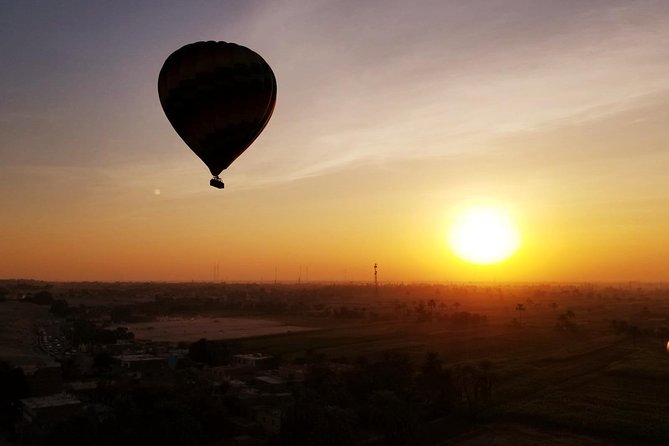
Starting at 5:30 am, this is not a lie-in kind of day. But that early departure is exactly why the balloon works. Before sunrise, Luxor’s heat is still mostly gone, the air is usually calmer, and your first view of the ancient sites comes with a soft, dreamy light.
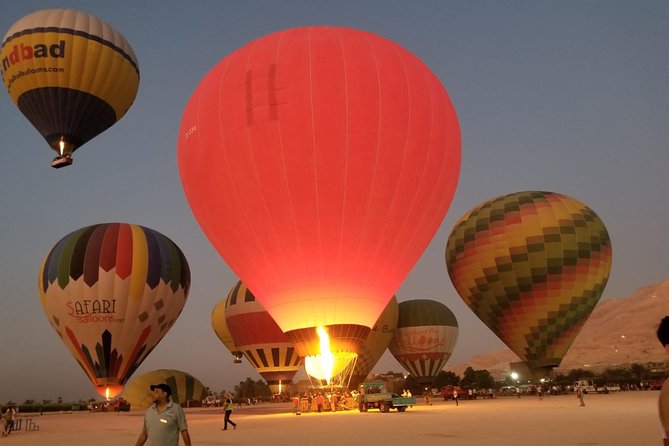
Once you transfer to the West Bank takeoff area, you meet the pilot and get a safety briefing before the crew prepares the balloon. Then you’re up in the air, drifting peacefully and getting broad views of the Thebes area. It’s not just pretty sightseeing. For first-time visitors, seeing the layout from above helps everything you do later on the ground make more sense—where the Nile sits, how the tomb zones relate, and why the West Bank became such a major burial region.
If you want one reason this tour has staying power, it’s that your day starts with a “big picture” moment. You’ll get it before you get stuck in museum-like stone corridors.
You can also read our reviews of more tours and experiences in Luxor.



What your morning timing looks like (and how to use it well)
This is a morning-first itinerary: balloon in the air first, Valley of the Kings right after. In practice, that means you’re balancing two kinds of waiting: the balloon prep time and the time needed to enter and move through tombs.
Here’s the practical takeaway: arrive with a clear game plan for your body and your phone. You’ll want:
- a camera ready for balloon photos as soon as you’re airborne
- water and something light to eat after you’re picked up (since the early hours can stretch)
- comfortable shoes for uneven paths around the Valley
The tour runs about 5 hours total, which is long enough to feel like a full day, but short enough that you won’t get stuck all day in one tomb. That’s a good thing, as long as you don’t expect everything to feel slow and unhurried.
Valley of the Kings: a tomb circuit that actually teaches you what you’re seeing
The Valley of the Kings is famous for a reason. This is the necropolis of Thebes—royal burials cut into the desert cliffs. Your guided visit focuses on four royal tombs, giving you more variety than the usual single-stop “check it off” approach.
The value here is not just quantity. Each tomb is different in layout and decoration, and those differences start to click once your guide ties them to what you’re walking through: corridor direction, painted scenes, and how rulers wanted to frame the afterlife.
Also, the Valley visits move at a workable pace. You get enough time in each tomb to look closely, but the overall plan keeps you from losing the morning entirely to queues and re-entry delays.
One consideration: tombs can be busy and tight, and that can make photos tricky. Focus less on getting the perfect shot and more on spotting the big scene types before your attention gets pulled in ten different directions.
Standing in King Tut’s tomb (KV62) and seeing what makes it famous
The main headline is, of course, King Tutankhamun’s tomb. Tut is the young pharaoh whose mummy was discovered in 1922 nearly intact by Howard Carter, which is why KV62 became such a global sensation.
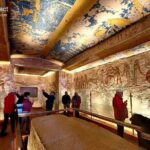
Inside the tomb, you’re in front of the royal mummy (as presented in the tomb setting). Even if you’ve seen images before, seeing Tut’s mummy in person hits differently because it’s still the same idea: you’re standing where a protective ritual and centuries of preservation met.
The timing is also tight in a good way. You’re not rushed to the point of losing the story, but you do need to stay aware of the group pace. In a place like this, the best “move” is to read your eyes first—look at the main painted areas and the overall structure—then let the details come second.
If you only care about one thing in Luxor, make it this moment. The Valley of the Kings is impressive, but Tut’s tomb is the one that gives your whole day its emotional anchor.
Ramses III, Merenptah, and Ramses IV: how to tell one royal tomb from another
The best part of seeing several tombs is learning the differences. Here’s how your experience plays out across these stops:





Tomb of Ramses III (KV11)
Ramses III’s tomb is known for colorful painted scenes and ritual texts—plus an extra layer of detail in side areas that show more “worldly” material. You’ll also come across details tied to foreign tributes and scenes like royal armory imagery and the tomb’s connection to harpists. It’s the kind of tomb where your brain keeps going back to the corners and side rooms, because those smaller spaces hold surprises.
Tomb of Merenptah (KV8)
Merenptah’s tomb has a different feel. It’s noted for a change in how rooms are arranged and how corridors and chambers are designed. You’ll also get the sense that tomb design evolves over time—something your guide can help you spot once you start paying attention to the overall flow, not just the artwork.
Tomb of Ramses IV
Ramses IV’s tomb stands out for the amount of color and detail, including the ceiling above the sarcophagi with the goddess Nut stretching across the space. Even if some paint has deteriorated, that ceiling concept still matters: it’s part of how the tomb frames the dead king’s place in the cosmos.
What to do on these stops: don’t try to “finish” the tomb. Pick two or three focal points—one major scene area, one ceiling detail (if accessible), and one corridor feature—then let that be enough.
Colossi of Memnon: a strong ending tied to Amenhotep III
After the tombs, you’ll visit the Colossi of Memnon—two giant statues dating back to Amenhotep III’s era. These statues are linked to the royal family line that connects to Tutankhamun’s broader historical context. The famous scale is the point: even after intense time underground, seeing these massive figures brings you back to how monumental Egyptian kingship looked in public space.
Also, it’s a good final stop because it’s not another maze. You can stretch your legs, take a breath, and shift your focus from painted afterlife scenes to the physical weight of the ancient world.
Why the Egyptologist guide makes or breaks the day
With this kind of tour, the guide is the whole experience. You’re moving through tombs where the visuals are powerful, but the meaning can stay stuck unless someone connects the dots.
One of the strongest signals from the guiding side is the way Egyptologists explain what you’re seeing in real time. For example, names like Ragab (with driver Ramadan also praised for making the day flexible) and Mansour Hussain (praised as someone trained through a dedicated Egyptologist guide program) come up as staff who can keep the tone informative without making it feel like homework.
Practically, that means you’re more likely to notice things like:
- how a corridor’s layout affects your sense of movement
- why certain scenes appear in specific areas
- how names like Tutankhamun, Ramses III, Merenptah, and Ramses IV fit into a larger timeline
If you want to get more out of your visit, ask your guide one simple question at the start: what should I look for first in each tomb? Then repeat that in your head as you move from stop to stop.
Price and value: what the $100 covers and what you must plan for
The published price is $100 per person, and the tour includes hotel pickup and drop-off plus an air-conditioned vehicle and a guide. That’s a real value in Luxor mornings, because you don’t want to burn energy hunting down transport in the dark.
But you should also budget for extra costs:
- entrance fees are listed as not included
- gratuity for the tour guide and driver isn’t included
One other practical note: the balloon stop shows that an admission ticket may not be included. That’s worth confirming before your day starts, so you don’t end up scrambling on the morning of your flight.
Still, for a day that strings together balloon time plus several major tombs, the “value math” can work well—especially if you would otherwise pay separately for a guide and private transport.
Comfort tips for tombs, heat, and cameras
Tombs feel cooler than the outside sun, but the morning itself can still be a mixed bag. You might start cool, then warm up fast as the day progresses.
Here’s what helps you enjoy it more:
- Wear shoes you can walk in confidently. Stone paths can be uneven.
- Bring a hat and sunglasses for outdoor transfer time and Colossi of Memnon photos.
- Have your camera battery ready. Cold early mornings can drain batteries faster than you expect.
- Don’t expect long photo sessions inside each tomb. Aim for a quick visual check, then put the camera away and look with your eyes.
And remember: the balloon part requires good weather. If it’s canceled because of poor conditions, you’ll be offered a different date or a full refund. That’s reassuring, but it still means you should keep some flexibility in your Luxor schedule.
Who should book this balloon + King Tut day
This tour fits best if you:
- want one high-impact morning that combines views with meaningful archaeology
- like having a guide connect details, not just move you from door to door
- don’t want to spend your entire trip underground, but still want a serious Valley of the Kings experience
It may not be ideal if you:
- hate early mornings and want a slow start
- need long, unhurried time in one single tomb over multiple stops
- are extremely price-sensitive once you add entrance fees on top
Should you book this hot-air balloon + Valley of the Kings tour?
Yes, if you’re looking for the smartest way to cover the big Luxor highlights in one morning: balloon views to orient you, then a guided circuit that includes King Tut’s tomb plus other royal tombs, ending at the Colossi of Memnon.
Before you commit, do two things: confirm what entrance fees are required and double-check balloon ticket inclusion for your exact booking. Once that’s clear, this is a strong pick for a first Luxor visit—especially if you want your King Tut moment to feel grounded, not rushed, and tied to the larger story of the Valley.
FAQ
What time does the tour start?
The start time is 5:30 am, with hotel pickup in Luxor before sunrise.
How long is the experience?
It’s listed as about 5 hours (approx.) total.
Is hotel pickup and drop-off included?
Yes. The tour includes hotel pick up and drop off and transport by air-conditioned vehicle.
Do I need to pay entrance fees?
Yes. Entrance fees are not included in the price listed for the stops.
Is an Egyptologist guide included?
Yes. The tour includes an Egyptologist tour guide.
What happens if the balloon can’t fly due to weather?
This experience requires good weather. If it’s canceled because of poor weather, you’ll be offered a different date or a full refund.