REVIEW · LUXOR
One Day Sunrise Balloon, Sunset Felucca ride, Luxor full-day tour
Book on Viator →Operated by DrMo Tours Egypt · Bookable on Viator
Sunrise looks almost too good to be real. This one-day Luxor combo stacks a hot-air balloon over the temples with a sunset felucca cruise, plus a private Egyptologist-led tour across both banks.
What I really like is the pacing. You’re not stuck on a rigid bus tour timeline—you’re moved by first-class air-conditioned private car and you can explore each stop in a way that works for your group. The other standout is the guide setup: a qualified Egyptologist, plus a photographer, so you’re not spending the whole day asking strangers to take photos.
One watch-out: you’re betting the day on early-morning balloon timing. Some past customers reported pickup delays that can affect the sunrise window, so you’ll want to be ready early and confirm exactly where you’ll meet.
In This Review
- Key takeaways before you go
- Price and what’s actually included (and what isn’t)
- How the sunrise balloon shapes the whole day
- Pickup timing: the one detail that can make or break sunrise
- Colossi of Memnon: where the day moves from sky to history
- The Valley of the Kings: tomb-hopping with real artwork details
- Tombs you’ll likely see on this schedule
- The Tutankhamun add-on (extra ticket, not included)
- Deir el Bahari (Hatshepsut): temple drama with time to breathe
- Karnak Temple: where scale becomes the story
- Luxor Temple and the final East Bank loop
- Sunset felucca: the calm reset you didn’t know you needed
- Guide quality: why names like Capo Hassan get remembered
- What to do if you want the smoothest day
- Who this Luxor day tour is best for
- Should you book this sunrise balloon, tombs, and felucca day?
- FAQ
- FAQ
- How long is the balloon flight?
- What does the price cover for this Luxor day?
- Are entrance fees included for the temples and tombs?
- Is lunch included?
- Can I visit the Tomb of Tutankhamun on this tour?
- Is free cancellation available?
Key takeaways before you go
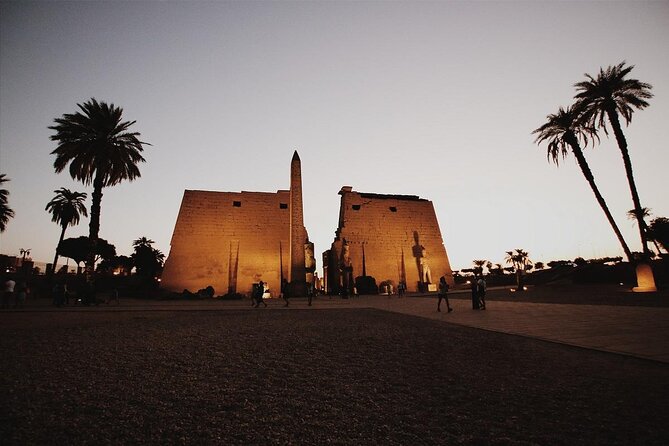
- Sunrise balloon flight over Luxor with a ~45-minute airtime block and a flight certificate
- Private Egyptologist + photographer help you get meaning and better photos, not just sightseeing
- West Bank tomb strategy: multiple royal tombs in the Valley of the Kings, with Tutankhamun as an extra-ticket add-on
- East Bank big hitters in one flow: Karnak highlights and Luxor Temple
- A calm finish on the Nile: an hour on a felucca with real river-life watching time
- Entrance fees and lunch are on you (the ticket price covers the guides and rides, not the site admissions)
Price and what’s actually included (and what isn’t)
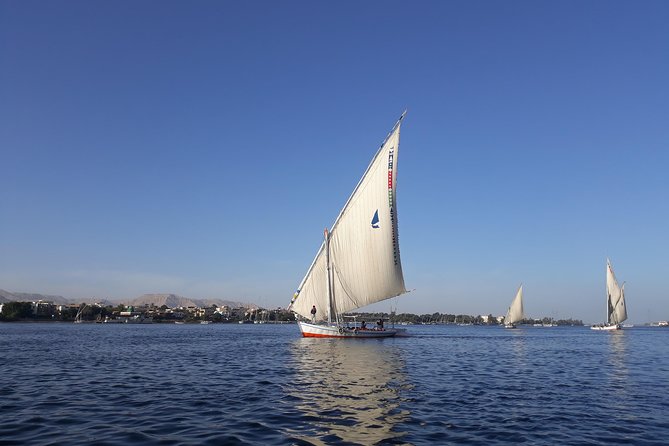
At $119 per person, this day feels like you’re paying mainly for three expensive pieces: door-to-door transfers, the balloon ride, and the sunset felucca. You’re also getting a private Egyptologist guide (not just someone with a playlist), plus a photographer and bottled water.
Entrance fees are excluded, as is lunch. So your true day cost depends on which tombs you add. The plan clearly flags that Tomb of Tutankhamun requires extra tickets, and several other major sites also list admissions as not included.
If you want the simplest budget mindset: plan for the $119 base price, then add (1) site entry fees, and (2) lunch, and (3) the optional Tut add-on.
You can also read our reviews of more tours and experiences in Luxor.



How the sunrise balloon shapes the whole day
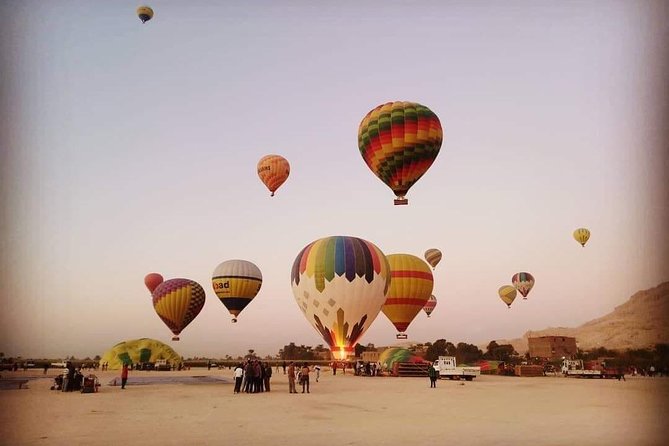
This tour’s energy starts before the temples do. You’re picked up early, then transported toward the balloon experience in the Luxor area. The schedule includes a motorboat transfer to the West Bank area and soft drinks before you head to the take-off zone.
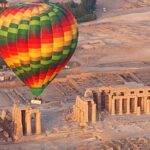
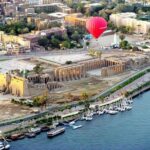
Then comes the balloon part: a flight lasting about 45 minutes, which is the heart of why people book this itinerary in the first place. You get your real “Luxor from above” moment—sun rising over temples, river, and desert. The experience includes the balloon setup process too, so it’s not just a ride you hop into.
Two practical notes that matter:
- You’ll want to dress for cool early temps and bring a layer you can handle once the sun climbs.
- If mornings make you anxious (or you’re sensitive to motion), consider that balloon rides can still feel different from other kinds of rides. One customer specifically mentioned feeling at ease even with vertigo—so it may not be an automatic no for everyone.
Pickup timing: the one detail that can make or break sunrise

This is a long day with multiple moving parts. That’s why pickup timing is so important.
Some customers reported that pickup ran late, and that they missed the sunrise portion of the plan. Another message clarified that on at least one occasion, the issue was the guest not being ready at the room at the arranged time.
So here’s what I’d do to protect your day:
- Be ready early enough that you can step out immediately when the driver arrives.
- Confirm the pickup point the evening before (and don’t wait until the last minute).
- Keep your phone charged, because the day includes transfers and multiple meeting points.
Private tours can feel more relaxed, but they still rely on punctual logistics.
Colossi of Memnon: where the day moves from sky to history
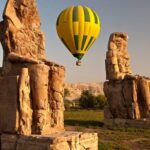
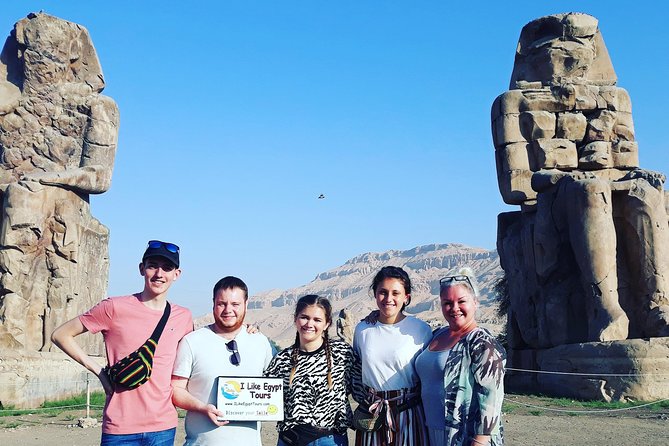
After the balloon, the tour transitions to the West Bank with a meeting point at Colossi of Memnon.
These are the two largest ancient statues in Egypt, tied to King Amenhotep III. Even if you know the name, seeing them in person hits different. They’re not a small stop. They’re big, solitary, and slightly surreal—like the desert decided to keep two stone guardians.
This stop is short (about 10 minutes), so treat it like a fast landmark moment. Use it to get your bearings for the West Bank route before the Valley of the Kings tomb visits begin.
The Valley of the Kings: tomb-hopping with real artwork details

The Valley of the Kings is the main West Bank draw, and the tour is built around hitting multiple royal tombs within a single day. After transfer, you’ll head into the necropolis area with a plan to visit several tombs.
Here’s what stands out in the way the day is set up: you’re not just “looking at tombs.” You’re moving from tomb to tomb with enough time to spot major details inside each chamber.





Tombs you’ll likely see on this schedule
The itinerary describes several specific tombs and also notes that the tour visits four royal tombs as part of the plan (with Horemheb named in that group). In practice, you’ll also want to pay attention to the named stops, because they include detailed descriptions of what to look for:
Tomb of Ramesses IX (about 25 minutes)
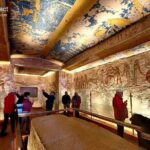
This tomb is described as colorful, heavy on carved and painted detail. One standout detail: the ceiling above the sarcophagi features the goddess Nut stretching across space. The sarcophagus is noted as one of the largest in the valley, even with some deterioration in paintings.
If you like your Egypt reading with visuals, this is the kind of tomb where you’ll be scanning ceilings and side details, not just walking through.
Tomb of Merenptah (about 25 minutes)
This one is described as a model of royal tombs and connected to mythology around Ptah. The notes also say it was discovered by Howard Carter in 1903.
You’ll get a different feel here—more about the tomb’s structure and the way royal burial design evolved, plus the protective religious themes that show up in the decoration choices.
Tomb of Ramses III (about 25 minutes)
This is the “what you see here” tomb. The description points to:
- colorful painted sunken reliefs with ritual texts like the Litany of Ra and Book of Gates
- Ramses before the gods
- secular scenes showing foreign tributes, including pottery imported from the Aegean
- royal armoury scenes
- and the harpists, which earned it the nickname Tomb of the Harpers
That last detail matters. It’s the kind of story you’ll remember later because it’s specific. It turns “a tomb” into a place with personalities and trade routes and everyday imagery.
The Tutankhamun add-on (extra ticket, not included)
The plan lists Tomb of King Tutankhamun (Tut) as an extra-ticket option, with about 25 minutes if you choose it.
If you’re torn on paying for Tut, use this quick decision rule: if Tut is the single reason you’re in Luxor, budget for the extra ticket and plan your energy. If Tut is only a side interest, you might enjoy the included tombs more because they’re already packed in.
Deir el Bahari (Hatshepsut): temple drama with time to breathe
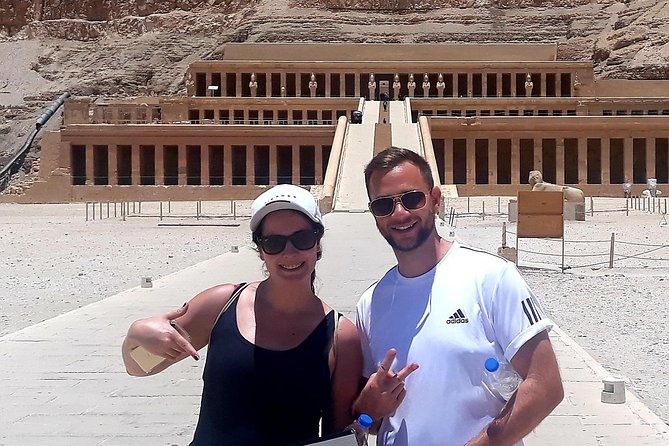
After tombs, you shift to one of the most visually striking East-to-West transitions in the whole region: Temple of Hatshepsut at Deir el Bahari.
You’ll be there for about 1 hour 30 minutes, and that time really helps because this temple needs a slow look. It’s tied to Hatshepsut—described as the only woman to reign over Egypt as Pharaoh—and it’s also called out as an ancestor connection point to Tutankhamun.
Practically, this is a relief after the Valley of the Kings walking. You get more space, open angles, and the chance to notice how temple architecture was designed to work with the land.
Karnak Temple: where scale becomes the story
Karnak is scheduled for about 2 hours, and it’s the kind of place that can swallow your attention in the best way.
The plan highlights the key parts you’ll want to focus on:
- Avenue of Sphinxes
- Hypostyle Hall with 134 gigantic columns
- obelisks of Queen Hatshepsut and Tutomosis I
- Temple of Amon with lotus and papyrus designs
- a granite Scarab of Amenophis III
- and the Sacred Lake
A strong guide matters here because Karnak wasn’t built all at once. You’re seeing layers from different reigns, which can otherwise feel like a blur of stone.
You’ll also make additional short stops that relate to the same Karnak complex zones—like the obelisks and the Avenue of Sphinxes walk segments—so you get a structured route rather than aimless wandering.
Luxor Temple and the final East Bank loop
After Karnak, the day ends with Luxor Temple, scheduled for about 1 hour 30 minutes.
This temple is dedicated to the Theban Triad: Amun-Ra, Mut, and Khonsu. The notes also point to granite statues of Ramses the Great. In other words, it’s not just an “old pile of rocks.” It’s a carefully designed sacred space with major royal messaging baked into the art.
This stop is a good “wrap the day” phase because it sits close to the city’s vibe. It feels less like a remote burial site and more like the living city’s spiritual counterpart.
Sunset felucca: the calm reset you didn’t know you needed
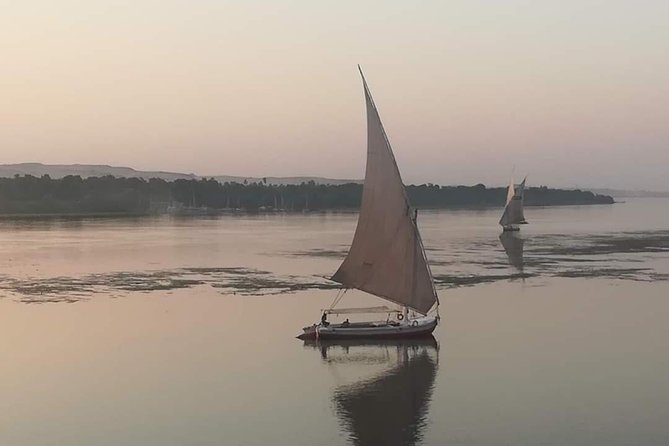
Once the temples are done, you still have time to exhale. At sunset, the tour includes a 1-hour felucca ride on the Nile River.
You’ll be transferred to the Nile side where a traditional felucca is waiting with soft cushions. The point here isn’t just scenery. It’s rhythm—letting the river slow your head down after hours of walking, heat, and stone details.
The ride description calls out what you can watch as you glide:
- children playing in the water
- camels and donkeys along the river edges
- farmers working
- water buffalo in the shallows
This is also where a private tour feels worth it. Instead of racing to check another box, you get time to actually look at what’s happening now.
Guide quality: why names like Capo Hassan get remembered
This tour leans hard on interpretation. And the guide does matter.
One of the clearest praise points from feedback is that Capo Hassan stood out for knowledge and patience. That lines up with how these sites need to be handled—especially Karnak and the Valley tombs, where details can be easy to miss if you’re just scanning.
You’ll also get a photographer included, which is helpful because balloon mornings and dark tomb interiors can turn into photo chaos if you’re trying to do everything yourself.
What to do if you want the smoothest day
This day is packed, so you’ll get the best results if you treat it like an athletic event, not a casual stroll.
My best practical tips:
- Eat earlier than you think you need before the balloon window.
- Wear shoes that work on uneven outdoor surfaces.
- Keep a small day bag with water and a layer for early morning.
- Bring a backup for your phone battery; you’ll want photos at the balloon and along the river.
- If you’re considering the Tutankhamun ticket, decide in advance so it doesn’t become a last-minute energy drain.
Also, be realistic about heat management. Your route includes outside walking and tomb interiors with limited time in each stop. Slow down inside: spend your minutes looking at the things your guide flags.
Who this Luxor day tour is best for
This is a good fit if you want a one-day Luxor “greatest hits” plan:
- you want both banks covered without planning your own route
- you like learning as you see, not just collecting photos
- you enjoy balloon rides and want the sunrise view to anchor your day
- you want the day to end with a quieter Nile moment rather than another rushed stop
It’s less ideal if you hate long days or if you’re the type who needs huge breathing space between stops.
Should you book this sunrise balloon, tombs, and felucca day?
I’d book it if your priority is to compress major Luxor highlights into one day and you value a private Egyptologist guiding your eyes. The combination makes sense: balloon morning for perspective, West Bank tombs for storytelling, East Bank temples for scale, and felucca sunset to reset.
I’d hesitate if you can’t handle early mornings or you know you’ll stress about timing. Because the balloon is central, you want to be ready and organized at pickup time.
If you do book, commit to the payoff: arrive rested enough for a full day, budget for entrance fees and lunch, and decide ahead of time whether Tutankhamun is worth the extra ticket. That’s how you turn a packed itinerary into a smooth, satisfying Luxor memory.
FAQ
FAQ
How long is the balloon flight?
The balloon experience includes a flight of about 45 minutes, and the included balloon ride time is listed as 35 to 60 minutes.
What does the price cover for this Luxor day?
It covers hotel pickup and return transfers, the hot-air balloon trip, a qualified Egyptologist guide (plus a photographer), bottled water, the full-day Luxor tour across East and West Banks, and a one-hour sunset felucca ride.
Are entrance fees included for the temples and tombs?
No. Entrance fees are not included, and the tour description indicates you pay as you go.
Is lunch included?
No, lunch is not included.
Can I visit the Tomb of Tutankhamun on this tour?
The Tomb of King Tutankhamun is listed as an option with extra tickets, and it is not included in the base tour.
Is free cancellation available?
Yes. You can cancel up to 24 hours in advance for a full refund. If you cancel less than 24 hours before the start time, the amount paid is not refunded.