REVIEW · LUXOR
Package deal Hot Air Balloon Ride & Full Day Luxor Tour w/Guide Lunch
Book on Viator →Operated by Luxor Travels · Bookable on Viator
Luxor looks different from the air. A sunrise hot air balloon over the Valley of the Kings turns the morning into something you’ll remember for years. Then you land on the ground and get a full Luxor highlights day with a licensed Egyptologist guide and plenty of landmark time.
I especially like how the route covers both the West Bank tombs and the East Bank temples in one long, well-paced day. You also get hotel pickup and an air-conditioned vehicle, which matters once the heat kicks in. One thing to consider: the day starts very early, and you’ll still need to budget extra for some entrance fees on top of the package price.
In This Review
- Key things I’d circle before you book
- Sunrise balloon over the Valley of the Kings: why this day starts in the dark
- The 10-hour day plan: how you go from balloon to tombs to temples
- Valley of the Kings tombs: what you’ll actually look for
- Tomb of Ramses III (KV 11): painted reliefs and surprising side scenes
- Tomb of Ramses IX: the ceiling above the sarcophagi
- Tomb of Merenptah: royal burial plus the Howard Carter connection
- Optional: Tomb of Tutankhamun (the one with the extra fee)
- Deir el Bahari: Hatshepsut’s temple and the power of a dramatic setting
- Colossi of Memnon: two statues that anchor an entire era
- Karnak Temple and the Amun spaces: where your guide’s explanations pay off
- Avenue of Sphinxes and obelisks: small details that make Luxor feel connected
- Luxor Temple: Theben Triad, Ramses statues, and the East Bank finale
- Price and logistics: what you’re paying for, and what you still need to budget
- Who this Luxor package fits best (and who should consider something else)
- Should you book this hot air balloon plus Luxor temples day?
- FAQ
- What’s the total duration of the tour?
- What time does the tour start?
- Is hotel pickup and drop-off included?
- What’s included in the $140 per person price?
- Are entrance fees included?
- What sites does the tour visit?
- How big is the group?
- What happens if the balloon can’t fly due to weather?
Key things I’d circle before you book
- Sunrise balloon flight over the Valley of the Kings for big views and early-morning magic
- Licensed Egyptologist guide who helps you choose tombs and explains what you’re seeing
- West Bank tomb time (including Ramses III, Ramses IX, and Merenptah) with optional Tutankhamun
- Deir el Bahari (Hatshepsut) stop with context on Egypt’s most famous female pharaoh
- Karnak + Luxor Temple circuit with obelisks and the Avenue of Sphinxes
- Lunch and AC transport included, so you’re not scrambling during the long day
Sunrise balloon over the Valley of the Kings: why this day starts in the dark
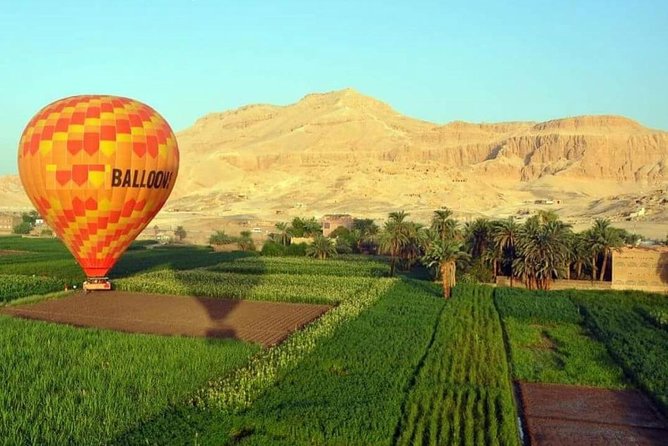
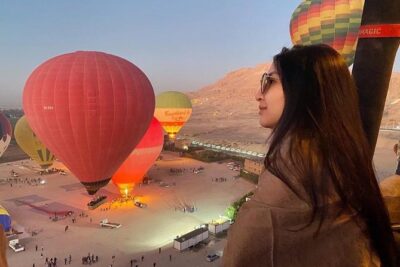
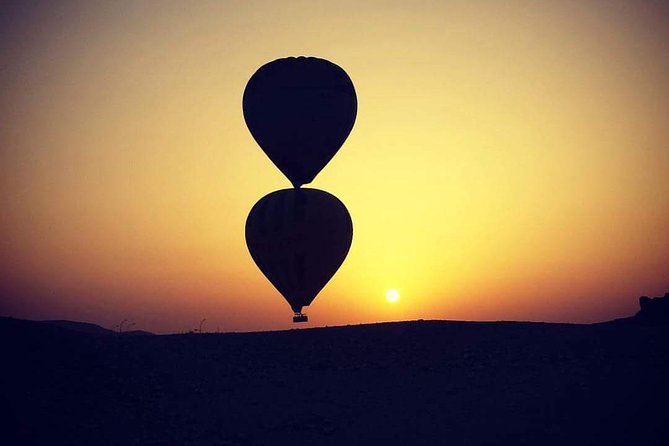
This is a morning-first kind of outing. You’re picked up around 5:30 AM, and you head toward the balloon launch area for a sunrise flight over the Valley of the Kings. The timing isn’t just for aesthetics—it’s also when the air is calmer and the views feel crisp.
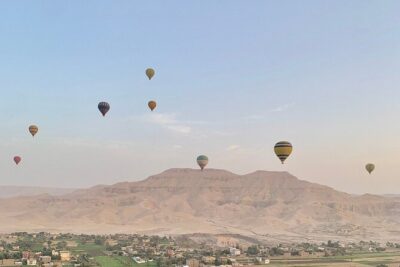
I like that your balloon experience is treated as the main event, not a quick add-on. On the balloon side, you can expect the launch to be organized and smooth, and you’re likely to see a lot of other balloons rising at the same time. From up high, you get a bird’s-eye perspective on the Theban necropolis—tomb entrances and ridgelines that can look confusing on the ground suddenly make sense.
Weather matters, and the operator is clear about this: the experience requires good weather. If conditions are poor, the plan can be adjusted (you’d be offered a different date or a full refund). In plain terms: if you’re in Luxor for only one day, keep an open mind and build in flexibility.
You can also read our reviews of more tours and experiences in Luxor.



The 10-hour day plan: how you go from balloon to tombs to temples
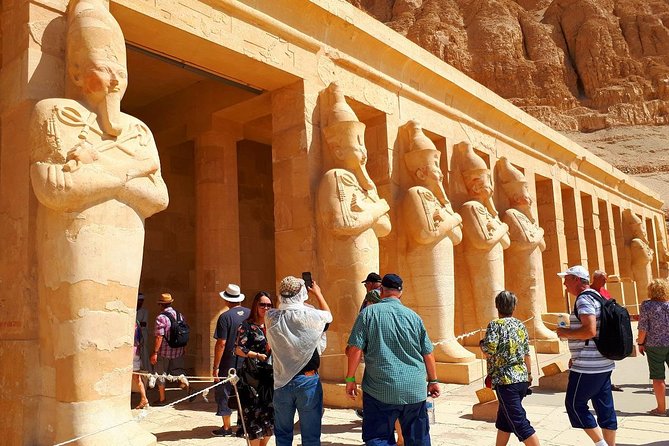
After the balloon, you’re set for a full day of monuments. The schedule is long—about 10 hours 50 minutes total—and it’s built around efficient travel by air-conditioned vehicle. That AC time is a real quality-of-life factor in Luxor.
Once the balloon ride is done, your West Bank focus begins with the Valley of the Kings. Your guide is there to recommend which tombs to visit, so you don’t end up wasting time reading everything alone at the entrance. Then you move onward to Deir el Bahari, the Colossi of Memnon, and across to the East Bank temples.
The big takeaway for you: this is a “see a lot, but still learn it” style tour. It’s not endless museum time where you feel like you’re just collecting tickets. Instead, each stop has a purpose—tombs for the afterlife story, Deir el Bahari for royal ambition, Karnak and Luxor for the living religion of Amun.
Valley of the Kings tombs: what you’ll actually look for
Your Valley of the Kings time is structured around visiting multiple tombs, with your Egyptologist guiding you toward the best choices. The itinerary mentions seeing the “best 3 tombs,” and in practice you may also have options depending on the ticket situation. The tour notes that admission rules vary by ticket type, including a note that certain tombs can be free if you have Valley of the Kings tektites.
Here’s what each tomb stop is about, and what you should keep an eye out for:
Tomb of Ramses III (KV 11): painted reliefs and surprising side scenes
This is one of the Valley’s big-name tombs, and it earns that status. KV 11 is known for colorful painted sunk reliefs with traditional ritual text scenes like the Litany of Ra and the Book of Gates. You also see Ramses presented before the gods, the kind of royal “I belong in the heavens” messaging that makes these tombs feel theatrical.
The cool part is that Ramses III’s tomb includes more secular details than you might expect. The side rooms include foreign tributes—highly detailed pottery imported from the Aegean, royal armor, boats, and a group of blind harpists. That harpist detail is tied to one of the tomb’s alternate names, and it’s the kind of human touch that breaks up all the strict religious symbolism.
Tomb of Ramses IX: the ceiling above the sarcophagi
Ramses IX’s tomb is all about color and placement. The tour specifically highlights the ceiling above the sarcophagi: it features the goddess Nut stretching across the space. That ceiling view is one of those moments where a small change in camera angle (or just standing back) makes the whole design click.
Even if parts of the paint have deteriorated over time, the tomb remains one of the Valley’s most decorated spaces. It’s a strong choice if you’re the type who likes art direction—composition, not just text.




Tomb of Merenptah: royal burial plus the Howard Carter connection
Tomb 8 is the burial place of Pharaoh Merneptah, and it’s described as a model of royal tomb design. The tour notes it was discovered by Howard Carter in 1903, which adds a real “this is where famous history intersects” feeling for your visit.
You’ll also hear a few design notes from your guide: there’s a material decrease in the number of lateral rooms, and there’s a dramatic increase in the height of the corridor (as described in the tour information). Those architecture differences are exactly why a guided visit helps—without context, it’s easy to only see walls and not the “how the builders made it work” choices.
Optional: Tomb of Tutankhamun (the one with the extra fee)
The Tomb of Tutankhamun is listed as optional with an entrance fee noted as 300.00 EGP. If you go for it, you’re in the presence of one of the most famous kings in the world, and the tour highlights the chance to see his royal mummy face-to-face in his tomb.
If you choose this stop, plan mentally for a higher-impact experience where you’ll want time to look slowly. And do confirm the ticket situation in advance, because the package doesn’t include all entrance fees.
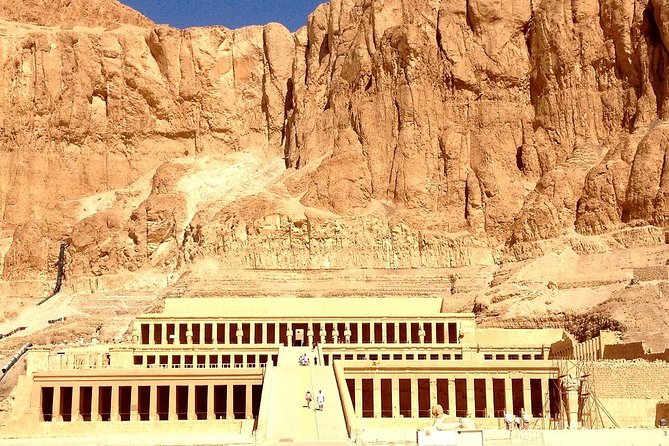
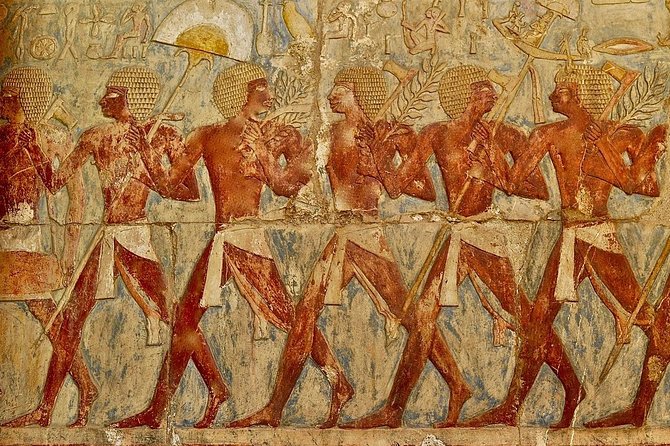
Deir el Bahari: Hatshepsut’s temple and the power of a dramatic setting
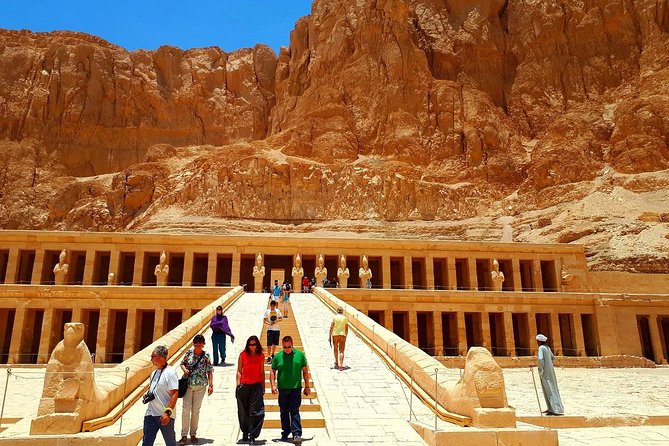
After the tombs, you head to Temple of Queen Hatshepsut at Deir el Bahari. This is the only woman ever to reign over Egypt as Pharaoh, and the tour frames Hatshepsut’s importance in two clear ways: her role in Egypt’s royal history and her connection to later dynasties, including Tutankhamun.
This is a temple visit that feels architectural and visual at the same time. Deir el Bahari sits in a dramatic location, and the tour gives you about one hour here—enough time to get the layout and still soak in the sense of grandeur without rushing.
Entrance fees for this stop are listed as 140.00 EGP, and the tour notes that entrance fees overall aren’t included in the package price. So if you’re building your Luxor budget, count on at least some additional temple costs.
Practical tip: for Hatshepsut, I’d suggest using your guide’s context early. When you understand who she was and what the temple was meant to project, the carvings stop being “pretty stone” and start reading like political messaging.
Colossi of Memnon: two statues that anchor an entire era
Then comes a classic Luxor photo stop with real historical weight: the Colossi of Memnon. The tour describes them as the two largest ancient statues in Egypt, dating to the era of King Amenhotep III. They’re famous for a reason—big scale, heavy presence, and a direct link to the royal world of Thebes.
You’ll have around 25 minutes here, and admission is marked as free in the provided info. This is a good break from tomb interiors and long walking—still meaningful, but less time pressure.
I like using this stop as a mental reset. You can look at the statues, notice the perspective tricks, and then carry that “scale awareness” into Karnak later.
Karnak Temple and the Amun spaces: where your guide’s explanations pay off
Karnak is where Luxor gets grand in a serious way. You’ll spend time at the Temple of Karnak, with a stated entrance fee of 200.00 EGP. The tour information focuses on the courtyard of Amun-Ra and notes it’s part of larger temple groupings with multiple aisles. It also highlights the sheer size—about 250,000 square meters—and the fact that restoration work means some areas may be under active change.
Then the itinerary continues to Temple of Amun, with a longer stated time (around two hours at that stage). Even though the text repeats the Amun-Ra courtyard description, the effect for you is clear: you’re getting a deeper Karnak visit, not just a quick stroll through the highlights.
In the reviews summary you provided, people mention the amazing pillars at Karnak. I’d take that as a cue: when you’re standing in those towering areas, you’ll get more out of the visit if you slow down and let your eyes move upward. Your guide’s role matters most here, because Karnak’s size can swallow your attention fast.
Avenue of Sphinxes and obelisks: small details that make Luxor feel connected
Between Karnak and Luxor Temple, you have the Avenue of Sphinxes, described as a route of human-headed sphinxes connecting Karnak and Luxor. The tour notes it’s over one and a half miles (about 3 km), and it once mattered during the Opet festival when statues of Amun and Mut were carried along the route.
This stop gives you more than scenery. It helps you understand Luxor Temple and Karnak as parts of one system, not two separate monuments. The tour also explains the symbolic story: at Luxor Temple, Amun was transformed into Min in a fertility connection for the festival. You’ll also learn about the estimated 1,350 sphinx statues and the barque chapels used along the way, with Queen Hatshepsut associated with building six of these chapels.
You’ll then see Obelisk of Queen Hatshepsut and Obelisk of Thutmose I. Each is described as having inscriptions and royal significance tied to different reigns. These are quick stops by time, but they matter because they show how Egyptian kings claimed the landscape with text and stone.
Luxor Temple: Theben Triad, Ramses statues, and the East Bank finale
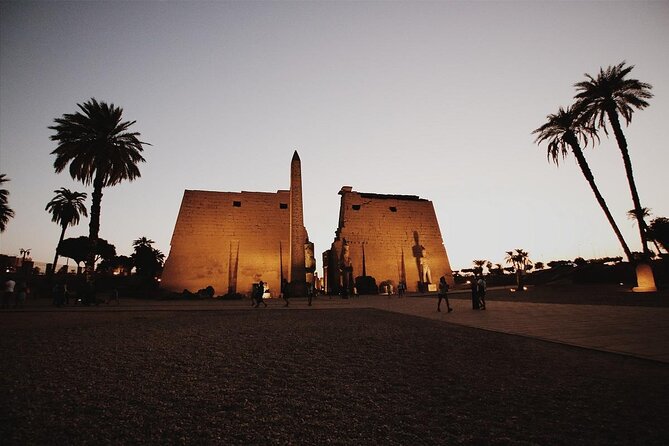
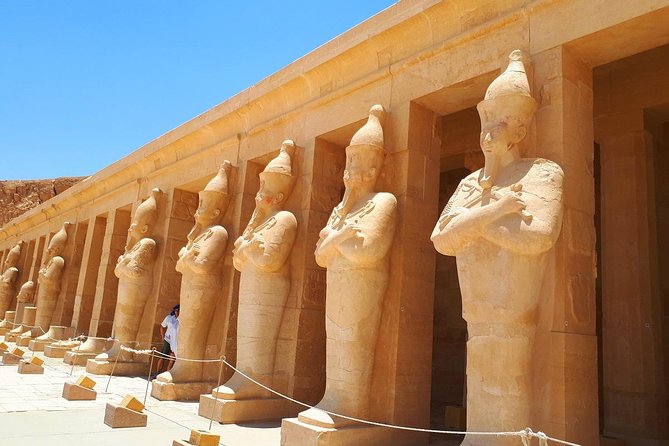
Your East Bank day ends at Luxor Temple, dedicated to the Theben Triad: Amun-Ra, Mut, and Khonsu. The tour notes that you’ll see granite statues of Ramses the Great, and you’ll spend about one hour here.
Luxor Temple can feel less overwhelming than Karnak, which is exactly why it’s a smart finale. After the scale and complexity of Karnak, Luxor Temple gives you a clearer sense of how royal power and religious worship were staged for everyday ritual life.
This is also where you can connect the dots from earlier stops. If you paid attention to the Avenue of Sphinxes and the Amun themes, Luxor Temple lands with more meaning. If you didn’t, it can still be impressive—but understanding the “why” makes it stick.
Price and logistics: what you’re paying for, and what you still need to budget
At $140 per person, this package is competing in a category where value often comes down to what’s truly included. Here, you get: a qualified Egyptologist guide, hotel pickup and drop-off, air-conditioned vehicle, lunch, and the hot air balloon ride, plus a full day visiting major Luxor monuments.
That bundle is the real strength. You’re not piecing together transportation, guide service, and lunch across multiple bookings. In a place like Luxor—where travel time and heat can drain your energy—having it handled matters.
Now the part you must plan for: entrance fees. The tour info clearly says entrance fees aren’t included, and it lists specific examples in Egyptian pounds:
- Temple of Hatshepsut: 140.00 EGP
- Temple of Karnak: 200.00 EGP
- Tomb of Tutankhamun (optional): 300.00 EGP
It also notes that some tomb admissions may be free if you have Valley of the Kings tektites. That means your total “extra cost” depends on what you already have and which optional tomb you choose.
My practical advice: before you go, confirm your tomb and temple inclusions and whether any “free with tektites” rule applies to you. Otherwise, you can arrive at a tomb entrance and suddenly find yourself deciding on the spot.
Who this Luxor package fits best (and who should consider something else)
This is a great fit if you:
- Want one full, organized Luxor day with both West Bank and East Bank highlights
- Care about context, and you’d rather have a guide explain what you’re seeing than just follow signs
- Like the big-ticket experience first thing—sunrise balloon—then temples and tombs with a plan
It may be less ideal if you:
- Hate early mornings or don’t handle heat well (you might face very hot conditions; one review notes around 43ºC)
- Want a slow, unhurried trip with lots of free time at every site
For most people, the small-group size helps. The tour info says a maximum of 15 travelers, and you’ll also get flexibility for a customized feel through the guide’s choices.
Should you book this hot air balloon plus Luxor temples day?
If your goal is to hit Luxor’s most famous monuments efficiently—while still learning what you’re looking at—this package is a strong choice. The sunrise balloon over the Valley of the Kings is the headline, and the rest of the day backs it up with a full East Bank and West Bank circuit.
I’d book it if you’re the kind of traveler who wants maximum value from a limited number of days. Just go in knowing the schedule is long, entrance fees are partly extra, and weather can affect the balloon.
If you want a Luxor day that feels like the place in full scale—tombs, temples, obelisks, and all—this is built for you.
FAQ
What’s the total duration of the tour?
The duration is about 10 hours 50 minutes.
What time does the tour start?
The start time is 5:30 AM.
Is hotel pickup and drop-off included?
Yes. Hotel pickup and drop-off are included.
What’s included in the $140 per person price?
Included are the Egyptologist guide, hotel pickup/drop-off, air-conditioned vehicle transport, lunch, the hot air balloon ride, and a full day tour to visit major Luxor monuments.
Are entrance fees included?
No. Entrance fees are not included. The tour info lists entrance fees for multiple sites and notes a separate rule that some tombs may be free if you have Valley of the Kings tektites.
What sites does the tour visit?
You’ll visit the Valley of the Kings (tombs), the Temple of Queen Hatshepsut at Deir el Bahari, the Colossi of Memnon, Karnak Temple, the Avenue of Sphinxes, obelisks, and Luxor Temple.
How big is the group?
The tour has a maximum of 15 travelers.
What happens if the balloon can’t fly due to weather?
The experience requires good weather. If it’s canceled due to poor weather, you’ll be offered a different date or a full refund.