REVIEW · LUXOR
One Package Hot Air Balloon with Best of Luxor Full Day Tour
Book on Viator →Operated by Etro tours · Bookable on Viator
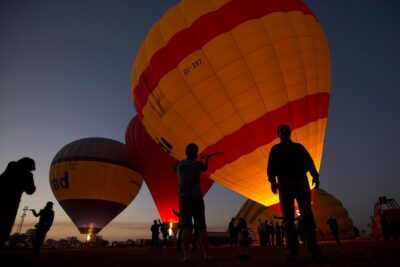
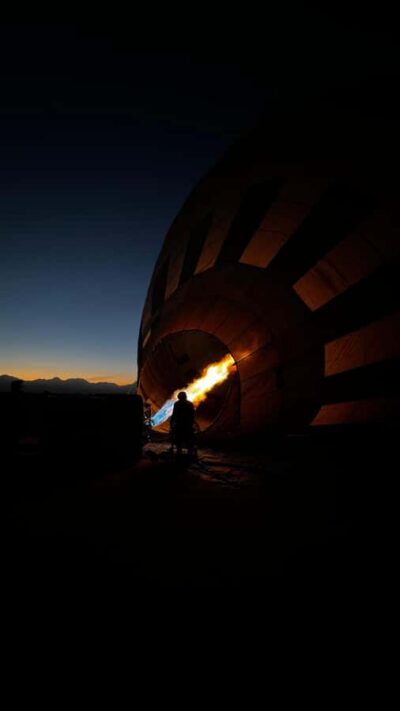
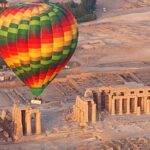
Up early, up in the air. A sunrise hot air balloon over Luxor gives you bird’s-eye views of the archaeological zone that ground sightseeing can’t match. Then you roll straight into a guided “best of” day, mixing big-name monuments with the kind of perspective you only get from the sky.
I also love how the day stays organized and low-stress thanks to hotel pickup and a professional Egyptologist guide. In the notes guests share, guides such as Ahmed Hassan are often singled out for making each stop click with clear, practical explanations. That combo matters when you’re packing a lot into one long day.
One thing to plan for: entrance fees aren’t included (only the balloon is), and a few of the temple stops require separate admissions—so your final cost depends on what you pay at each site.
In This Review
- Key highlights before you go
- Why a 45-minute balloon flight changes how you see Luxor
- Pickup, mobile ticket, and the morning rhythm (7 to 9 hours total)
- Light breakfast and tea: the small inclusion that saves the day
- Colossi of Memnon: huge stones, and a famous sound myth
- Deir el-Bahari and Hatshepsut’s cliff temple with three terraces
- Valley of the Kings: why it’s worth staying alert
- Karnak Temple: the scale hit you feel in your chest
- Luxor Temple: Ramses II guards the entrance
- Price and what you still pay on the ground
- Who this tour fits best
- Should you book this hot air balloon plus Best of Luxor full day?
- FAQ
- How long is the hot air balloon flight?
- Does the tour include hotel pickup and drop-off?
- Is breakfast included?
- What sites are included in the full-day sightseeing?
- Are entrance fees included?
- Is tipping included?
- Is the tour private?
- Can I cancel for a full refund?
Key highlights before you go
- 45-minute balloon flight included, timed for early light over Luxor
- Hotel pickup and drop-off plus air-conditioned transport
- Light breakfast and tea to steady you before the long temple loop
- West Bank classics: Hatshepsut at Deir el-Bahari and the Valley of the Kings
- East Bank powerhouses: Karnak Temple and Luxor Temple
- Colossi of Memnon stop with the famous Vocal Memnon story (and free admission there)
Why a 45-minute balloon flight changes how you see Luxor
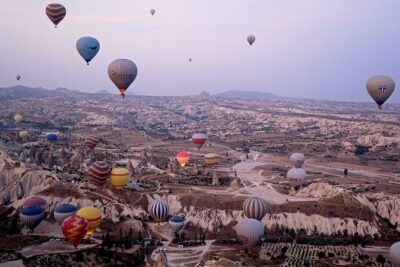
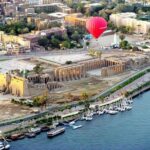
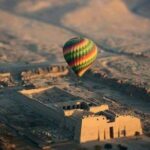
Luxor is famous for ruins, but a hot air balloon turns those ruins into something else: a full-scale map you can almost read. The ride is about 45 minutes, and it’s long enough to feel the shift from takeoff jitters to real calm.
From the air, you get the kind of overview that makes the temples feel connected instead of scattered. You can spot how the Nile corridor shapes where ancient Egyptians built, and you’ll likely find your photos better too—not because of fancy camera tricks, but because you’re photographing a bigger idea.
It also helps that balloon time is relatively short compared with the rest of the day. You’re not locked into hours of sitting; you get the magic shot of the sky, then you land and keep moving while the morning is still fresh.
You can also read our reviews of more tours and experiences in Luxor.



Pickup, mobile ticket, and the morning rhythm (7 to 9 hours total)
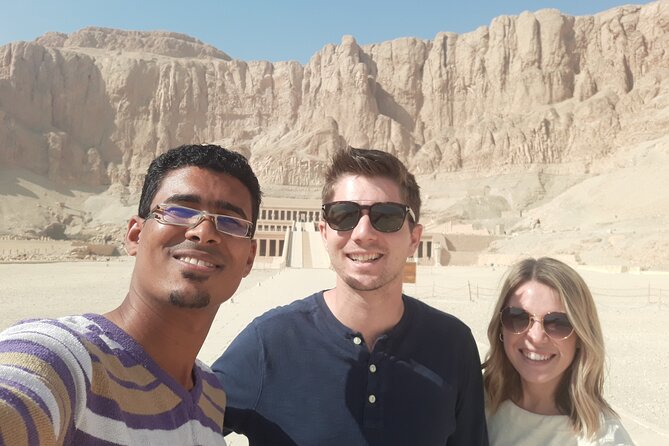
This is a single-day package that runs roughly 7 to 9 hours, starting in the morning. That means you’ll want a simple plan for the night before: early bedtime, ready phone for your mobile ticket, and light packing so you don’t waste energy.
You’re picked up from your hotel and returned after the full set of stops, so you’re not solving logistics while you’re tired. The transport is air-conditioned, which is a big deal in Luxor, especially on a day that includes both the West Bank and East Bank.
One more smart detail: this is listed as a private tour/activity, meaning it’s just your group. That usually makes the pace feel more controlled, and it’s easier for the guide to keep the story straight stop to stop.
Light breakfast and tea: the small inclusion that saves the day

The package includes light breakfast and tea before your balloon ride and early sightseeing. It’s not a full feast, but that’s exactly why it works here: you get enough fuel without feeling weighed down before you’re out in the sun.
This matters because the day is paced like a marathon of major sites. A little food early helps you stay alert when you’re listening to historical context, rather than zoning out or getting cranky halfway through the Valley of the Kings.
Colossi of Memnon: huge stones, and a famous sound myth
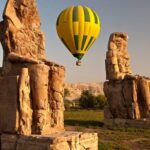
After the balloon, the first major ground stop is the Colossi of Memnon. These are two towering statues of Pharaoh Amenhotep III, carved from quartzite sandstone and about 18 meters (59 feet) tall. They’re the surviving remnants of what used to be a mortuary temple entrance.
What makes this stop fun for visitors is the story tied to the statues’ acoustics. They’re associated with the idea of the Vocal Memnon: people believed the statues produced a whistling or humming sound when struck by the sun’s rays. Whether you take the ancient explanation literally or not, the myth gives the stones a personality, and it’s an easy win for photo opportunities.
The other practical advantage: the stop is relatively short (about 15 minutes) and admission is listed as free here. It’s a nice reset before the longer stretches at Deir el-Bahari and the Valley.
Deir el-Bahari and Hatshepsut’s cliff temple with three terraces

Next comes one of the most visually striking stops on the West Bank: the Temple of Hatshepsut at Deir el-Bahari. This funerary temple was built for Hatshepsut, an 18th Dynasty ruler who reigned from 1478 to 1458 BC.
The design is the star. The temple is built into the cliff face, with three terraces rising in layers up the rock. Even if you only spend the time to look at the overall shape, you’ll feel why this place is so memorable: it’s architecture that looks engineered to impress from far away.
On top of that, the temple is full of chapels, courtyards, and halls with carved details connected to Hatshepsut’s story and achievements. There’s also a major red granite statue of Hatshepsut that’s now in the Metropolitan Museum of Art in New York—so when you see what remains here, it helps you understand how widespread the influence of this site is.
A practical note: this stop is listed at about 2 hours, and admission is not included. So if you want to minimize decision-making that day, it’s smart to mentally budget for entry fees at Deir el-Bahari and the next stops.



Valley of the Kings: why it’s worth staying alert
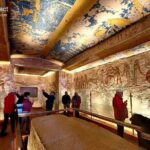
The Valley of the Kings is where Luxor turns from impressive to hypnotic. It’s part of the Theban Necropolis and home to tombs of New Kingdom pharaohs. The valley contains over 60 tombs, built mainly for rulers of the 18th, 19th, and 20th dynasties.
This place is known by another name too: the Valley of the Gates of the Kings. That poetic title fits the experience—because you’re stepping into a setting designed around ritual, power, and beliefs about the afterlife.
Among the most famous tombs is Tutankhamun’s, plus Rameses II and Hatshepsut are associated with tombs in this broader area. Even without going deep into tomb-by-tomb details, the sheer concentration of royal burials gives the whole valley weight.
The stop is listed at about 2 hours, and admission isn’t included. If you’re trying to control cost, you can think of this as the point where your separate entry fees kick in most noticeably. If you’re trying to control fatigue, this is also where you’ll want decent water habits and a slow, steady walking pace.
Karnak Temple: the scale hit you feel in your chest
Then you head to the Temple of Karnak complex, one of the world’s largest religious temple areas. It’s dedicated to Amun and his family—Mut and Khonsu—and it was developed and expanded across about 2000 years, from the Middle Kingdom to the Ptolemaic period.
Karnak’s best feature is its sheer size and how the complex layers time on top of time. The guide’s job here is huge: when someone connects what you’re seeing to how the temple functioned politically and religiously, Karnak stops being a collection of big ruins and becomes a system.
One element that’s singled out in the description is the largest hypostyle hall ever built. Even if you don’t memorize every architectural term, that means you’re walking into a space designed to dwarf you. It’s the kind of scale that makes you stop talking and just look up.
This stop is also about 2 hours, with admission not included. It’s worth planning your photo time here. Karnak is the sort of place where you can spend too long chasing images—so do a quick circuit for orientation, then linger where the columns and doorways pull your attention.
Luxor Temple: Ramses II guards the entrance
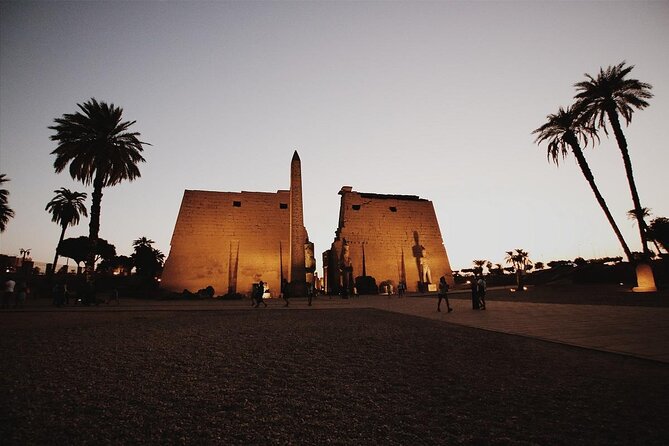
At the end of the day you visit Luxor Temple, a New Kingdom temple dedicated to Amun, Mut, and Khonsu. It’s linked historically to Karnak via an avenue of sphinxes, and it was once a major religious and political center.
Luxor Temple is often easier to process than Karnak because it feels more focused. The entrance is particularly known for its two massive stone statues of Ramses II. Those statues give you a clear visual anchor, so your brain can “locate” the monument quickly.
Inside, there’s also a hypostyle hall with towering columns and carved details, plus a sanctuary that was the most sacred part of the temple. One detail I like for helping you understand how the space was used is the presence of a sacred lake, used for purification by priests. It turns a set of ruins into something operational—like a building with routines, not just a stage set.
This stop is listed at about 2 hours, and admission isn’t included. By this point you’ll likely feel the day’s length, but Luxor Temple can be a satisfying finish because it’s a strong contrast to the West Bank sites you saw earlier.
Price and what you still pay on the ground
The package is listed at $99 per person, and that price covers a lot of heavy lifting: the hot air balloon experience, a qualified Egyptologist guide, air-conditioned transport, plus hotel pickup and drop-off.
But the fine print matters for how you budget. Entrance fees are not included, and that can change what the day costs once you’re on-site. One stop—the Colossi of Memnon—is specifically marked as free in the description, so you won’t pay there, but you should expect additional payments for places like Hatshepsut at Deir el-Bahari, the Valley of the Kings, Karnak, and Luxor Temple.
Tipping is also listed as not included. That’s not a “hidden fee” so much as a normal travel reality—plan to carry some small cash so you’re not scrambling at the end.
So is $99 good value? For many people, yes, because balloon rides plus a full-day guided loop with transport is the expensive part of the Luxor equation. The only catch is cost clarity: if you prefer to see your total upfront, build in time to pay on the day for site admissions.
Who this tour fits best
This is a strong match if you want a single, organized day that covers both sides of Luxor—West Bank highlights and East Bank monuments—without needing to plan routes.
It also suits history lovers who like being guided through the “why,” not just the “what.” In the notes tied to the experience, guides like Ahmed Hassan and Ahmed are often praised for staying with you through the route and explaining details in a way that makes the sites feel alive.
You might want to think twice if:
- You’re trying to keep total spending minimal, since entrance fees and tipping are extra
- You dislike early starts, because this is built around morning balloon flight timing
- You prefer a slower pace with fewer major stops in one go (this day is packed)
Should you book this hot air balloon plus Best of Luxor full day?
I’d book it if you want the classic Luxor combo: see the temples from the sky, then get the human-scale stories on the ground with an Egyptologist guide and comfortable transport. The structure of the day—balloon first, then a logical East/West progression—helps you feel like you’re getting the most out of your time.
I’d hesitate only if you’re very cost-sensitive and hate paying site admissions separately. In that case, check whether you’re comfortable with additional entry fees for multiple stops, because that’s the main variable.
If you like big-picture moments and you’re ready for a full day, this one is a practical way to make Luxor feel bigger than it is—without making you do any of the logistics yourself.
FAQ
How long is the hot air balloon flight?
The balloon ride is listed as about 45 minutes, as part of a full day that runs roughly 7 to 9 hours.
Does the tour include hotel pickup and drop-off?
Yes. Hotel pickup and drop-off are included.
Is breakfast included?
Yes. The package includes a light breakfast and tea.
What sites are included in the full-day sightseeing?
The tour includes Luxor Temple, Karnak Temple, Valley of the Kings, Hatshepsut Temple at Deir el-Bahari, and Colossi of Memnon.
Are entrance fees included?
No. Entrance fees are not included. Colossi of Memnon is marked as free in the stop details, but other sites are listed as not included.
Is tipping included?
No. Tipping is not included.
Is the tour private?
Yes. It’s listed as private, meaning only your group participates.
Can I cancel for a full refund?
Yes, you can cancel up to 24 hours in advance for a full refund. If you cancel less than 24 hours before the experience starts, the amount paid is not refunded.