Luxor feels like a movie set, but this tour adds the one view you can’t fake: a sunrise hot-air balloon drifting over both sides of the Nile. I like that the day is built around the East Bank and West Bank in one smooth flow, so you get the big-name temples without constantly changing plans. The second thing I really like is the practical support baked in—hotel pickup, a real Egyptologist guide, and even a professional photographer to help you capture the moments. One drawback to plan for: entrance fees aren’t included, so your final day cost depends on what you choose to pay at each site.
You’re also dealing with Egypt’s #1 weather variable: balloons don’t fly in poor conditions. The upside is that the operator notes you’ll be offered another date or a refund if the balloon can’t operate due to weather—but I still suggest you confirm the night before and keep your phone/WhatsApp ready, because there have been reports of last-minute cancellations causing a very long wait early in the morning.
In This Review
- Key Highlights to Know Before You Go
- Sunrise Balloon Over Luxor: The One View You’ll Remember
- How the Morning Works: Pickup, Boat Transfer, and Getting to the Balloon Area
- West Bank Stop: Colossi of Memnon in 30 Minutes
- Valley of the Kings: Where Every Tomb Has a Job
- Deir el-Bahari: Hatshepsut’s Temple and the Power of Design
- Karnak Temple Complex: Amun, Mut, and Khonsu—How to Make It Make Sense
- The Avenue of Sphinxes and Obelisks: Quick Stops That Actually Matter
- Luxor Temple: The East Bank Wrap-Up at 1.5 Hours
- Price and Value: What $190 Covers—and What You Still Need to Budget
- Comfort, Group Size, and the Photo/Guide Advantage
- Who Should Book This Tour (and Who Should Think Twice)
- Should You Book This Tour?
- FAQ
- What is the duration of the Luxor Full Day Tour?
- Is hotel pickup and drop-off included?
- How long is the hot air balloon ride?
- Is the hot air balloon entrance included in the price?
- Are entrance fees to temples included?
- Is breakfast included?
- How do you get to the West Bank for the balloon area?
- Is this tour private?
- What happens if the balloon can’t fly due to weather?
- Is confirmation provided after booking?
Key Highlights to Know Before You Go
- Sunrise balloon over Luxor (45 to 60 minutes in the air) gives you the best overview of the city’s layout.
- Motorboat transfer to the West Bank helps you start the day with less backtracking.
- Multiple UNESCO-level stops: Valley of the Kings, Hatshepsut at Deir el-Bahari, Karnak, and Luxor Temple.
- Professional photographer + Egyptologist guide means you’re not just wandering with a map.
- Comfort included: air-conditioned first-class luxury car, plus bottled water during the trip.
- Balloon “flight certificate” is included, which is a nice keepsake for the cost.
Sunrise Balloon Over Luxor: The One View You’ll Remember
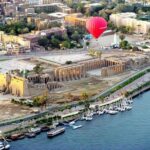
If you’ve ever seen Luxor photos, you’ve seen temples. But a balloon ride is different. From above, you understand why Luxor is so famous: the Nile shapes everything, the temple walls sit in a rhythm of centuries, and the West Bank feels like its own separate world once you’re up in the sky.
I especially like that this tour is timed for the morning. The light is softer, the heat hasn’t turned into a full-time job yet, and the air feels calmer for ballooning. You also get that classic balloon moment—quiet, floating, then the crew guiding you toward a safe landing.
In a review tied to this experience, the balloon pilot is mentioned by name—captain Adel—and the tone is exactly what you want to hear on a first-time balloon: the crew made people feel safe and secure from the start. That matters. Even if the flight is short, your mindset at takeoff shapes the whole experience, and this one is set up to get you relaxed fast.
You can also read our reviews of more tours and experiences in Luxor.



How the Morning Works: Pickup, Boat Transfer, and Getting to the Balloon Area
The day starts very early. You’ll be picked up from your hotel and travel in a first-class air-conditioned luxury car. That may sound like a comfort perk, but in Luxor, early morning is when comfort becomes practical—cool air in the van helps you stay human before the balloon.
After pickup, you’ll head toward the Nile River area for the transfer. The program describes a motorboat ride to the West Bank, with soft drinks before you go to the balloon takeoff area. That sequence is smart because it reduces the need for long road transfers at the time of day when everything feels tight and rushed.
Then it’s balloon time: you’re told the ride is 45 minutes, with the overall experience listed as 45 to 60 minutes. Either way, that’s enough time to look, breathe, and take photos without feeling like you’re trapped in a schedule.
A note that’s worth respecting: balloon confirmations are said to be received at booking, but weather is still the boss. Keep your phone accessible and double-check that your pickup details match where you’re staying. You’re also smart to have breakfast-nearby plans in case timing shifts, since the tour includes a light breakfast with tea.
West Bank Stop: Colossi of Memnon in 30 Minutes
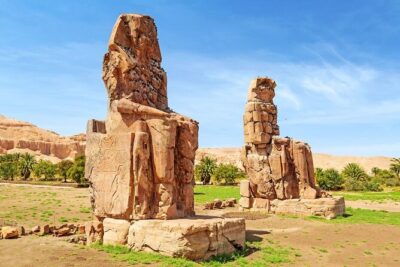
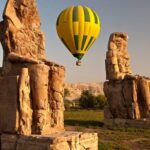
The day’s first temple-world moments on the West Bank come at the Colossi of Memnon—two massive seated statues from around 1350 BC. These aren’t tomb interiors; they’re the giants that remain after a larger temple complex has vanished over time.
I like this stop because it’s quick and grounding. You arrive, you orient yourself, and you walk away with a clear image of what Amenhotep III wanted to project across centuries. The statues are said to depict Amenhotep III, facing eastward toward the Nile, with carved figures on the throne that include his wife Tiye and his mother Mut (the program lists names and details). Even with limited time, it gives you a story to carry into the Valley of the Kings.
Practical detail: this stop is listed as included for admission, and the stop time is about 30 minutes. That’s perfect if you want a history hit without a long walk in the morning heat.
Valley of the Kings: Where Every Tomb Has a Job
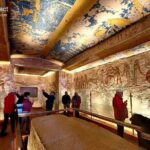
Then you hit the big one: the Valley of the Kings. This is the West Bank’s star museum without walls—used for royal tombs for centuries, and still a living reminder that ancient Egypt treated death as a whole system, not a single event.
The program frames the valley as being used roughly over a long stretch of time, with royal tombs spanning multiple dynasties. It also highlights that the valley is divided into two main valleys: the Eastern Valley and the Western Valley. That matters because it helps you understand why the area feels like it has “zones,” not just one straight line of tomb entrances.
You’ll have about 2 hours at this stop, and entrance fees are not included. That’s the part I’d plan for in your budget. It also affects how you approach your time: if you want to see one tomb in depth, you can. If you want to just get a sense of the valley layout, you can. Two hours is enough for either style if your expectations are clear.
One more practical tip: wear shoes that handle uneven ground. The Valley of the Kings is ancient, not tidy. If you want the photos, you’ll be moving—sometimes slowly, sometimes with stairs or uneven steps.
Deir el-Bahari: Hatshepsut’s Temple and the Power of Design
Next is the Temple of Hatshepsut at Deir el-Bahari, typically the stop where people stop saying Luxor is only about pyramids and starts saying Luxor is about architecture and ambition.
This temple is known as Hatshepsut’s mortuary temple from the 18th Dynasty, and the program calls out that it’s one of the best remaining temples, built around 3500 years ago. I also like the way it’s described: the temple uses a distinctive layout compared with many other Egyptian temples—three successive floors with terraces, built of limestone.
For you, that design choice is the whole point. As you walk, you’re reading the structure like a set of steps toward authority. And Hatshepsut’s story helps anchor it. The tour notes her as the only pharaonic woman to reign in ancient Egypt, and the temple is literally how that legacy took physical form.
This stop is about 1 hour, and entrance fees are not included. That can be a surprise cost, but it’s also one of the reasons this tour feels like good value: you’re paying once for the big day flow, then you choose your paid entries on top of that.





Karnak Temple Complex: Amun, Mut, and Khonsu—How to Make It Make Sense
Karnak is the temple you’ve probably heard about. But here’s what makes it worth doing with a guide: it’s not one temple; it’s a complex with construction stretching from the pharaonic era all the way toward the Roman period.
The program specifically ties Karnak to the divine triad: Amun (Amun Ra), his wife Mut, and their son Khonsu. It also notes that each has its own associated temple within the complex. That simple structure helps you make sense of what can feel like a thousand walls and columns if you’re walking on your own.
You’ll have about 2 hours at Karnak, and admission is not included. The time is enough if you use it right: focus on the main axes and the big worship spaces rather than trying to see everything. The guide helps you prioritize so you don’t end up exhausted and still unsure what you saw.
The Avenue of Sphinxes and Obelisks: Quick Stops That Actually Matter
After Karnak, the itinerary includes a set of shorter photo-and-perimeter stops: the obelisk of Queen Hatshepsut and Thutmose I, then the Avenue of Sphinxes, and then another obelisk of Thutmose I. Each is listed as free and roughly 10 minutes.
These may sound like filler, but I like them because they connect two anchors: Karnak and Luxor Temple. The program describes the Avenue of Sphinxes as stretching between the temples in the past (about 3 km originally) and notes that today only a few hundred meters remain visible. Seeing what’s left is still powerful—because you can picture what the full processional route once looked like.
And the obelisks add a sense of vertical scale. Even at brief stops, they break up the long walking day and give your eyes a new angle.
Luxor Temple: The East Bank Wrap-Up at 1.5 Hours
Finally, you end at Luxor Temple. This one sits on the East Bank and is described as a large temple complex founded around 1400 BC, associated with worship of Amun-Ra, Mut, and Khonsu—again, the Theban triad.
The tour notes major building phases during the reigns of kings like Amenhotep III and Ramses II, plus additional shrines set up by Thutmose III. What that means for you: Luxor Temple isn’t only ancient; it’s layered. Different rulers left their fingerprints on the same sacred space over time.
You’ll have about 1.5 hours, and entrance fees are not included. I find this time window is just right. It gives you enough space to walk the core areas, look up, and feel the scale without rushing through.
If you’re a first-time Luxor visitor, this end point feels like a clean finish. Your eyes have already learned the Nile’s geography. Now the temples feel less like random stops and more like a connected story.
Price and Value: What $190 Covers—and What You Still Need to Budget
The listed price is $190 per person for a tour that runs about 7 hours. Here’s how I’d judge the value, without sugarcoating it.
What’s genuinely “worth the money” here:
- Hotel pickup and drop-off
- Sunrise balloon ride with entrance included (plus a flight certificate)
- A real Egyptologist guide
- A professional photographer
- Air-conditioned luxury car
- Breakfast with tea
- Bottled water during the trip
- Guided visits to major sites across both sides of the Nile
What isn’t included:
- Entrance fees to the temples and monuments at stops like the Valley of the Kings, Hatshepsut, Karnak, and Luxor Temple
So the value depends on your final entrance-fee total. If you plan to visit several paid sites (and this itinerary pushes you toward that), you’re likely getting a solid deal because the biggest headline—ballooning—is already built into the price.
One more practical value note: the itinerary includes soft drinks during the boat transfer and mentions a light breakfast. In Luxor, food timing matters. Doing balloon first and having something in your stomach helps you avoid the worst-case scenario of being cranky and hungry while you wait for gates and timings to line up.
Comfort, Group Size, and the Photo/Guide Advantage
This tour is described as private for your group: only your group will participate. That’s a meaningful comfort upgrade compared with the big cattle-car style tours, especially when you’re dealing with a sunrise schedule where everyone’s patience is thin.
You’ll travel in a qualified Egyptologist guide’s care, plus a professional photographer. Even if you’re the type who doesn’t care about photos, this can help you get the right shots at the right angles, especially at places like Karnak and Luxor Temple where perspective makes a huge difference.
Also included is mobile ticketing. That matters because it reduces friction at check-in points. And the tour offers group discounts, which can be worth asking about if you’re traveling with friends.
Who Should Book This Tour (and Who Should Think Twice)
This is a great fit if:
- You’re seeing Luxor for the first time and want the big West Bank + East Bank hits in one day
- You want the sunrise balloon without spending time piecing together multiple providers
- You like guided context—temples make more sense when someone explains what you’re looking at
You might think twice if:
- You’re trying to minimize total spend and don’t want to add multiple paid entrances
- You strongly dislike early mornings (this is a dawn-day plan, by design)
- You’re not comfortable with weather dependence, since ballooning is weather-requires-good-conditions
If you’re traveling with mobility concerns, you should still consider the uneven outdoor terrain at the West Bank stops. The program says most travelers can participate, but the actual walking and ground conditions matter in practice.
Should You Book This Tour?
I’d book it if you want Luxor’s two best strengths in one run: the balloon perspective and the temple storytelling across both sides of the Nile. The inclusion of pickup, balloon flight entrance, breakfast, and a guide/photographer combo makes it feel efficient and value-driven.
Just go in with two realistic expectations:
1) Entrance fees are on you, so check your budget before you fall in love with every paid tomb and temple stop.
2) The balloon is weather-dependent. I’d keep your communication channels open and confirm details close to departure.
If you handle those two points, you’ll come away with photos, context, and a morning view that’s hard to top.
FAQ
What is the duration of the Luxor Full Day Tour?
The tour runs about 7 hours (approx.).
Is hotel pickup and drop-off included?
Yes, hotel pickup and drop-off are included.
How long is the hot air balloon ride?
The sunrise balloon ride is described as about 45 minutes, with the overall hot air balloon activity listed in the program as around 1 hour.
Is the hot air balloon entrance included in the price?
Yes, the hot air balloon entrance is included.
Are entrance fees to temples included?
No. Entrance fees are not included in the package.
Is breakfast included?
Yes. A light breakfast with tea is included.
How do you get to the West Bank for the balloon area?
The program includes a motorboat transfer to the West Bank, with soft drinks provided.
Is this tour private?
It’s described as private for your group, meaning only your group will participate.
What happens if the balloon can’t fly due to weather?
If it’s canceled due to poor weather, you’ll be offered a different date or a full refund.
Is confirmation provided after booking?
Confirmation is stated as received at the time of booking.