REVIEW · LUXOR
From Luxor:7-Night Luxury Nile River Cruise & Hot Air Balloon
Book on Viator →Operated by Nice tours · Bookable on Viator
Luxor wakes up differently when you add a sunrise hot air balloon to the mix. This Nile cruise stacks major Egyptian sights with smooth pacing, a private Egyptologist guide, and the kind of day-by-day structure that keeps you from feeling lost. You also get boat time that actually feels like a break, not just transportation.
Two things I really like: the West Bank temple day is tightly organized, so you hit the big monuments without wasting hours figuring out logistics. Then there’s the balloon ride at first light, when Luxor looks almost unreal before the tour groups and traffic show up. One possible drawback: entrance fees aren’t included, so budget for those add-ons at a few key stops.
In This Review
- Key highlights (quick hits before you decide)
- Why a Nile Cruise With a Balloon Feels Smarter Than One-Off Tours
- Day 1 on the West Bank: Valley of the Kings, Hatshepsut, and Colossi of Memnon
- Valley of the Kings: the tombs that turn names into places
- Deir el-Bahari and Hatshepsut’s temple: powerful, and surprisingly personal
- Colossi of Memnon: big stone faces, short stop, good payoff
- Luxor old market time: a taste of everyday city life
- Sunrise Balloon and the Cruise Glide Toward Esna
- What makes the balloon worth it
- Then: cruise time that feels like a breath
- Edfu by Horse Cart and Kom Ombo’s Two-God Temple
- Edfu temple: largest Ptolemaic temple energy
- Kom Ombo: the temple built for contrasts
- Crowds: what to do if it feels busy
- Aswan High Dam, Philae Island, and Nubian Market Time
- Philae Island and the Temple of Isis: a strong mix of nature and stone
- The High Dam: modern engineering meets ancient river logic
- Nubian influence: a vibe shift you’ll feel immediately
- Abu Simbel and the Nubian Village: One Big Day You’ll Be Glad You Have
- Abu Simbel Temple Complex: long, powerful, and worth the distance
- Nubian Village: the trip’s human side
- Day 6 and Day 7: The Leisure Days That Actually Help
- Finish Strong on the East Bank: Karnak and Luxor Temple
- Karnak Temple: the biggest temple complex in the world
- Luxor Temple: the story continues into the night without actually waiting that long
- Drop-off at the end
- Price and Value: What You Get for $900 (and what adds cost)
- Who This Tour Fits Best (and who might want a different style)
- Should You Book the Luxor Nile Cruise With Balloon?
- FAQ
- FAQ
- What is the duration of the Luxor 7-night Nile cruise with hot air balloon?
- Where does the tour start in Luxor?
- Does the tour include a hot air balloon ride?
- Are entrance fees included for temples and tombs?
- What sites does the tour cover?
- What is included with the cruise?
- Is pickup and drop-off included?
- Can I cancel for a full refund?
Key highlights (quick hits before you decide)
- Sunrise balloon over Luxor: big views, early start, and that first slice of light over the Nile Valley.
- Egyptologist-guided Temple days: you’ll get story and context, not just photo stops.
- Horse and carriage at Edfu: a traditional way to get to the temple, with a fun change of pace.
- Abu Simbel included on the schedule: it’s a long, high-effort day that ends up being a trip-maker.
- Aswan Nubian village time: you get off the boat and into local life, not only monuments.
- Two different Luxor banks: West Bank tombs first, then East Bank temples to close.
Why a Nile Cruise With a Balloon Feels Smarter Than One-Off Tours
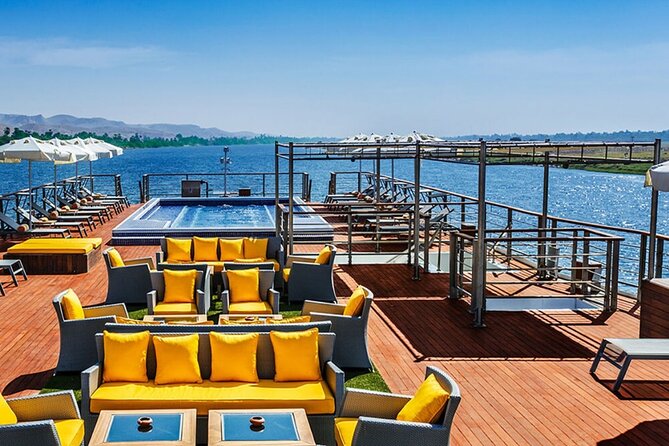
Nile cruises work best when they do two jobs: they move you between regions, and they turn sightseeing into a rhythm. This one does that. Your days are planned around major sites, but you’re not shuttling cross-country in a constant gridlock. The boat sections give your brain time to reset.
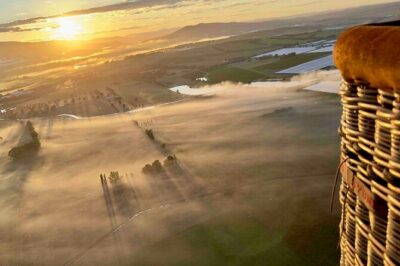
Now add the balloon. Most people go to Luxor for the temples and tombs. The balloon turns the trip into something visual and atmospheric. Early light changes everything—color, shadows, scale. You see why these ancient places were built where they were, right where the river cuts through the desert.
Also, you get professional private guiding on the key cultural days. In the reviews, names like Mary Mena, Safa, Ayman, and George show up again and again—people praising clear English and a good balance between facts and pace. You should expect explanations that help you recognize what you’re seeing (kings, pharaohs, temple layouts), not just read captions off stone.
You can also read our reviews of more tours and experiences in Luxor.



Day 1 on the West Bank: Valley of the Kings, Hatshepsut, and Colossi of Memnon
Your first day is all about Luxor’s West Bank, the side tied to the tombs and royal monuments. It’s the right opener, because once you understand how the West Bank functioned as a burial landscape, the rest of the trip starts clicking.
Valley of the Kings: the tombs that turn names into places
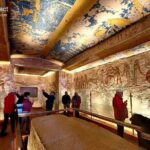
You’ll head to the Valley of the Kings, visiting major royal tombs including those of Ramesses III, Ramesses VI, and Merenptah. There’s also time for the tomb entrance connected with Tut-Ankh-Amon. Even if you know the legends, being there changes how you picture them—tight corridors, carved scenes, and the sense of design meant for the afterlife.
The important practical note: entrance tickets aren’t included here, so plan for add-on fees.
Deir el-Bahari and Hatshepsut’s temple: powerful, and surprisingly personal
Next comes the Temple of Hatshepsut at Deir el Bahari. This is one of those sites where you feel the scale fast. Hatshepsut is remembered as Egypt’s female ruler, and the temple architecture reflects confidence and legitimacy—plus it’s a beautiful setting against the cliffs.
Again, entrance fees are not included, so treat this as a must-pay stop when you budget.
Colossi of Memnon: big stone faces, short stop, good payoff
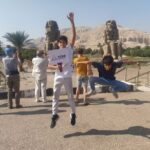
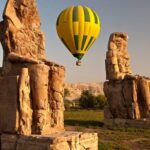
You’ll then see the Colossi of Memnon, connected to Amenhotep III’s mortuary temple. It’s shorter, but it’s worth it: these massive stone figures are an instant visual hook. For your photos, you’ll get that perfect “I can’t believe this is real” moment without spending the whole afternoon on one spot.



Luxor old market time: a taste of everyday city life
After monuments, you’ll return toward Luxor city for a look around the old market area. This isn’t a full shopping spree; it’s a way to get your bearings and see how the tourist world sits next to daily life.
Sunrise Balloon and the Cruise Glide Toward Esna
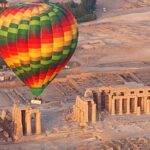
Day 2 is the one people remember. The balloon is scheduled for early before sunrise, which means you’re up while the world is still quiet. You’ll ride over Luxor city, then head back toward your boat.
What makes the balloon worth it
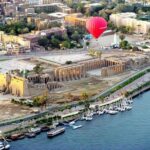
You’re not just buying a ticket for a ride. You’re buying perspective. From the air, the Nile Valley stops being a map and becomes a shape: river line, settlements, desert edges, and the way temples and tombs fit into that geography.
In the reviews, the balloon view gets called out again and again—people describing it as the standout moment even among a long list of highlights. If you want one photo that looks like it belongs in a documentary, this is the one.
Then: cruise time that feels like a breath
After the balloon, you sail through ancient villages and islands and arrive in Esna in the evening. That’s the other value of the package: you’re not racing from stop to stop for every single hour.
One more practical thought: a balloon ride is weather-dependent in many places. The tour includes the ride, but you should still plan to be flexible with your schedule and early wake-up.
Edfu by Horse Cart and Kom Ombo’s Two-God Temple
This is where the itinerary shifts from Luxor-style West Bank grandeur to a more “temple town” feel.
Edfu temple: largest Ptolemaic temple energy
In the morning you’ll arrive in Edfu and go to the Edfu Temple via a traditional horse and carriage ride. The ride gives you a little local flavor and a break from modern transport. Once there, this is a major temple complex, known as one of the biggest Ptolemaic temples in Egypt. You’ll want comfortable shoes and patience—the details are dense and the scale is hard to capture in one quick lap.
Entrance fees are not included here, so budget accordingly.
Kom Ombo: the temple built for contrasts
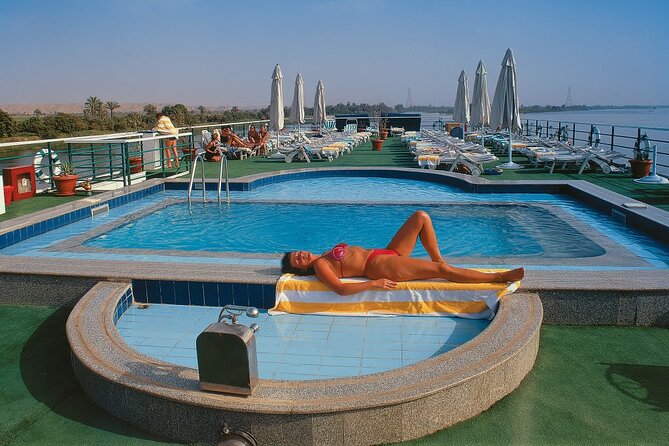
In the afternoon you continue to Kom Ombo. You’ll have time to enjoy the cruise on the boat’s sun deck with a refreshing drink, then visit a temple dedicated to two gods. The coolest part is how the temple design reflects those contrasts. It’s less about one single hero sculpture and more about symmetrical storytelling across the space.
Again, entrance fees aren’t included.
Crowds: what to do if it feels busy
Some people note that temple stops can be crowded when multiple boats arrive around the same time. That’s normal on this river route. Your best move is simple: take the first minutes to get your bearings, then slow down for a second round. Guides often help you time the visit so you see the important parts without getting swallowed by the group rush.
Aswan High Dam, Philae Island, and Nubian Market Time
Aswan adds a different mood. It’s not just monuments; it’s Nubian culture and riverfront life.
Philae Island and the Temple of Isis: a strong mix of nature and stone
After breakfast, you’ll tour Philae Island and visit the Temple of Isis. This stop often feels more cinematic than you expect, because it blends island setting with monumental carvings. You get plenty to look at and enough context from the Egyptologist guide to keep it from being a blur.
Entrance tickets aren’t included.
The High Dam: modern engineering meets ancient river logic
Then you’ll see the Aswan High Dam. It’s a useful stop because it gives you the modern reason for why the Nile looks the way it does today—electricity, regulation, and how the river’s behavior affects life along it.
This day also includes free time to explore Aswan and its ancient market area. Even a short market window can help you understand the city beyond monuments.
Nubian influence: a vibe shift you’ll feel immediately
You’ll notice how Nubian culture shows up through clothing, music, and general warmth in how people interact. It’s not a separate “tour within a tour.” It’s woven into the day, especially if you use your free time to wander with intent rather than just drifting.
Abu Simbel and the Nubian Village: One Big Day You’ll Be Glad You Have
If there’s one day that feels like effort, it’s this one—and it’s also one of the most rewarding.
Abu Simbel Temple Complex: long, powerful, and worth the distance
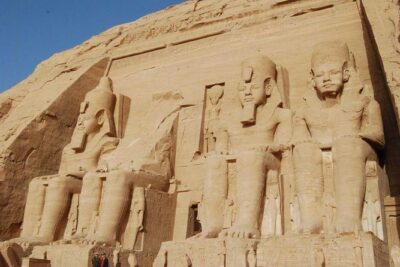
You arrive at Abu Simbel in the morning and spend a big block of time exploring the temple complex. It’s one of the world’s most important ancient wonders. The scale can feel unreal at first, but the guide’s explanations help you see it as deliberate design rather than just massive stone.
Entrance fees aren’t included, so keep that in your budget planning.
Nubian Village: the trip’s human side
Afterward, you return to your Nile cruise for lunch, then head out for a Nubian village visit. This is where the day turns from monuments to people. You’ll have around two hours to experience local life, then go back to the ship.
Some tour moments like this are quick in other packages. Here, it’s given enough time to actually feel like you stepped off the boat and into a real place.
Day 6 and Day 7: The Leisure Days That Actually Help
Most cruise itineraries either cram every hour or give you time that feels pointless. These are different because the “at leisure” blocks are what makes the trip comfortable.
Day 6 is a full day on board at your own pace. Day 7 is also leisure time while cruising back toward Luxor. That means you can recover from early starts (like the balloon) and still enjoy the ship’s daily rhythm: scenery changes outside your window, meals you don’t have to chase across town, and the simple fact of being on the Nile.
This is also where you can choose your own pace. If you want to read, nap, take deck photos, or just watch the shoreline slide by, this part of the itinerary supports that.
Finish Strong on the East Bank: Karnak and Luxor Temple
You end with classic East Bank Luxor power.
Karnak Temple: the biggest temple complex in the world
After breakfast you’ll tour Karnak Temple, described as the biggest temple complex in the world. Karnak can be overwhelming if you don’t have a guide, because it’s not one building—it’s layers of structures and stories. With an Egyptologist, you’ll be able to connect what you’re looking at to who built it and why.
Entrance fees aren’t included.
Luxor Temple: the story continues into the night without actually waiting that long
Next is Luxor Temple, built by Amenhotep III in the 18th Dynasty and completed by Ramses (as described in the itinerary). This stop feels more approachable than Karnak because it’s easier to see and understand in a shorter window.
Entrance fees aren’t included again.
Drop-off at the end
At the end of the tour, you’ll be dropped off back at your accommodation or at the airport in Luxor.
Price and Value: What You Get for $900 (and what adds cost)
At $900 per person, the headline value here is not just the cruise. You’re getting a 7-night 5-star Nile cruise with meals, a cabin with facilities, private transportation, and a professional private Egyptologist guide. On top of that, the itinerary includes the hot air balloon ride, horse and carriage for Edfu, plus a structured run through Luxor, Esna, Edfu, Kom Ombo, Aswan, Abu Simbel, and back.
That balloon and Abu Simbel scheduling alone can be expensive when booked separately. So the package makes sense if you want fewer moving parts and more “everything is handled” comfort.
Now the costs to plan for: entrance fees aren’t included. This matters because several stops are major ticket items. Also, gratuities are optional.
If you keep those add-ons in mind, the overall value looks strong, especially because you’re not just being transported—you’re being guided.
Who This Tour Fits Best (and who might want a different style)
This is a great match if you want:
- A temple-focused trip that still includes human-scale time (the Nubian village, market walks).
- Comfort and pacing. You’re not moving every hour.
- One main guide running the big story across days, which helps everything connect.
It may be less ideal if you:
- Prefer total freedom with no fixed structure. This tour is scheduled and guided.
- Hate early wake-ups. The balloon means an early start.
- Are very sensitive to crowding at popular sites. Temple stops can get busy when boats arrive together.
One small reality check from past experiences: some people found the boat rooms a bit older while still basically comfortable. If cabin age matters a lot to you, I’d still book, but I’d set expectations that “functional and clean” is the main promise, not luxury interiors in a new-hotel sense.
Should You Book the Luxor Nile Cruise With Balloon?
I think you should book this if you want the classic Egypt highlights with a single, clean package plan. The sunrise balloon is the kind of experience you can’t recreate on your own once you’re there, and it adds a totally different layer to the trip beyond stone temples.
Also, the guiding quality seems to be the real engine. Names like Mary Mena, Safa, Ayman, George, Issa, and Adam show up in reviews as people who deliver clear explanations and good pacing. Even better, some guides are described as flexible with needs on the day, which matters when you’re balancing photos, questions, and timing.
If you’re choosing between doing Luxor and Abu Simbel as separate trips versus bundling them into one cruise route, this is the more efficient way to go. You’ll see a lot, but you’ll also get the Nile rhythm in between.
If you hate uncertainty around entrance fees, just plan for them up front. Do that, and this package becomes a very solid way to experience Egypt’s most famous sites without turning your holiday into logistics.
FAQ
FAQ
What is the duration of the Luxor 7-night Nile cruise with hot air balloon?
The tour is listed as 8 days (approx.), including 7 nights on the Nile cruise.
Where does the tour start in Luxor?
The start time is listed as 11:00 am in Luxor.
Does the tour include a hot air balloon ride?
Yes. The hot air balloon ride is included.
Are entrance fees included for temples and tombs?
No. Entrance fees are not included. The itinerary notes admission tickets as not included for multiple sites.
What sites does the tour cover?
The itinerary includes stops such as the Valley of the Kings, Temple of Hatshepsut (Deir el-Bahari), Colossi of Memnon, Karnak Temple, Luxor Temple, plus Edfu, Kom Ombo, Aswan, Philae Island, Abu Simbel, and a Nubian village visit.
What is included with the cruise?
The tour includes a 5-star 7-night Nile cruise, meals (breakfast, lunch, dinner), cabin with all facilities, and sites mentioned in the programme, along with guide services and transportation.
Is pickup and drop-off included?
Yes. Airport/hotel pickup and drop-off is included.
Can I cancel for a full refund?
Yes. Free cancellation is offered up to 24 hours in advance of the experience start time for a full refund.