REVIEW · LUXOR
Best Of Luxor Sightseeing in 2-Days including Hot Air Balloon and Tours
Book on Viator →Operated by Egypt Lifetime Tours · Bookable on Viator
Waking up early for a hot air balloon in Luxor is the kind of plan that changes how the rest of the trip feels, and this tour pairs that moment with serious temple time on both banks. I especially love the East and West Bank mix plus a real Egyptology guide who helps you understand what you’re seeing instead of just pointing at it. One thing to think about: entrance fees are not included, so your final day-by-day total will depend on what you pay at each site.
On the balloon side, you get a 30 to 40 minute ride over the monuments and Nile-side city, with a safety intro before takeoff. On the history side, you’ll visit the Valley of the Kings, Queen Hatshepsut’s mortuary temple, and the big hitters at Karnak and Luxor Temple. If you’re hoping to bring a DSLR, that’s the drawback worth knowing early, because professional camera gear is not allowed for balloon security.
In This Review
- Key highlights
- Your early-morning balloon moment over Luxor’s monuments
- Valley of the Kings: picking the best tombs on the West Bank
- Hatshepsut’s mortuary temple: one female ruler, 22 years of reign
- Colossi of Memnon: a quick photo stop with a big presence
- Karnak Temple: the 60-acre complex that explains Luxor
- Luxor Temple: statues and an obelisk you can’t ignore
- Price and what you’re really getting for $180
- Practical logistics: timing, group size, and comfort
- Guides in the real world: what to expect from the narration
- Who this Luxor tour suits best
- Balloon restrictions you should know ahead of time
- Should you book Best Of Luxor Sightseeing in 2-Days?
- FAQ
- What’s included in the $180 per person price?
- Are entrance fees for the temples included?
- When do you get picked up for the hot air balloon ride?
- How long is the hot air balloon flight?
- Who can’t join the hot air balloon trip?
- What happens if the balloon is canceled due to bad weather?
- Can you bring a professional camera on the balloon?
- Do you get hotel pickup and drop-off in an A/C vehicle?
- How large is the group for this tour?
Key highlights
- Hot air balloon ride timed for early light over Luxor’s main sites
- Valley of the Kings tomb selection with your guide helping you choose the best open tombs
- Hatshepsut’s mortuary temple with context on her unusual 22-year reign
- Karnak Temple at huge scale, touring a complex around 60 acres
- AC vehicle transfers plus hotel or Nile Cruise pickup and drop-off
Your early-morning balloon moment over Luxor’s monuments
This tour is built around one big payoff: flying when Luxor is still quiet. You’re picked up around 5:00 am for the balloon trip (the exact time can shift with availability), then you transfer down to the Nile. From there, you’ll take a motorboat across, followed by another transfer to the takeoff area.
Before you fly, the balloon captain gives a brief intro to safety procedures. That matters because the experience is controlled but not complicated—you just need to listen, dress for early morning chill, and be ready when they call you in.
The flight itself runs about 30 to 40 minutes, and it’s truly the way to connect the dots between the temples you’ll see later. From the air, Luxor looks like a planned city of monuments, not just a collection of separate stops. You also get that classic aerial view over the Nile-side city, which is hard to recreate from the ground.
One practical note that affects your packing: a professional camera isn’t allowed on the balloon, but you can use your cellphone for photos. So bring a fully charged phone, and consider a backup power bank if you tend to use lots of video.
You can also read our reviews of more tours and experiences in Luxor.



Valley of the Kings: picking the best tombs on the West Bank
On the first day, the tour drives you to the West Bank about 40 minutes from Luxor. You start at the Valley of the Kings, where New Kingdom pharaohs carved tombs into the mountains. The idea was protection through concealment—tombs were hidden in rock, with the hope that treasures and mummies would stay safe from time, thieves, and chaos.
You’ll have time to visit 3 open tombs. Here’s where a guide earns their keep: the guide helps you choose which tombs are the best fit in the time you have. This saves you from the classic mistake of rushing through whatever’s closest or available without understanding what’s worth your attention.
You’ll spend about 1 hour 30 minutes at the Valley of the Kings, and you should plan that admission fees are on you (paid by card). If you’re sensitive to crowds, it helps to go early, and you are, because the day starts around 8:00 am.
Tip for first-timers: don’t try to read every wall like it’s a textbook. Instead, watch for the big themes your guide points out—because when you know what you’re looking at, tombs stop feeling like random rooms and start feeling like planned storytelling.
Hatshepsut’s mortuary temple: one female ruler, 22 years of reign
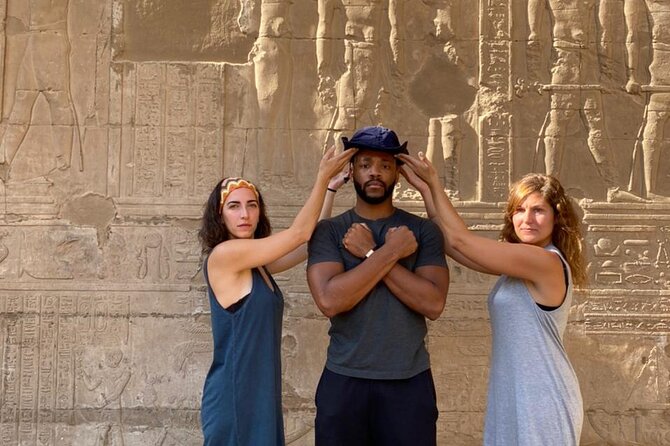
Next up is the Temple of Hatshepsut, the mortuary temple of the queen who ruled as a sole pharaoh. This stop is one of the best examples in Luxor of how political power can show up in stone—through scale, symbolism, and the way the architecture frames authority.
You’ll spend about 1 hour 30 minutes here. Your guide explains Hatshepsut’s story, including the relationship with her nephew and how she managed to rule for 22 years. That context matters, because otherwise the temple can feel like just another set of columns and carvings.
If you like Egyptology that connects biography to buildings, you’ll appreciate this stop. It’s not only about art. It’s about messaging—who gets to claim legitimacy, and how monuments help do the convincing.
As with other sites, entrance fees are not included, so have your card ready before you get to the ticket point.
Colossi of Memnon: a quick photo stop with a big presence
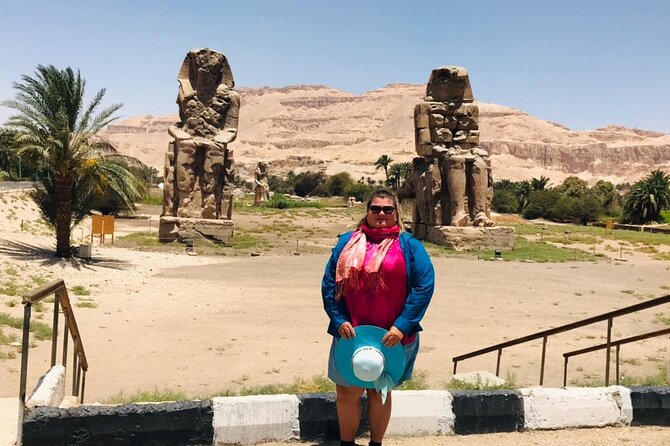
After Hatshepsut, you’ll make a short stop at the Colossi of Memnon—the gigantic statues of Pharaoh Amenhotep III. This is a 10-minute photo break, so don’t treat it like a full sightseeing moment.
Even in a few minutes, the statues work because they’re massive and strangely calm-looking. They signal a time when rulers built to outlast their own lifetimes. It’s also a nice reset between temples, especially when you’re touring in the heat and your day is starting to stack up.
Because it’s brief, this stop is best for getting your bearings and getting a couple of solid photos—then moving on to the next monument with fresh energy. Admission is listed as free here, which is a nice little bonus.
Karnak Temple: the 60-acre complex that explains Luxor
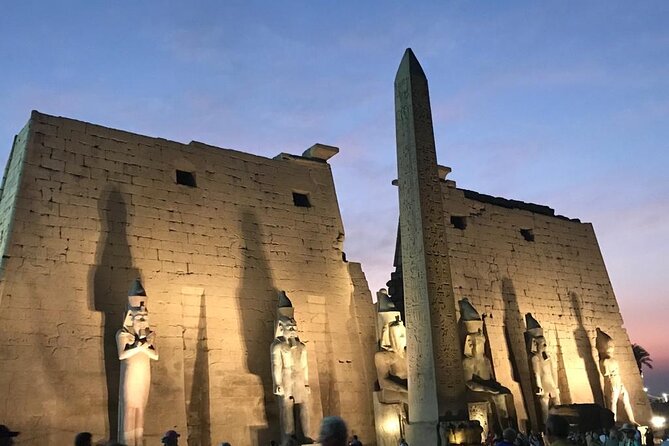
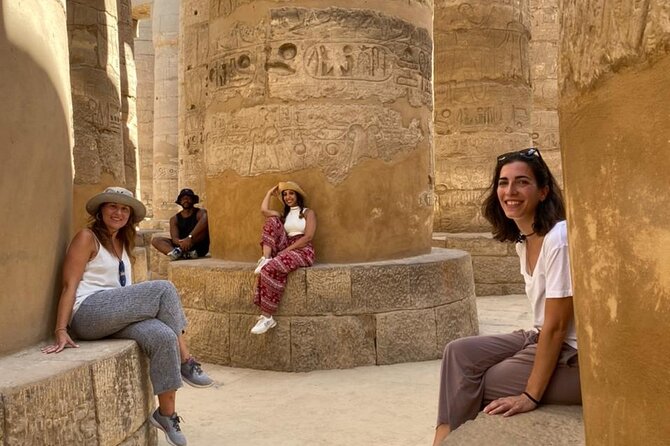
Day two brings you to Karnak Temple, described as the largest temple in the world and covering about 60 acres. That size can mess with your sense of time, so the guide’s role becomes even more important. Without guidance, Karnak can turn into a long walk punctuated by landmarks.
You meet your guide around 8:30 am and tour for about 1 hour 30 minutes. You’ll hear stories tied to kings and gods of the temple, which keeps the visit from turning into a pure “spot-the-column” exercise.
A key value here is that Karnak helps you understand Luxor as a whole. Once you grasp the logic of what was built, when, and why, the later stop at Luxor Temple clicks more easily.
Again, admission fees are not included and you pay them by card. Also, wear comfortable shoes—Karnak is big, and the pace is mostly about moving between highlights.





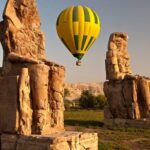
Luxor Temple: statues and an obelisk you can’t ignore
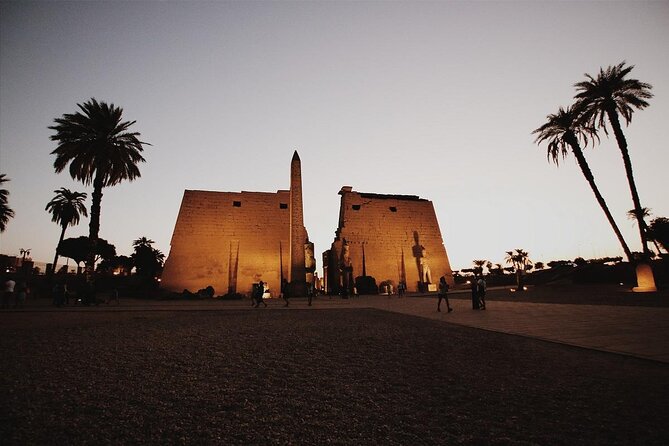
After Karnak, you head to Luxor Temple, where you’ll have about 1 hour 30 minutes. This is the part of the circuit that feels more immediately photogenic, with its huge statues and the obelisk that gives the complex its strong focal points.
The guide helps you frame what you’re seeing so it doesn’t read like random grandeur. You’ll get plenty of chances to take pictures in front of major features, so it works well if you like your history with a side of visuals.
At the end, you’re transferred back to your hotel in Luxor.
As always in this tour, entrance fees are not included, so plan on paying on-site.
Price and what you’re really getting for $180
The price is $180 per person and the average booking happens around 7 days in advance. That’s a useful planning window because Luxor can sell out—especially for balloon slots.
What makes this good value is that the package covers the expensive logistics: all transfers and hotel pickup and drop-off in an air-conditioned vehicle, plus a professional English-speaking Egyptologist guide for the sightseeing days and the balloon ride time window (30 to 40 minutes).
What is not included is also important:
- Entrance fees to the sights
- Tipping for guide and driver
- Food and beverages (lunch is optional)
- Hotel accommodation
So think of the $180 as the “experience and transportation” part. Then add your site tickets and any meals you choose. If you’re trying to keep costs down, you can still do it—just don’t assume the listed price covers admission.
Also, note the balloon rules can affect your packing costs more than you’d expect. If you were planning to bring professional camera equipment, you’ll need to adjust because it isn’t allowed for security reasons.
Practical logistics: timing, group size, and comfort
This tour runs like a smooth machine, but it’s early. Day one starts around 8:00 am pickup from your hotel or Nile Cruise. Day two is earlier for the balloon: pickup around 5:00 am.
They keep things manageable with an AC vehicle for temple transfers, and you stay in a small group—maximum 20 travelers. That size is helpful. You’re not stuck with a massive crowd that stretches your time at each stop.
For the balloon day, the flow is:
1) early pickup
2) transfer to the Nile, motorboat crossing, then transfer to takeoff area
3) flight around 30 to 40 minutes
4) return to your hotel for breakfast
5) guide-led temple tour starting around 8:30 am
The tight schedule is the tradeoff for getting a balloon flight and two major temple days. If you’re the type who hates early starts, this might not be your ideal match.
Comfort tips that come straight from how this works:
- Dress in layers for early morning balloon weather, then remove as the day warms up.
- Keep your cellphone charged for balloon photos since that’s what’s allowed.
- Bring water, and plan your meals knowing food isn’t included.
Guides in the real world: what to expect from the narration
The big difference between a good Luxor tour and a just-okay one is how the guide explains what you’re looking at. This tour uses an English-speaking Egyptologist tour guide, and that background shows in the way stops are connected.
In the feedback for this experience, Mona is specifically praised for being excellent, informative, and helpful—plus going beyond the basics with travel assistance during your time there. If you get a guide like Mona, expect clear explanations and a calm, organized pace.
Even if your guide isn’t Mona, the format is designed for the same outcome: you leave each stop understanding what the site was built for and who the people were, not just where to take photos.
Who this Luxor tour suits best
This is a strong fit if you want:
- a high-impact 2-day plan without having to coordinate between sites
- guided context for the West Bank and East Bank highlights
- a balloon ride paired with temples, so the whole trip feels connected
- a small-group experience (up to 20) with pickup and drop-off taken care of
It may not be the best fit if:
- you don’t do early mornings well
- you’re counting on bringing professional camera gear onto the balloon
- you’re traveling with someone who can’t take the balloon (more below)
Balloon restrictions you should know ahead of time
The hot air balloon trip has clear limits:
- Children under 6 aren’t allowed
- Pregnant women aren’t allowed
- Professional camera is not allowed (cellphones are fine)
If any of these apply, you’ll need to rethink the plan or confirm alternatives with the provider before you commit.
Should you book Best Of Luxor Sightseeing in 2-Days?
I’d book this if you want the best “Luxor highlights in order,” with transportation handled and a guide doing the heavy lifting on history and interpretation. The hot air balloon isn’t just a fun extra here—it’s the piece that makes the rest of the monuments feel like part of one story.
Don’t book blindly if you hate early mornings or you’re tight on budget for entrance fees and tips. Once you account for tickets, you’ll want to be sure the total still feels worth it.
Best move: if you can, keep your expectations flexible on balloon weather. It’s weather-dependent, and that reality is part of the trade. If it runs, you get an unforgettable overhead view. If it doesn’t, you’ll be refunded the balloon amount for adults and children as listed.
FAQ
What’s included in the $180 per person price?
The tour includes hotel or Nile Cruise pickup and drop-off by an A/C vehicle, an English-speaking Egyptologist guide, the hot air balloon ride (about 30 to 40 minutes), and 2-day guided sightseeing to Valley of the Kings, Hatshepsut temple, Colossi of Memnon, Karnak Temple, and Luxor Temple.
Are entrance fees for the temples included?
No. Entrance fees for the sightseeing are not included, and you need to pay them on-site by card.
When do you get picked up for the hot air balloon ride?
You’re picked up from your lobby around 5:00 am (it can change depending on balloon availability). You then transfer to the Nile, cross by motorboat, and travel to the takeoff area.
How long is the hot air balloon flight?
The balloon ride is about 30 to 40 minutes.
Who can’t join the hot air balloon trip?
Children under 6 years are not allowed, and pregnant women are not allowed on the balloon trip.
What happens if the balloon is canceled due to bad weather?
If the hot air balloon is canceled due to poor weather, you’ll receive a refund of $60 USD per adult and $50 USD per child.
Can you bring a professional camera on the balloon?
No. A professional camera is not allowed for the balloon trip for security reasons. You can use your cellphone to take photos.
Do you get hotel pickup and drop-off in an A/C vehicle?
Yes. All transfers include pickup and drop-off by an air-conditioned vehicle.
How large is the group for this tour?
The tour has a maximum of 20 travelers.
If you’d like, tell me your travel month and your comfort level with very early starts, and I’ll help you decide if the balloon-timing tradeoff is worth it for you.