REVIEW · LUXOR
Luxor Hot Air Balloon with East and West Banks of Luxor day tour with Lunch
Book on Viator →Operated by Excursion Giza Day Tour · Bookable on Viator
A day in Luxor looks epic from the ground, but air is the real upgrade. This tour mixes a sunrise hot air balloon ride with guided temple visits across both banks, so you get the scale of Thebes in two very different ways. You start early, then shift into an easy-paced, guided rhythm that fits nicely into a ~6-hour window.
Two things I really like: first, the balloon ride is built in (45 minutes in the air), not an expensive add-on you have to scramble to book. Second, you’re not just driving between ruins—you have an Egyptologist guide who helps you connect the dots at stops like Hatshepsut and Karnak.
One thing to consider up front: several temple and tomb entries are not included, so you’ll want to budget extra on the day (or bring cash for tickets your guide asks you to pay at the sites).
In This Review
- Key highlights you’ll feel quickly
- Sunrise balloon over Luxor: the view is the whole point
- How the morning works: hotel pickup, boat transfer, then flight
- Deir el Bahari and the Temple of Hatshepsut: power, tuned for the eye
- Valley of the Kings and the Colossi of Memnon: the tomb story hits differently
- Luxor Temple: Ramses’ obelisk and the theban triad in plain sight
- Karnak Temple: the avenue walk and why it feels huge
- Comfort, food, and what’s actually included
- Price and value: how $14 per person can work
- Who this Luxor balloon + East/West Banks tour is for
- Should you book it?
- FAQ
- What time does the balloon day start?
- How long is the hot air balloon ride?
- Is hotel pickup and drop-off included?
- What’s included in the price?
- Are entrance tickets included for the temples and tombs?
- Is this tour private?
- How long is the full tour?
- What is the cancellation policy?
- What if I’m traveling with different ages or fitness levels?
Key highlights you’ll feel quickly
- 45 minutes in the air at sunrise, with the balloon ride ticket included
- Private experience with pickup and drop-off in an air-conditioned vehicle
- East and West Banks in one day, including Hatshepsut, Valley of the Kings, Luxor Temple, and Karnak
- Soft drinks and a light lunch included (koshry or falafel sandwich)
- Egyptologist guidance that turns temples into a clear story instead of random stone
Sunrise balloon over Luxor: the view is the whole point
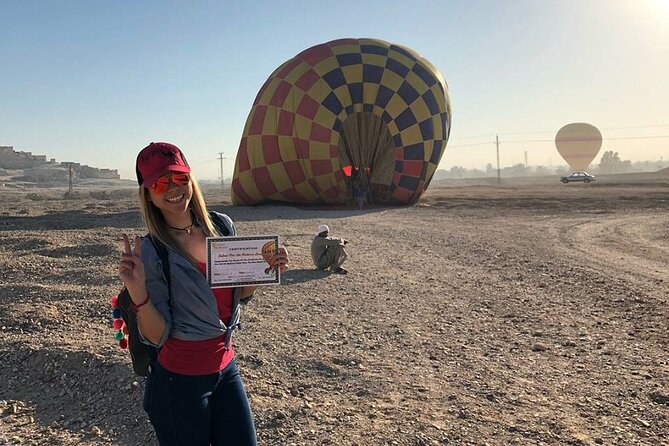
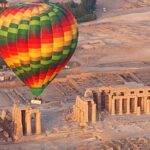
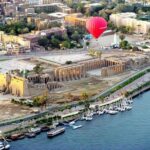
If you care about atmosphere, start with the balloon. Luxor at sunrise isn’t just pretty—it’s calm, bright, and wide open. The ride portion is short (45 minutes), but it’s long enough to feel how the river bends, how far the city reaches, and why ancient Egyptians built where they did.
You also get a very real sense of Luxor as an open-air museum. From the air, you’re not stuck with one angle or one facade. You’re seeing the layout that makes the East Bank and West Bank feel like two halves of the same story.
Timing matters here. Your day begins with an early hotel pickup around 5:00 am, so be ready for cold mornings and fast transitions. Plan on being awake long before the first rays hit.
You can also read our reviews of more tours and experiences in Luxor.



How the morning works: hotel pickup, boat transfer, then flight
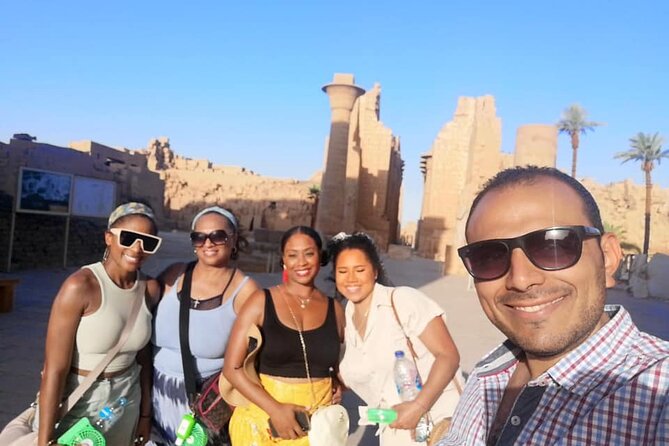
The start is more than a simple van ride. You’ll be picked up from your Luxor hotel and transferred toward the West Bank for the balloon setup. Along the way, you’ll enjoy soft drinks, then take a motor boat transfer before heading to the take-off area.
That boat step is one of those small details that makes the day feel smoother than just shuttling. It also helps explain why Luxor balloon mornings feel like an organized mini-expedition rather than a single ticket exchange.
A practical note: the balloon ride runs every day, but confirmation in advance is strongly recommended. Sunrise is non-negotiable for balloon schedules, so don’t treat this as a last-minute plan.
Once your 45 minutes in the sky are over, you land and then catch your return pickup to go back to your hotel. The day keeps moving, so treat the balloon as your main event and the temples as the well-paced follow-through.
Deir el Bahari and the Temple of Hatshepsut: power, tuned for the eye
After the balloon, you head into the West Bank with your Egyptologist guide. The first major stop is the Temple of Hatshepsut at Deir el Bahari.
What makes this stop feel special is how visually commanding it is. Even if you’ve seen photos, seeing the temple in person gives you a better sense of scale—especially how it sits against the terrain and frames the story of Hatshepsut. Your guide also focuses on the human angle: Hatshepsut was a female ruler for 20 years who is described as having taken on a male role to secure the throne.
That detail is more than trivia. It helps you read the carvings and architecture with less guessing and more understanding. You don’t have to be an expert. Your guide’s job is to connect the symbols to the political reality.
Drawback to plan for: admission for Hatshepsut is not included, so expect a ticket cost on-site. Also, this is a guided stop with a set time (about an hour), so if you like to linger, you’ll want to ask your guide one or two key questions so you leave satisfied.
Valley of the Kings and the Colossi of Memnon: the tomb story hits differently
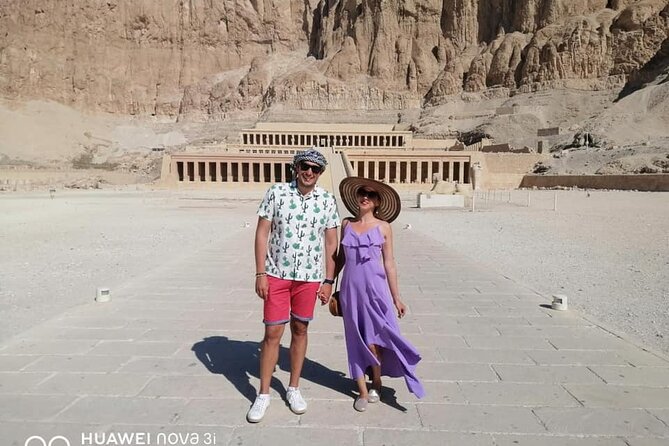
Next comes the Valley of the Kings, the burial site of kings of Thebes (ancient Luxor). This is one of those places where the site itself does part of the work: it’s quiet, purposeful, and clearly built for secrecy.
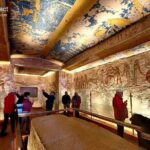
Your visit centers on the famous tombs, including those of Tutmosis I, Tutmosis III, Tut-Ankh-Amon, Ramsess VI, Mrenptah, and Amonhotep II. Even when you don’t get inside every tomb (time is always limited), your Egyptologist guide can help you understand how the names fit into a broader timeline of rulership and power.
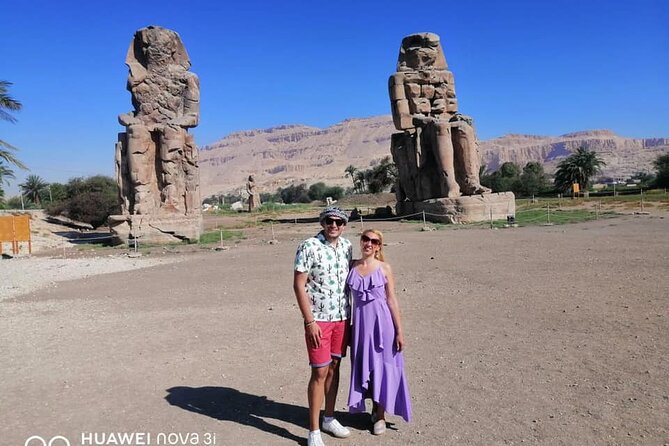
Then the schedule continues toward the Colossi of Memnon. These giant statues are instantly recognizable and help you shift from “tomb focus” into “memorial grandeur.” It’s a different kind of monument, but it complements the theme: how the ancient world wanted the dead to be remembered.
You’ll also get your light lunch here: koshry or a falafel sandwich. This timing is useful because it breaks up the morning before you head back across the Nile.
Two key considerations:
- Tickets are not included for the Valley of the Kings stop, so budget extra.
- This is still a touring day, not a slow museum afternoon—so it’s worth going in with a couple of tomb names you actually care about.
Luxor Temple: Ramses’ obelisk and the theban triad in plain sight
After lunch, you move to the Luxor Temple. This is on the East Bank and works well as a visual palate-cleanser after the West Bank’s tomb focus.
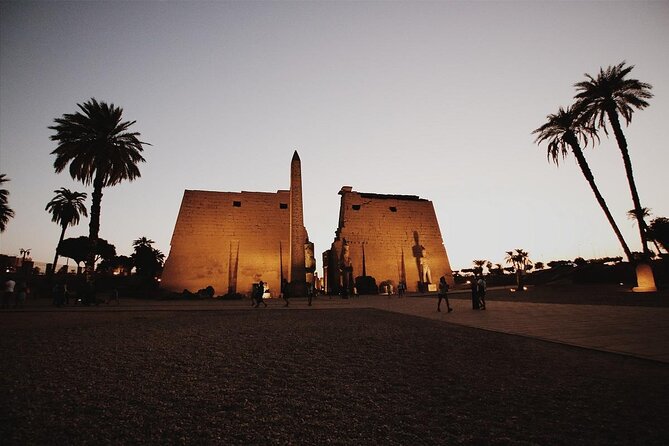
Here’s what your guide will point out: Luxor Temple was built by Amenhotep III in the 18th Dynasty and completed by Ramses II in the 19th Dynasty. It’s associated with the great god Amun-Ra, along with Mut and Khonsu—often referred to as the Theban triad.
One of the practical highlights is the Obelisk of Ramses II in front of the 1st Pylon. It’s the kind of landmark that helps you orient quickly. You get a sense of how entrances, processional spaces, and symbolism were designed to move people through the sacred experience.
Luxor Temple is about an hour in your schedule. Admission for this stop is not included, so again, plan on buying tickets separately.
A useful tip: if you want the most value, ask your guide what to watch for in the carvings before you start walking. In a limited time slot, that one question can turn a quick visit into a memorable one.





Karnak Temple: the avenue walk and why it feels huge
Karnak is the big one. The tour takes you to Temple of Karnak, described as the greatest example of worship in history and dedicated to Amun, Mut, and Khonsu. Construction spans from the Middle Kingdom through the Graeco Roman Kingdom, so you’re looking at a temple complex that evolved over long periods rather than a single finished project.
Expect your guide to emphasize layout and symbolism, not just “here’s a wall, here’s a column.” One of the fun moments involves the ram-headed avenue and a feature tied to large scarabs. Your guide may mention a local tradition about making a wish if you walk around the scarab area. Even if you’re skeptical, it’s a nice way to add a human beat to all the stone.
This stop also runs around an hour. Admission for Karnak is not included, so factor that into your daily budget.
At the end, you’ll be escorted back to your hotel. It’s a clean finish after a packed day: balloon overhead, temples on the ground, then home without having to figure out transport yourself.
Comfort, food, and what’s actually included
This is a ride-and-visit format, so comfort matters. You travel in an air-conditioned vehicle with hotel pickup and drop-off, plus bottle water. That may sound basic, but in Egypt’s heat and early mornings, it makes the day feel less exhausting.
Food is included in a simple, practical way: a light lunch of koshry or a falafel sandwich. It’s not a fancy sit-down meal, and that’s okay. You’re on the move, and the goal is to keep you fed enough to enjoy the afternoon temples without slowing the schedule.
You’ll also have soft drinks during the balloon morning portion. It helps you stay comfortable before the flight when you might otherwise just be waiting around in the cold-to-warm transition.
Price and value: how $14 per person can work
At $14 per person, the value is strongest because the balloon ride ticket is included. A sunrise balloon is usually the most expensive piece of any Luxor day. Here, it’s part of the package along with transport, hotel pickup, and your guided East/West Bank temple stops.
That said, don’t ignore the fine print: multiple site admissions are not included (Hatshepsut, Valley of the Kings, Luxor Temple, Karnak). So the real total cost depends on how many tickets you’ll need to pay on-site.
Still, for a first-time Luxor day, this format can be one of the best ways to cover major landmarks without jumping between vendors or building your own route. You trade a bit of freedom for structure—and for many visitors, that’s the sweet spot.
Who this Luxor balloon + East/West Banks tour is for
This tour fits you if you want:
- The Luxor balloon experience without extra scheduling stress
- A private guide-led day so you can ask questions and move at your group’s pace
- A clear “greatest hits” route across both banks: West Bank tombs and memorials plus East Bank temples
It’s also a good match if you’re short on time. With a duration of about 6 hours, you can cover a lot without turning the day into a marathon.
The tour notes that most travelers can participate, which is a helpful sign. Still, balloon mornings start early and temple days involve walking through ancient sites, so it’s smart to come with comfortable footwear and a flexible attitude.
Should you book it?
Yes—if you want an efficient Luxor day that mixes two kinds of magic: sunrise from above and temples explained on the ground. The balloon inclusion is the big win, and the private, guided structure makes the landmarks feel connected rather than checkbox-style.
I’d think twice if you know you want lots of unstructured time at sites, or if you prefer fully included admissions with zero on-the-day ticket spending. But if you can handle a few ticket payments on-site, this is a strong value way to see why Luxor is famous in the first place.
FAQ
What time does the balloon day start?
Pickup is scheduled early, around 5:00 am, for the balloon experience.
How long is the hot air balloon ride?
The balloon ride itself is about 45 minutes.
Is hotel pickup and drop-off included?
Yes. The tour includes hotel pickup and drop-off in Luxor.
What’s included in the price?
You get an air-conditioned vehicle, bottle of water, soft drinks during the balloon morning, the hot air balloon ride ticket, and a light lunch (koshry or falafel sandwich).
Are entrance tickets included for the temples and tombs?
No. The Temple of Hatshepsut, Valley of the Kings, Luxor Temple, and Temple of Karnak admissions are not included.
Is this tour private?
Yes. It’s described as private, meaning only your group participates.
How long is the full tour?
It’s listed as approximately 6 hours.
What is the cancellation policy?
You can cancel for a full refund up to 24 hours before the experience’s start time.
What if I’m traveling with different ages or fitness levels?
The tour states that most travelers can participate, but balloon mornings and temple walking still mean you should plan for early start and time on your feet.