REVIEW · LUXOR
Explore Luxor: West & East Banks Plus Hot Air Balloon Ride
Book on Viator →Operated by Aqua Egypt Tours · Bookable on Viator
Luxor at sunrise is the real deal. This full-day private trip strings together hot air balloon views, West Bank monuments, and East Bank temples, with an expert Egyptologist keeping it clear. I especially like that the balloon ride is built in, and that you also get a slower felucca sail on the Nile in the middle of all the archaeology. One thing to consider: most temple entry fees are extra, and the schedule is full enough that you’ll want good shoes and a patient attitude.
I like the way this day is paced: early air, then West Bank monuments, then the big temple complexes later. Your guide’s job is to connect the dots between tombs, temples, and who built what, and the private setup makes it easier to ask questions without the usual herd-movement feeling.
If you want Luxor in one shot—without bouncing between offices—this works well. If you hate long days, this may feel like a lot, even though the stops are sensible and timed.
In This Review
- Key highlights at a glance
- Sunrise balloon over Luxor: the sky view that changes everything
- Price and value: what $130 covers (and what you’ll add)
- West Bank tombs: Valley of the Kings in real time
- Deir el Bahari and Hatshepsut: a temple built like a statement
- Karnak Temple: Amun’s complex made for walking
- Luxor Temple: A calmer finale on the East Bank
- Colossi of Memnon: a quick stop that still lands
- Felucca sail on the Nile: the slow break you’ll appreciate
- Egyptologist with a steady hand: how the day stays readable
- Who this tour suits best (and who should think twice)
- Tips that make this day easier
- Should you book this Luxor balloon and banks tour?
- FAQ
- What is included in the $130 per person price?
- Which attraction tickets are not included?
- Is the balloon ride ticket included?
- Do you also include a Nile boat ride?
- How long is the tour?
- Where does pickup happen?
- Is this a private tour?
- Is lunch included?
- How long is the hot air balloon flight, and how high do you go?
- What is the cancellation policy?
Key highlights at a glance
- Sunrise balloon time in the 30–45 minute range, with views up to about 1,500 feet
- Private group only, led by an Egyptologist, plus AC transport and bottled water
- West Bank focus with Valley of the Kings and Hatshepsut at Deir el Bahari
- Big-ticket East Bank hits: Karnak and Luxor Temple, plus Colossi of Memnon
- Felucca sail on the Nile for a calmer rhythm between monuments
- Tickets are mixed: balloon and Colossi are marked ticket-free, while major temples are not included
Sunrise balloon over Luxor: the sky view that changes everything
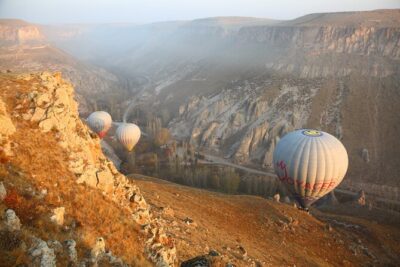
Start early, because Luxor is at its best before the heat and crowds show up. The balloon ride runs 30 to 45 minutes, and you’re told the flight can reach up to around 1,500 feet. That matters more than it sounds. From the air, you stop thinking about individual temples and start seeing the bigger pattern—how the Nile bends through the city, how the West Bank sits as a quiet contrast to the East Bank’s temple density, and how much of Luxor’s magic is geography, not just architecture.
This is also where having the right operator matters. The plan emphasizes top safety standards and experienced pilots, and you’ll feel that in how the day is structured: you’re picked up, you’re transported with AC, and you’re not improvising logistics at the last second.
Practical note: bring something warm for early morning, even if Luxor feels hot during the day. Morning in the desert can be cooler than you expect, and you’ll be outside before and after the flight.
You can also read our reviews of more tours and experiences in Luxor.



Price and value: what $130 covers (and what you’ll add)
At $130 per person, you’re buying a full package: hotel or cruise pickup and drop-off, air-conditioned vehicle, a qualified Egyptologist guide, the hot air balloon ride, and bottled water. That’s a lot of “moving parts” bundled together, which is exactly why this price can feel fair.
Where you’ll likely spend extra is entry fees. The plan clearly marks that tickets are not included for:
- Valley of the Kings
- Temple of Hatshepsut at Deir el Bahari
- Temple of Karnak
- Luxor Temple
It also notes that balloon admission is free and the Colossi of Memnon admission is free. That mix can be handy for budgeting if you plan ahead.
Lunch is listed as optional, not included. So if you’re hungry after a sunrise start and a long archaeological day, you’ll want to decide in advance whether you’ll pay for lunch during the trip or build your own food plan.
West Bank tombs: Valley of the Kings in real time
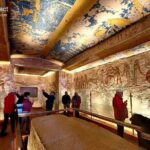
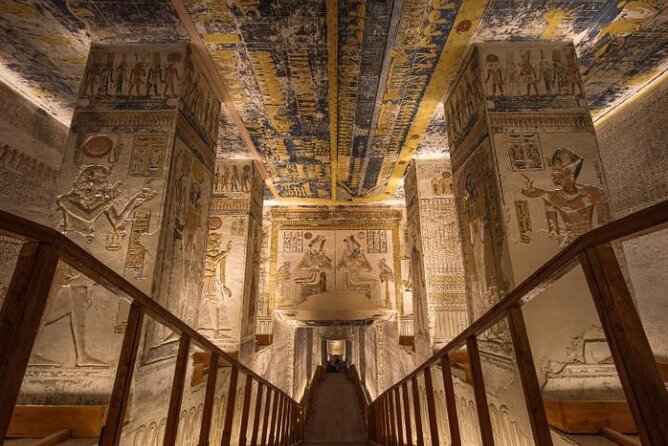
Your West Bank day begins at the Valley of the Kings, with about 2 hours set aside for guided time. This is the burial ground for a long line of New Kingdom pharaohs, and the list of major names in the plan is a good map for what to look for as you walk: Tutmosis I, Tutmosis III, Tut-Ankh-Amon, Ramses VI, Mrenptah, and Amonhotep II.
What I like about doing this with a guide is simple: you don’t just see rock-cut entrances. You learn what the tombs represented, why they were built where they were, and how the Valley functions like an organized city for the dead. The timing also works. Two hours isn’t enough to linger like a museum day, but it’s enough to get the big ideas and still feel the scale.
The main drawback? Tomb visiting is inherently a bit intense. It’s a lot of information in a short window. If you’re the type who wants to slow down and read every sign, this is a “go guided, then linger later” kind of stop.
Deir el Bahari and Hatshepsut: a temple built like a statement
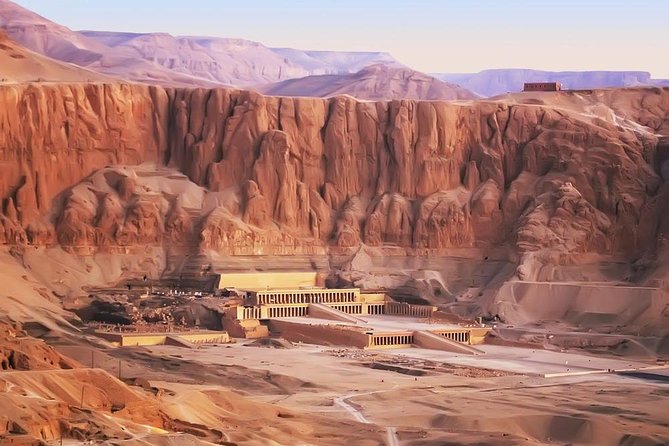
Next up is the Temple of Hatshepsut at Deir el Bahari. You get about 1 hour here, which is a fair amount given how visually powerful the site is.
The plan frames Hatshepsut in a specific way: she’s described as the only pharaonic woman who ruled Egypt, and the temple is tied to her reign in the 18th Dynasty (around 1490–1469 B.C.). Even if you don’t memorize dates, that context changes how you read the architecture. This isn’t just a pretty ruin. It’s propaganda in stone—an official story carved into the landscape.
If you want a practical tip: take a moment to look at the layout before you rush through details. This temple has a “step and terrace” feel, so letting your eyes follow the structure makes everything click faster than if you stare at carvings only.
Karnak Temple: Amun’s complex made for walking
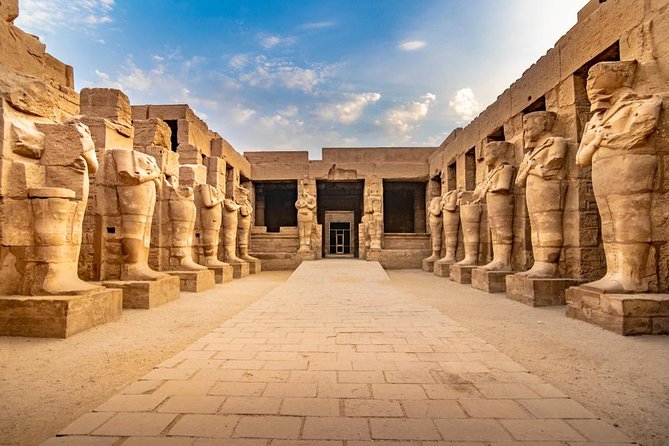
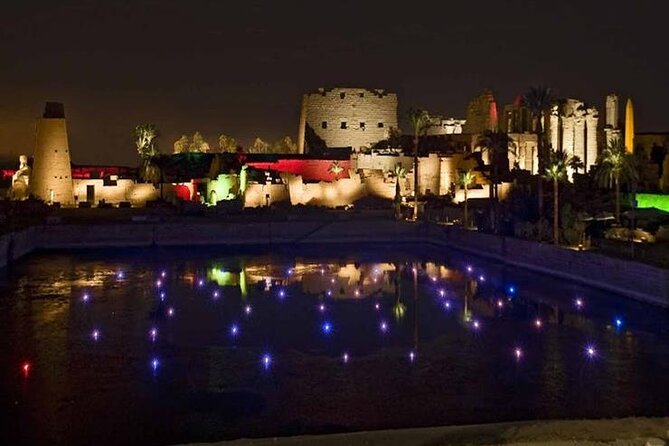
Later, you’ll spend around 3 hours at Temple of Karnak. This is the long one, and it’s where the biggest payoff comes from giving yourself enough guided time.
Karnak is described as the greatest example of worship tied to Amon, along with his wife Mut and their son Khonsu. That line matters because Karnak can overwhelm you if you only think of it as piles of columns. With the guide’s explanations, you start seeing why the complex is laid out like it is—and why different parts felt important to different periods and purposes.
Three hours is a lot, but it’s also the right amount of time to avoid the classic problem: you reach Karnak, you see a lot, and then you leave unsure what you just saw. With a guide and that time block, you’re more likely to leave with a mental map.
Wear shoes you can stand in for real. Karnak is uneven, and shade can be inconsistent—so plan your pace and take short breaks when you need them.





Luxor Temple: A calmer finale on the East Bank
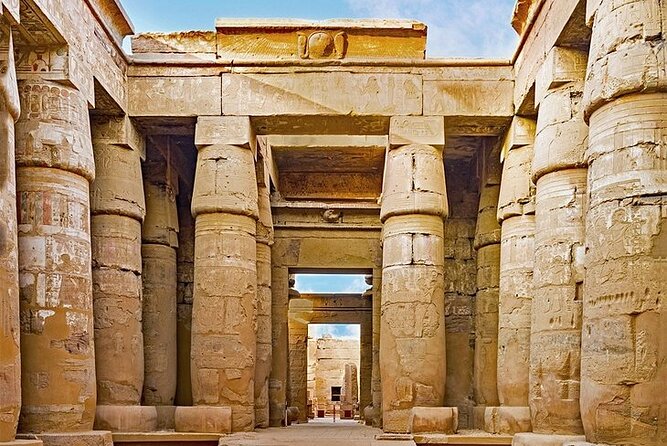
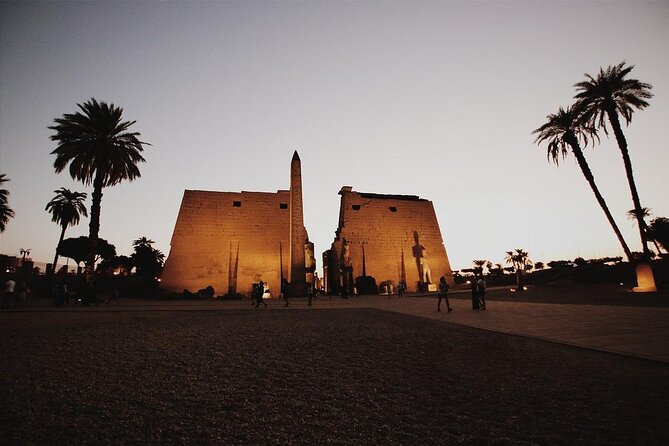
After Karnak, the day ends at Luxor Temple, with about 1 hour. The plan notes it was begun by Amunhotep III in the 18th Dynasty and completed by Ramses II in the 19th Dynasty.
This is a nice balancing stop after Karnak’s scale. Luxor Temple often feels more approachable, and the guide’s storytelling helps you see it as part of a living religious system tied to kingship and ceremony rather than a standalone monument.
If you’re the type who likes to photograph architecture, this is a good window. By the time you reach Luxor Temple, your eyes have adjusted from sunrise balloon wonder to archaeological focus, and you’ll start noticing details faster.
Colossi of Memnon: a quick stop that still lands
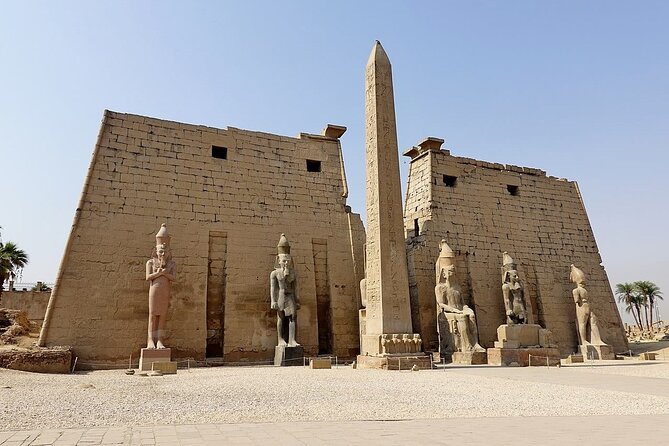
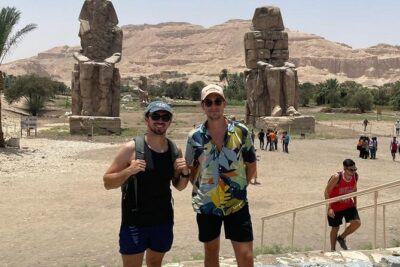
The Colossi of Memnon are scheduled for about 30 minutes, and the plan lists admission as free. These are the surviving remnants of the mortuary temple of Amenhotep III.
Even with a short time slot, this stop works because it’s memorable without being complicated. You can take it in with a glance, then let the guide fill in what the statues meant and how they functioned inside the larger mortuary complex.
This is also a good moment to reset. After long temple walking, 30 minutes gives your brain a chance to feel something visually powerful without burning out.
Felucca sail on the Nile: the slow break you’ll appreciate
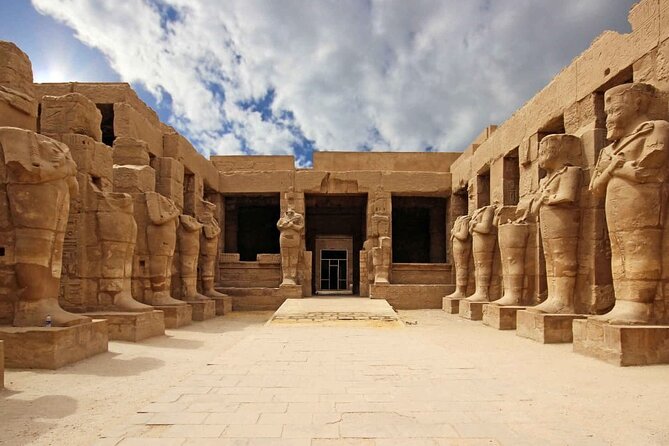
In between temple-heavy blocks, you get a peaceful sail along the Nile on a traditional felucca boat. The exact time isn’t listed in the plan details you provided, but the point is clear: you’re meant to shift gears.
I love this kind of break because Luxor can get info-heavy. The Nile boat does two useful things: it gives you a change of pace and it gives you a sense of place. You’re seeing Egypt from the river, not only from carved stone. It’s also when you’ll likely feel less rushed—no frantic moving between rooms.
If you’re prone to getting cold on boats, pack a light layer. Even in warm months, wind can change the feel fast.
Egyptologist with a steady hand: how the day stays readable
The plan includes a qualified Egyptologist guide, and in the past, the guide named Sayed has been praised for being professional and responsible, with smooth organization and accurate historical explanation. People also highlight that his team maintains a safe, punctual rhythm and that the car is well maintained with AC.
That matters because Luxor is one of those places where you either leave with a clear story—or you leave with scattered images. The value of an Egyptologist isn’t just facts. It’s the way those facts are organized into something you can carry home.
Also, small human touches show up in the feedback. One review mentions sugar cane juice, and another mentions restaurant recommendations. Even if those are small items, they often signal the difference between a strict drop-off tour and a day where someone is actually watching the experience.
Who this tour suits best (and who should think twice)
This is a strong fit if you want:
- A big Luxor sampler: West Bank + East Bank in one day
- Private pacing so you can ask questions and move as a group
- Sunrise balloon as a once-in-a-lifetime centerpiece
- A blend of fast highlights and a slower Nile break
It may not be your best choice if:
- You dislike long days (8–10 hours can feel packed once pickup and walking start)
- You want all entry fees included in one price
- You prefer very flexible stops where you can spend extra time reading inside tombs or temples
Tips that make this day easier
- Build your day around the balloon sunrise start. Arrive rested.
- Bring comfortable shoes. Karnak and Valley of the Kings require real walking.
- Pack a light layer for early morning and for the boat wind.
- Budget extra for the main temple tickets (Valley of the Kings, Deir el Bahari, Karnak, Luxor Temple).
- If you care about lunch, decide ahead of time. Lunch is optional, not included.
Should you book this Luxor balloon and banks tour?
If you want the most efficient way to experience Luxor’s big names—Valley of the Kings, Hatshepsut at Deir el Bahari, Karnak, Luxor Temple, plus a Nile felucca ride—this is a smart pick. The biggest reason is value: you’re not just paying for sites. You’re paying for a full-day structure with transport, a guide, and the balloon already in.
I’d book it if you’re okay with a busy schedule and you’re willing to add a little extra money for temple entry fees. I’d think twice only if you’re someone who wants lots of downtime or you want a trip where every cost is bundled.
If your priority is one unforgettable Luxor memory with the best sky-to-stone sequence—air, river, and monuments—this day does that job.
FAQ
What is included in the $130 per person price?
The price includes hotel or cruise pickup and drop-off, an air-conditioned vehicle, a qualified Egyptologist guide, the hot air balloon ride, and bottled water.
Which attraction tickets are not included?
Entry/admission is not included for the Valley of the Kings, the Temple of Hatshepsut at Deir el Bahari, the Temple of Karnak, and Luxor Temple.
Is the balloon ride ticket included?
Yes. The balloon portion is listed as a 30–45 minute flight, and balloon admission is marked as free.
Do you also include a Nile boat ride?
Yes. The tour includes a peaceful sail on the Nile using a traditional felucca boat.
How long is the tour?
The tour runs about 8 to 10 hours.
Where does pickup happen?
Pickup is offered from your hotel or cruise ship in Luxor. The listed start meeting point is Luxor Airport, Luxor Egypt.
Is this a private tour?
Yes. It’s private, meaning only your group participates.
Is lunch included?
No. Lunch is listed as optional, not included.
How long is the hot air balloon flight, and how high do you go?
The flight is 30 to 45 minutes, and the ride can reach up to about 1,500 feet.
What is the cancellation policy?
Free cancellation is available up to 24 hours in advance of the experience for a full refund.