REVIEW · LUXOR
5-Day Adventure Nile Cruise from Luxor to Aswan & Hot Air Balloon
Book on Viator →Operated by Egypt Rest Tours · Bookable on Viator
A Nile cruise over ancient sites is hard to beat. This one pairs a 5 deluxe boat with major stops in Luxor and Aswan, plus a hot air balloon ride in Luxor and a full guide team to keep the pace moving.
I like that the plan includes the big-name monuments with admission handled for you, so you spend less time negotiating tickets and more time watching details like hieroglyphs and temple layouts. I also like the practical setup: pickup offered, transfers in air-conditioned vehicles, and an English-speaking Egyptology guide tied to the major day visits.
One thing to consider is how packed the sightseeing days feel. You may also experience guide handoffs during temple hours, because the agency support is organized end-to-end even if the main guide isn’t standing next to you at every single stop.
In This Review
- What really stands out on this cruise
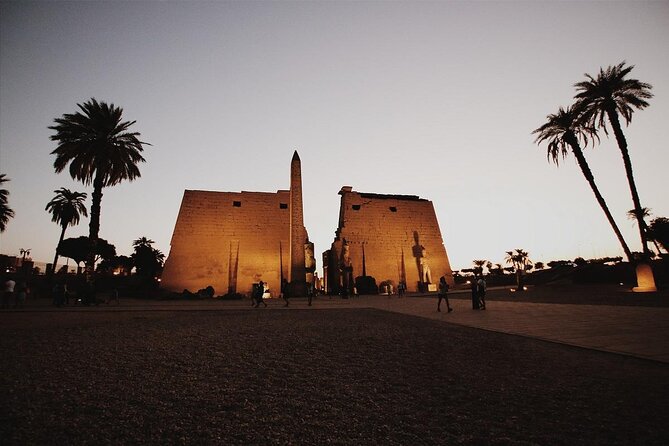
- Where your trip starts: Luxor Temple and Karnak’s scale
- Luxor at sunrise: how the hot air balloon ride fits in
- Valley of the Kings, Deir el Bahari, and Colossi of Memnon
- Edfu (Horus) and Kom Ombo: two temples with a clever twist
- Philae, the High Dam, and Aswan’s unfinished giant
- The long prize: Abu Simbel by Lake Nasser
- Price and value: what $1,300 buys you here
- Cruise comfort: the part you actually get to rest in
- Who this Nile cruise suits best (and who should tweak expectations)
- Should you book Egypt Rest Tours for Luxor to Aswan?
- FAQ
- How long is the Nile cruise from Luxor to Aswan?
- Where does the tour start, and what time does it begin?
- What’s included in the 5 Nile cruise portion?
- Do I get an English-speaking guide?
- Is the hot air balloon ride included?
- Which major sites are included along the route?
- Are admission tickets included for the sites?
- Is cruise Wi-Fi included?
- Can I get a full refund if I cancel?
What really stands out on this cruise
- Hot air balloon ticket included for a sunrise view over Luxor
- English-speaking Egyptology guide and coordinated private transport
- Full-board meals across the cruise nights (breakfast, lunch, dinner)
- Luxor + Aswan temple pairing that makes sense geographically
- Long-distance Abu Simbel day from Lake Nasser (a highlight, but a time commitment)
- High-touch support from the Egypt Rest Tours team, with names like Yasser, Ahmed, Kathrin, and Mohammed appearing in guest feedback
Where your trip starts: Luxor Temple and Karnak’s scale
You begin in Luxor, the classic entry point for Upper Egypt. The Luxor Temple visit is a smart warm-up: it’s grand, built around 1400 BCE, and it gives you that immediate “this is why people come” feeling—columns, carved details, and the sense that the riverfront was once part of daily religion and royal life. Even if you only have a couple of hours, it’s enough time to notice how carefully Egyptian architects shaped space for processions and ritual movement.
Then comes Karnak, and that’s where the trip teaches a key lesson fast: scale in ancient Egypt was a goal, not an accident. Karnak began in the Middle Kingdom period (around Senusret I), then expanded through the New Kingdom and later eras. So you’re not looking at one tidy building—you’re looking at layers of power and belief stacked across centuries, with the complex tied to Amun and the Theban triad. If you’ve ever felt overwhelmed in big sites, Karnak is exactly why an on-the-ground guide helps. You’ll want someone pointing out what to look for instead of only taking photos and hoping it all makes sense later.
Practical note: temple visits can mean walking on uneven stone and dealing with heat. If you’re sensitive to crowds or sun, bring a hat and water and don’t treat these stops like museums with long indoor pauses. Egyptian monuments are busy on purpose—so go in with the right pacing mindset.
You can also read our reviews of more tours and experiences in Luxor.



Luxor at sunrise: how the hot air balloon ride fits in
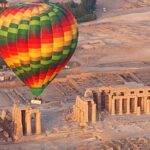
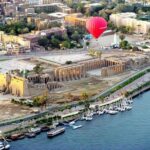
The hot air balloon ride is one of the easiest ways to make the trip feel special right away. The schedule includes about 45 minutes in the air, and that timing matters: you get softer morning light and clearer views down toward the modern city edges and ancient silhouettes nearby. It’s the kind of experience that makes the rest of the monuments feel more “real” afterward, because you start seeing how Luxor sits along the Nile and how the valley-side geography influences where temples and tombs ended up.
There’s also a simple logistics win here: the balloon ticket is included, so you’re not hunting down a separate booking or dealing with last-minute confusion. That matters more than it sounds when you’re traveling with limited time and a tight temple plan.
What to consider: balloon days run on weather. Your cruise experience description notes that the hot air balloon depends on good weather, meaning you may be offered a different date or a refund if it can’t run. If you’re the type who hates schedule uncertainty, this is worth keeping in mind.
Valley of the Kings, Deir el Bahari, and Colossi of Memnon
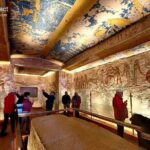
After the balloon, the trip hits the royal side of ancient Egypt. The Valley of the Kings covers tombs carved across roughly 500 years, from the 16th to the 11th century BC. This is a place where it helps to understand that tombs weren’t just “burials.” They were carefully designed final spaces connected to belief, protection, and eternity. Two hours is a solid window here—you can see the scale of the necropolis without turning it into a race.
Then you visit the Temple of Hatshepsut at Deir el Bahari. This stop is a standout for people who enjoy architecture. Hatshepsut’s mortuary temple is often described as a marvel of design and engineering, and in practice it shows. You’ll see a temple complex shaped by terraces and corridors that guide the eye through ritual spaces. Even without reading every line of your guide’s explanation, the layout feels intentional and impressive.
The Colossi of Memnon are shorter—around 20 minutes, and admission is free—yet they’re memorable. Two massive statues tied to Amenhotep III mark the entrance to his mortuary temple area. They’re a fast hit, but they work well as a “breather stop” between longer tomb and temple hours.
One caution for this chunk of time: your legs may start to feel it. You’ll be doing multiple archaeology-heavy stops in a short stretch, so pack for walking—comfortable shoes matter more than style. And if you want photos, shoot early and mid-visit rather than waiting until late when the sun gets harsh and crowds thicken.
Edfu (Horus) and Kom Ombo: two temples with a clever twist
From Luxor you travel downriver to Edfu, where the Temple of Horus—known for its ancient sanctuary and its Hellenistic and later names—adds a different flavor than the Theban sites. A big reason people love Edfu is that the temple feels “complete” in the sense that it’s still readable. You can recognize how the layout supports ceremonies and how the symbolism connects with what you learned earlier about divine kingship.
The visit is planned for about two hours, which gives you time to move beyond the main hall photos. This is also a good stop for a guide to explain what the temple’s different sections are meant to do, because the carvings and doorway scenes tend to feel repetitive until someone connects them.
Then comes Kom Ombo, a unique double temple that’s different from the single-dedicated sanctuaries you may have seen already. The description points to its Ptolemaic-era roots (180 to 47 BC) and Roman-era additions later. That mix of eras is a theme of this whole cruise: Egypt didn’t stop. It kept rewriting itself, building and rebuilding religious meaning.
Two hours here works well too. Kom Ombo’s appeal is partly visual and partly conceptual: you can see how the temple expresses more than one religious focus within one complex. It’s a satisfying stop for people who like learning how symbols shift across time.
Tip: if you tend to tire at temples, this is where you can slow down. Don’t try to “finish” the site. Pick a section and let your eyes read it. Two hours is enough to feel you actually understood what you saw.
Philae, the High Dam, and Aswan’s unfinished giant
Aswan is where the trip starts feeling more modern, even while you’re surrounded by ancient stone. Philae Temple is visited in the context of today’s geography: it sits in a reservoir formed by the Aswan Low Dam, downstream from the Aswan Dam and Lake Nasser. That matters because it changes how you experience the monument. Instead of imagining it only as a remote holy island, you see how modern water projects reshaped the region and forced preservation choices.
The plan includes about two hours at Philae, giving you time to notice the temple complex character. Philae’s story also helps connect your earlier temple visits to later periods of Egyptian worship, because the site remained significant over different eras.
Then you get a short visit to the Aswan High Dam. It’s only about 30 minutes, but it’s a smart reminder that rivers don’t just shape ancient empires—they also shape modern economies and engineering. It’s not an archaeology stop. It’s context.
Next is the Unfinished Obelisk. This one’s genuinely fascinating because it’s a process site, not just a finished monument. The plan sets aside about an hour to see the enormous obelisk in the quarries of Aswan, and the “unfinished” angle tells you something important: ancient stonework wasn’t magic. It was heavy work with tolerances, risks, and real outcomes.
What to consider here: Aswan heat can hit hard. You’ll be outdoors for long stretches. If you’re traveling in warmer months, treat shade breaks as part of the day, not as an afterthought.




The long prize: Abu Simbel by Lake Nasser
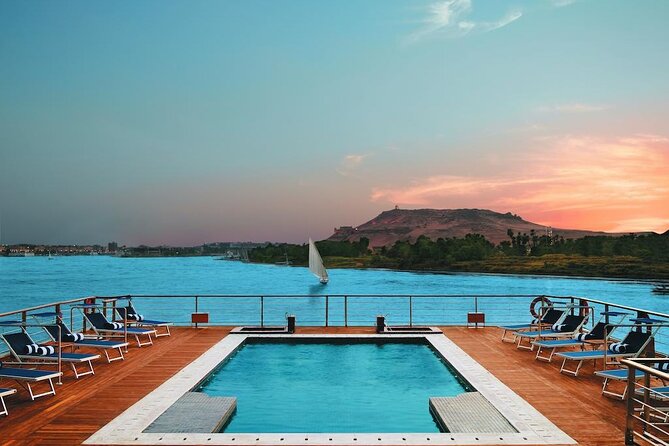
If you want one day to feel like a major mission, make it Abu Simbel. The temples are carved into rock—two immense temples—and they sit near the Sudanese border, close to Lake Nasser. The distance is why the visit is scheduled for about 5 hours. This is not a quick stop. It’s the kind of day you plan your energy for.
The reward is obvious in your photos later, but it’s more than a photo stop. Abu Simbel’s scale changes how you understand what pharaohs were trying to achieve. This isn’t just a local temple. It’s a statement anchored in geography, stone, and timing.
Practical note: this day likely means long travel. The tour does include transfers by qualified drivers in A-C vehicles, which helps, but you should still expect a tiring day compared with the closer Luxor/Edfu/Kom Ombo visits.
If you’re choosing between “seen it once” and “really felt it,” Abu Simbel usually wins. Go in with a patient mindset, not a sprint.
Price and value: what $1,300 buys you here
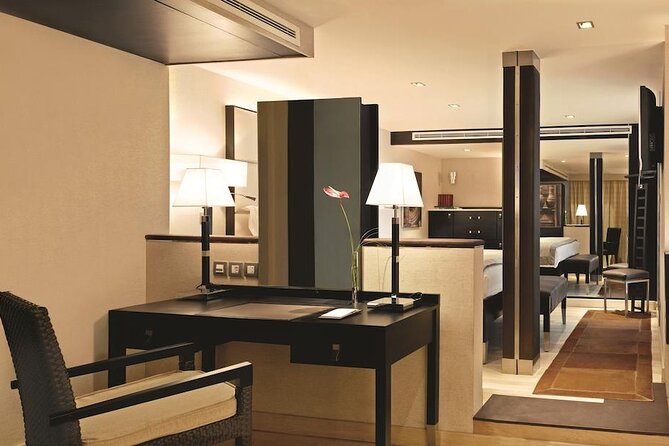
At $1,300 per person, the value depends on what you’re trying to buy: convenience, guide quality, and time savings. This tour price bundles a lot into one package: 04 nights accommodation on board a 5 Nile cruise on a full-board basis, plus an Egyptology guide and transfers in air-conditioned vehicles. It also includes admission tickets across the major sites and the hot air balloon ride.
That’s the real value: you’re paying for reduced decision-making. Instead of splitting your time between booking monuments, finding transport, and scheduling the balloon separately, everything is coordinated. You also get meet-and-assist support from English-speaking representatives, which can matter a lot when you land and start moving immediately.
There’s also evidence of high-touch service in guest feedback. Names like Yasser show up again and again for support across key legs of the journey, and guides such as Ahmed and Mohammed get mentioned for being helpful and professional. Even if you don’t get the same face standing beside you the entire time, the organized approach is the point.
One thing I’d flag: tips are not included. That’s standard in Egypt touring, but it’s still something to budget for so your final bill doesn’t surprise you. If you plan ahead for gratuities, you’ll feel the trip is much better value.
Cruise comfort: the part you actually get to rest in
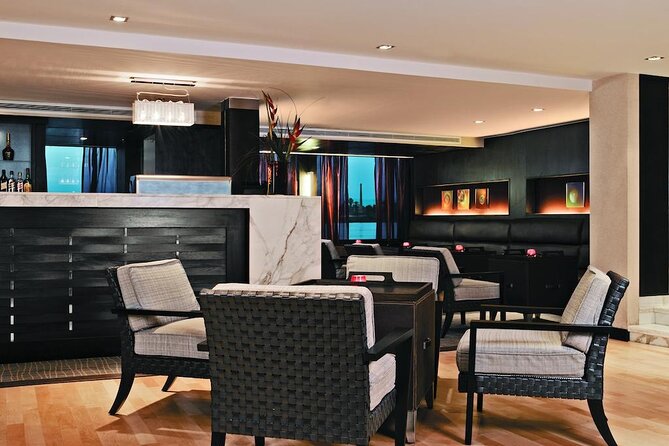
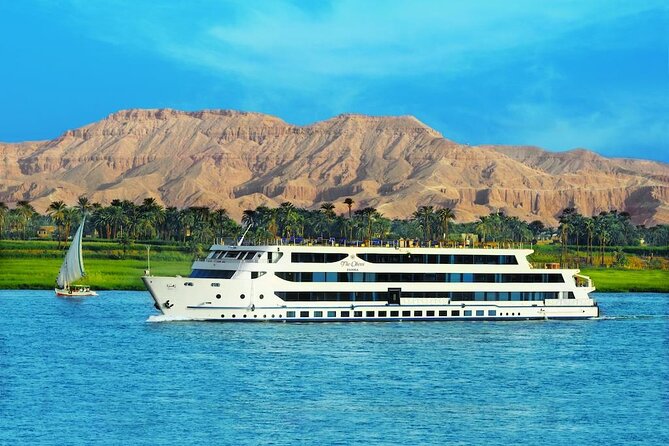
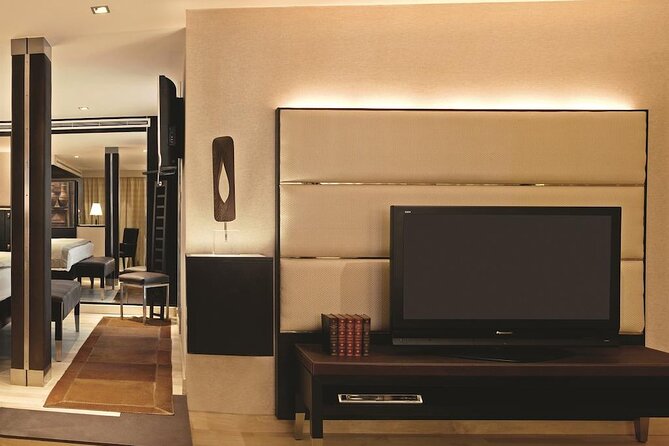
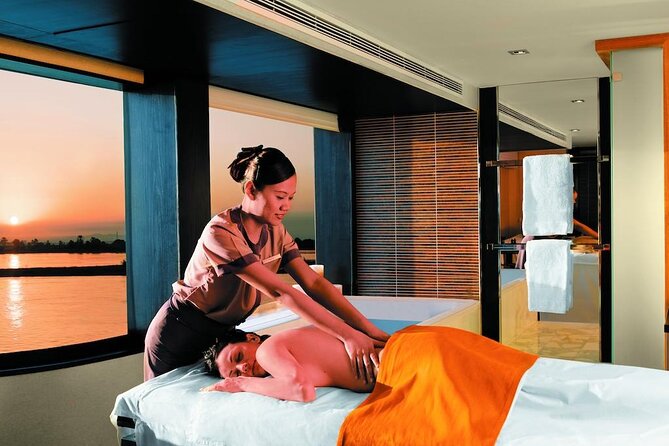
The cruise part is the glue. You’re spending four nights on board a 5 Nile cruise with breakfast, lunch, and dinner included. That full-board setup is a big advantage when you’re in sightseeing mode all day. You’re not hunting for meals or trying to interpret menus while you’re tired.
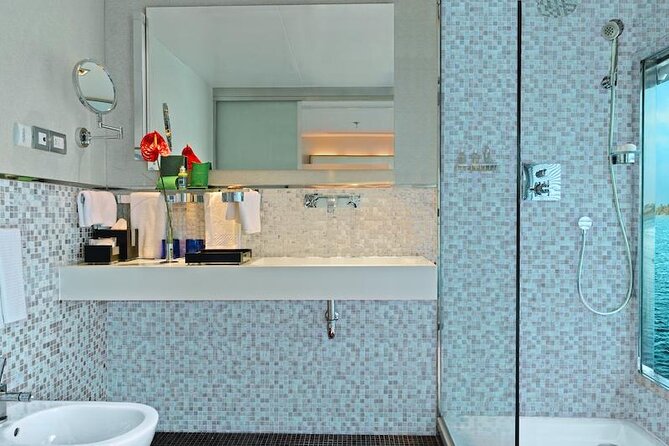
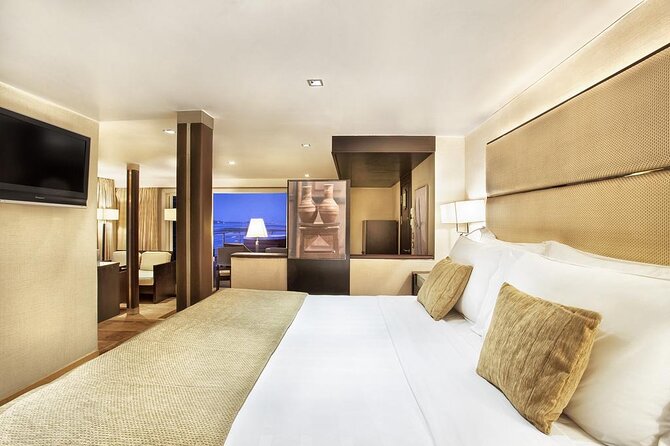
Guests have mentioned boats like Princess Sarah, Louvian, and Royal Beau Rivage in their experiences, and those names tend to signal an expectation of comfort and attentive onboard service. Cabins are described as spacious and kept clean, and meals are described as varied and delicious. You’ll still want to manage expectations: a cruise ship isn’t a spa resort, but it’s a great way to regenerate between temple days.
If you care about Wi-Fi for work or messaging, note that cruise Wi-Fi isn’t included. If you can’t be offline, plan around that.
Who this Nile cruise suits best (and who should tweak expectations)
This tour is ideal if you want a classic Luxor-to-Aswan Nile cruise experience with major temples and a sunrise balloon, without spending your vacation doing logistics math. It’s a good match for couples and small groups because it’s described as a private tour/activity: only your group participates.
It also works well for history-first travelers who like Egyptology explanations tied to what they’re seeing. The inclusion of an English-speaking guide for the key monument hours makes a real difference—temples are easier when someone helps you focus on the right carvings and meanings.
If you’re the type who hates fast schedules, you might find temple-heavy days tiring. Consider this the kind of trip where you’re meant to experience a lot in a short span, not where you float leisurely all day.
And remember the practical reality: weather can affect the balloon. If your trip depends on a perfect balloon photo, keep an open mind and pack flexibility.
Should you book Egypt Rest Tours for Luxor to Aswan?
I’d book this Nile cruise if you want the big anchors—Luxor Temple, Karnak, Valley of the Kings, Hatshepsut, Edfu, Kom Ombo, Philae, and the Abu Simbel temples—wrapped into one coordinated package. The included admission, full-board cruise nights, English-speaking Egyptology guidance, and coordinated transfers are the reasons it feels low-stress compared with piecing the trip together yourself.
I wouldn’t book it if you’re looking for a slow travel rhythm with lots of free time. This trip is built around monument hours and travel days, especially the Abu Simbel day. Also, if guide presence has to be one consistent person standing with you at every moment, be aware that organized handoffs can happen even when support is still strong.
If you want a well-run route that maximizes your time along the Nile—especially with the hot air balloon included—this is a strong choice.
FAQ
How long is the Nile cruise from Luxor to Aswan?
The duration is approximately 5 days, including 4 nights on board the cruise.
Where does the tour start, and what time does it begin?
The experience starts in Luxor with a start time of 12:00 pm.
What’s included in the 5 Nile cruise portion?
You get 04 nights accommodation on board a 5* Nile cruise on a full-board basis, with breakfast (4), lunch (4), and dinner (4).
Do I get an English-speaking guide?
Yes. The tour includes an Egyptology English-speaking tour guide, plus meet-and-assist support by English-speaking representatives.
Is the hot air balloon ride included?
Yes. The Luxor hot air balloons experience is included, with a duration of about 45 minutes and admission ticket included.
Which major sites are included along the route?
Key stops listed include Luxor Temple, Karnak Temple, Valley of the Kings, Temple of Hatshepsut at Deir el Bahari, Colossi of Memnon, Temple of Horus in Edfu, Temple of Kom Ombo, Philae Temple, the Aswan High Dam, the Unfinished Obelisk, and the Abu Simbel Temple Complex.
Are admission tickets included for the sites?
Yes. Admission tickets are included for the listed major stops (with Colossi of Memnon noted as free).
Is cruise Wi-Fi included?
No. Cruise Wi-Fi is not included, and optional access is mentioned.
Can I get a full refund if I cancel?
Yes. Free cancellation is offered up to 24 hours in advance for a full refund. If you cancel less than 24 hours before the start time, the amount paid is not refunded.