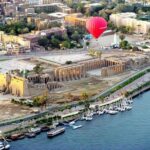
Flying over Luxor is pure magic. This 4-night Nile cruise from Luxor to Aswan mixes major temple days with an included hot air balloon sunrise flight, plus a comfortable cabin and onboard meals that keep your day from turning into a snack-only survival mission. You also get meet-and-assist help and air-conditioned transfers, so you’re not stuck figuring out logistics while jet-lagged.
What I really like is the way the sightseeing is built around “why it matters,” not just “what it is.” An Egyptology guide stays with you at the big stops, and that turns Karnak, the Valley of the Kings, Edfu, and Philae into an actual story you can follow.
One thing to plan for: entrance fees aren’t included, so you’ll still pay at several temples (even though the cruise, balloon, guide time, and taxes/service charges are covered).
In This Review
- Key highlights you’ll care about
- Why this Luxor-to-Aswan cruise works (and not just because it’s on a boat)
- Your cabin and ship time: comfortable downtime between temples
- Day 1 in Luxor: Karnak and Luxor Temple set the stage
- Karnak Temples: Amun, Mut, and the long view of power
- Luxor Temple: Amenhotep III, Ramesses II, and a famous obelisk
- Optional: Luxor market and Corniche stroll on your own
- Day 2: Sunrise hot air balloon plus the West Bank’s royal tombs
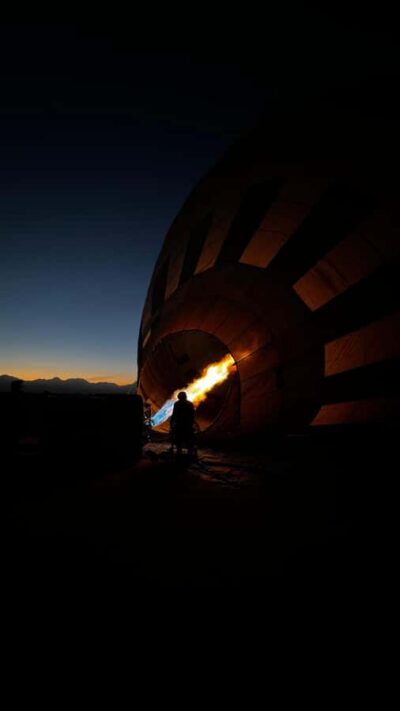
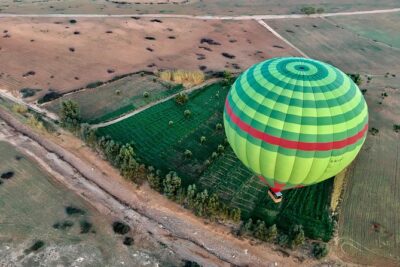
- Included hot air balloon ride: the view you can’t fake
- Valley of the Kings: where optional choices are worth thinking about
- Temple of Hatshepsut at Deir el Bahari: female pharaoh in a limestone setting
- Colossi of Memnon: a quick photo stop with big presence
- Day 3: Edfu and Kom Ombo—two temples that feel different on purpose
- Temple of Horus in Edfu: the falcon god’s well-preserved stage
- Temple of Kom Ombo: symmetrical design and two gods
- Day 4 in Aswan: High Dam engineering and Philae’s rescue story
- Aswan High Dam: what modern control looks like on the Nile
- Temple of Philae on Agilkia Island: Isis, relocation, and survival
- Day 5 in Aswan: choose your pace after breakfast
- Price and value: why $595 can work out well, even with entrance fees
- Who should book this Nile cruise with the balloon
- A quick reality check before you go
- Should you book this Nile cruise with the balloon included?
- FAQ
- Is the hot air balloon included in this Luxor to Aswan cruise?
- How long is the trip and what route does it follow?
- Are entrance fees included for the temples?
- What meals are included onboard?
- Do you get pickup and transfers?
- Will there be an expert guide during the historical visits?
- Can the tour accommodate dietary restrictions?
- How flexible is cancellation?
Key highlights you’ll care about
- Sunrise hot air balloon over Luxor is included and usually the fastest way to feel the scale of Egypt
- Spotless, well-kept ship and comfortable cabins with amenities (many rooms have great river views)
- Expert guide on the major sites helps you connect symbols, gods, and royal names to what you see
- Onboard meals from lunch day 1 to breakfast day 5 means fewer meals to organize
- Private-group format (only your group participates) can mean smoother pacing and less waiting
- A strong temple sequence: Karnak → West Bank → Edfu → Kom Ombo → High Dam/Philae
Why this Luxor-to-Aswan cruise works (and not just because it’s on a boat)
A Nile cruise only feels great if the days are paced well. Here, you get a classic route that hits Egypt at the most photo-friendly times: early start for the balloon, then temple visits that are easier to enjoy before the heat really ramps up.
The smart part is that you’re not only “passing by.” You’ll have guided stops at the big names—Karnak, Luxor Temple, the Valley of the Kings, Hatshepsut, Edfu, Kom Ombo, and Philae—so your trip isn’t just cruising with a few quick photos.
The other big practical win is that food and transfers are handled. Lunch on day 1 and breakfast on day 5 are included, and the air-conditioned transfers cut down on the usual stress of Egypt travel days.
You can also read our reviews of more tours and experiences in Luxor.



Your cabin and ship time: comfortable downtime between temples
The cruise portion is designed to be a real break, not downtime you dread. The ship is described as well-kept and clean, with rooms that feel cozy and comfortable and typically set up for rest after long, sun-heavy visits.
Because this is a Luxor-to-Aswan route, your ship days are also part of the experience. You’ll sail after key visits—like heading toward Edfu and then Aswan—so you’re not packing and unpacking every few hours. If you get a cabin with a river view, it’s a nice perk for morning light and evening calm.
What to expect day to day: you’ll be out touring for several hours, then come back to the ship for onboard meals and a bit of time to reset. That rhythm matters. Egypt’s monuments are powerful, but they’re also time-consuming. A comfortable ship makes that easier.
Day 1 in Luxor: Karnak and Luxor Temple set the stage
Day 1 starts strong with two of Luxor’s biggest temple hits.
Karnak Temples: Amun, Mut, and the long view of power
Karnak is dedicated to Amun and his wife Mut. It’s not just impressive scale—it’s also a site that helps you understand how Egyptian beliefs were layered over centuries. You’ll also learn about the earliest known international peace treaty, inscribed on a wall in the Temple of Amun. That detail gives Karnak a surprising human angle: diplomacy, not just gods.
You’ll spend about 2 hours here, and entrance fees are not included.
Luxor Temple: Amenhotep III, Ramesses II, and a famous obelisk
Next is Luxor Temple, originally started by Amenhotep III and completed by Ramesses II. It’s centered on Amun-Ra, with Mut and Khonsu. Pay attention at the entrance for the impressive obelisk of Ramesses II—small in the grand scheme of the site, but a great landmark when you’re meeting the guide and trying to orient quickly.
Expect about 2 hours again, also with entrance fees not included.



Optional: Luxor market and Corniche stroll on your own
After the temples, you’ll transfer to check into the cruise. You also have an optional self-guided window to explore the Luxor market and the Corniche. This is your low-pressure option: browse for spices and handmade crafts, then walk by the Nile and stop for Egyptian tea if you feel like it.
If you’re the type who gets tired of tours that feel like a checklist, this stop is a good pressure valve.
Day 2: Sunrise hot air balloon plus the West Bank’s royal tombs
If you only cared about temples, this day would still be worth it. But the balloon turns it into a different kind of Egypt.
Included hot air balloon ride: the view you can’t fake
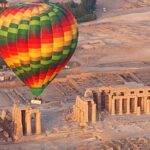
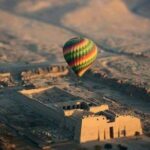
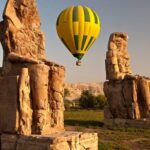
You’ll get an early morning pickup and a balloon ride of about 45 minutes, timed for sunrise. The flight is included, and it’s one of those experiences where the details matter: desert, river, and temple silhouettes all sit in the same frame.
This is also a practical day tip: wear something comfortable you can layer, and don’t plan to bring a heavy bag you’ll regret in the basket. Even if you’re not a “photo person,” the view helps you understand what you’re about to see on the West Bank.
Valley of the Kings: where optional choices are worth thinking about
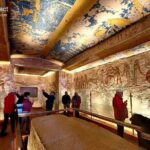
After crossing to the West Bank, you’ll visit the Valley of the Kings for about 3 hours. This is where the pharaohs’ tombs live—royal power made stone and secrecy.
You’ll have an optional add-on to visit King Tutankhamun’s tomb. Consider it if you’re a big fan of the story of Tut. If you’re more into seeing the sweep of the valley and the main tomb complex experience, you can skip the optional part and still feel you got value.
Entrance fees aren’t included here.
Temple of Hatshepsut at Deir el Bahari: female pharaoh in a limestone setting
Next is the Temple of Hatshepsut at Deir el Bahari, dedicated to Egypt’s only female pharaoh. The temple’s integration with the limestone cliffs is part of why it feels so dramatic—walls and terraces feel like they were built to match the geology.
Plan about 2 hours. This stop also pairs well after the balloon because you’ll have that “from above, everything makes sense” moment.
Colossi of Memnon: a quick photo stop with big presence
To close the day’s sightseeing, you’ll have a photo stop at the Colossi of Memnon for about 30 minutes, then return to the cruise for lunch.
This stop is short on purpose. It gives you a clear visual anchor for your photos without stealing too much time from the main monuments.
After that, you sail toward Edfu.
Day 3: Edfu and Kom Ombo—two temples that feel different on purpose
This is a day where contrast helps. You’ll go from a major Ptolemaic temple experience to something visually unusual thanks to the way it’s designed.
Temple of Horus in Edfu: the falcon god’s well-preserved stage
Edfu’s Temple of Horus takes about 3 hours. It’s dedicated to the falcon god Horus and includes impressive pylons, courts, and halls with detailed reliefs.
The key value here is how well the temple has survived. When carvings and layout are still clear, a guided visit becomes easier. You’re not trying to guess what you’re looking at; your guide can point to symbols and connections without the experience feeling like a puzzle you’ll never finish.
Entrance fees aren’t included.
Temple of Kom Ombo: symmetrical design and two gods
Next is Kom Ombo, dedicated to both Sobek (the crocodile god) and Horus the Elder. What makes it stand out is the symmetrical design: two entrances, courts, and sanctuaries.
You’ll spend about 3 hours here. It’s the kind of place where the guide’s explanations can really help you see why there are two religious “tracks” in one building complex.
After this, you sail to Aswan.
Day 4 in Aswan: High Dam engineering and Philae’s rescue story
Aswan is a great break from the purely ancient vibe. You get modern impact first, then the ancient temple that was literally moved to survive.
Aswan High Dam: what modern control looks like on the Nile
You’ll visit the Aswan High Dam for about 2 hours. This is about controlling the Nile’s annual flooding and producing hydroelectric power.
Even if you’re not an engineering person, it helps you understand why Egypt’s river has always shaped life. It’s also a useful context for thinking about why some of the monuments couldn’t just be left alone.
Entrance fees aren’t included.
Temple of Philae on Agilkia Island: Isis, relocation, and survival
Then comes Philae, dedicated to Isis, for about 2 hours. Here’s the standout detail: it was relocated to Agilkia Island to save it from flooding.
That “save the temple” story changes how you look at the carvings. You’re not only seeing ancient religious art; you’re seeing what it took to keep that art from disappearing.
Entrance fees aren’t included.
Day 5 in Aswan: choose your pace after breakfast
After breakfast, you disembark. This day is flexible, which is a relief after a few packed monument days.
You can choose between optional experiences:
- Abu Simbel visit
- A Nubian Village outing
- Or simply explore Aswan at your leisure for a slower day
Because this is the last day, it’s smart to decide based on your energy level and your Egypt priorities. If you’ve been energized by royal monuments, Abu Simbel may fit. If you want local culture time without more long waits at big sites, the Nubian Village option can be a great contrast. And if you’re tired of early starts, just enjoying Aswan is a perfectly valid move.
Price and value: why $595 can work out well, even with entrance fees
At $595 per person, you’re not just paying for a room on the Nile. You’re paying for:
- A 4-night cruise from Luxor to Aswan
- The included hot air balloon
- Air-conditioned transfers and meet-and-assist help
- An expert Egyptology guide on the historical stops
- Meals onboard: lunch day 1 through breakfast day 5
- All taxes and service charges
So the value comes from the fact that a lot of the trip’s hardest parts are handled for you. Balloon logistics, guided temple time, and onboard meals are where many Egypt packages either hike prices with add-ons or make you do extra work.
Your main extra cost is straightforward: entrance fees aren’t included. So if you’re budgeting, set aside some money for tickets at sites like Karnak, Luxor Temple, the Valley of the Kings, Edfu, Kom Ombo, and Philae.
One more value note: this is a private tour/activity where only your group participates. That can reduce waiting and make the guide’s explanations feel more like a conversation than a rush job.
Who should book this Nile cruise with the balloon
This cruise is a good fit if you want a structured, high-value route with minimal planning headaches.
You’ll probably love it if:
- You like Egypt temples and want the guide to connect what you see to what it means
- You want the balloon experience without hunting for it separately
- You prefer a mix of “touring” and genuine downtime on the ship
- You care about comfort—clean ship, comfortable cabin, onboard meals
You might think twice if:
- You hate paying entrance fees separately
- You want lots of free time every day (the day-to-day touring schedule is built-in)
- You’re sensitive to early mornings (the balloon pickup is early)
A quick reality check before you go
Here’s what can make or break your comfort on this kind of trip:
- Expect long days with stone monuments and lots of walking on uneven ground
- Bring sun protection and comfortable footwear
- If you’re choosing optional add-ons like the King Tut tomb or Abu Simbel, plan for extra time and cost since entrance fees are not included
Also, keep your expectations straight. This is a cruise with guided stops, not a slow wander. That structure is exactly why it’s good value.
Should you book this Nile cruise with the balloon included?
Yes, if you want the best mix of big-name temples + sunrise balloon without dealing with a pile of logistics. The included balloon is the standout, and the guided temple sequence is the engine that turns pretty sights into a trip with meaning.
I’d book it especially if you like Egypt but don’t want your days to feel like you’re running from ticket booth to ticket booth. Just budget for entrance fees, wear comfortable shoes, and treat the ship time as your recovery phase.
FAQ
Is the hot air balloon included in this Luxor to Aswan cruise?
Yes. The hot air balloon is included as part of the experience, with the ride scheduled for the Luxor morning.
How long is the trip and what route does it follow?
It’s approximately a 5-day trip with a 4-night Nile cruise from Luxor to Aswan.
Are entrance fees included for the temples?
No. All entrance fees are not included, so you’ll pay for tickets at the historical sites during the day.
What meals are included onboard?
Lunch is included on day 1, and dinner is included on each of the cruise nights. Breakfast is included on day 5.
Do you get pickup and transfers?
Yes. Air-conditioned transfers are provided between your arrival/departure point and the cruise ship, and meet-and-assist is included at the Luxor Airport, train station, or Luxor hotel.
Will there be an expert guide during the historical visits?
Yes. An expert tour guide is included for the historical sites included in the program.
Can the tour accommodate dietary restrictions?
Yes. Dietary restrictions such as vegetarian, vegan, and gluten-free can be accommodated.
How flexible is cancellation?
Free cancellation is available. You can cancel up to 24 hours in advance for a full refund.