Waking up for monuments changes everything. This Luxor-to-Aswan cruise strings together the West Bank of Luxor, Karnak, Edfu, Kom Ombo, and the Abu Simbel temples in a tight 4-day flow, with hot air balloon views and Egyptologist guides driving the story. I love how much you cover in a short time, but the main drawback is that you’ll likely pay extra for entrance fees and you should budget for on-board drinks like water and for tipping.
I like that the logistics are mostly handled for you: pickup is offered, transfers use an air-conditioned coach, and you also get motor-boat rides to the West Bank plus a horse-and-carriage stop at Edfu. Group size is kept small (max 15), and Abu Simbel is done as a sharing small group with an English-speaking guide, which helps keep the morning run organized.
In This Review
- Key Things to Know Before You Go
- Luxor to Aswan in 4 Days: What This Nile Cruise Covers
- Day-By-Day Plan: West Bank Luxor, Karnak, Edfu, Kom Ombo, and Abu Simbel
- Day 1: Valley of the Kings, Queen Hatshepsut, and Carter House
- Day 2: Hot air balloon over Luxor, Karnak, Luxor Temple, then cruise onward to Edfu
- Day 3: Edfu Temple by horse and carriage, then Kom Ombo at sunset
- Day 4: Abu Simbel (around 5 a.m.), then Philae, Aswan High Dam, and end of service
- Hot Air Balloon Over Luxor Sky: The One Thing You’ll Remember
- Guides and Transfers: How Smooth the Days Feel
- Food, Cabins, and Boat Reality Checks (Including the Stuff You Should Plan For)
- Drinks and water: plan for extra spending
- Price and Value: Is $410 a Fair Deal?
- Tipping: it’s part of the rhythm
- Who This Cruise Fits Best (and Who Might Want a Different Style)
- Should You Book This Luxor to Aswan Cruise?
- FAQ
- What are the dates and how long is the experience?
- What’s included in the price?
- Are entrance fees included?
- Is the hot air balloon always guaranteed?
- What happens if the balloon includes a child?
- How do you visit Abu Simbel?
- What kind of transport do you use between sights?
- How many people are in the group?
- Can I cancel and get a full refund?
Key Things to Know Before You Go
- Hot air balloon over Luxor for sunrise views of temples and the Nile corridor
- Abu Simbel at about 5 a.m. to beat the day’s heat and crowds
- A real Egyptologist guide (many guests specifically praised guides like Ravi, Talaat, Mahmoud, Mohamed, Michael, Khaled, and Mohammed)
- Full-board cruise meals (lunch to breakfast across the 3 nights)
- Transfers are mostly taken care of with an air-conditioned coach plus boat rides
Luxor to Aswan in 4 Days: What This Nile Cruise Covers
This is a high-intensity itinerary in the best way. You don’t just “cruise down the Nile.” You hop off at the right moments to see the headline sites, then return to the boat for dinner and a little decompression. If you like your travel packed with meaning and movement, you’ll probably enjoy this format.
The core experience is Luxor to Aswan aboard a 5-star cruise for 3 nights, paired with guided temple visits and a hot air balloon flight over Luxor. You also get evening entertainment mentioned as part of the program, including a galabia party and belly-dancing show, which fits the idea of Nile cruises as both history and atmosphere.
The value question comes down to what you want to “buy” with your time. For $410 per person, you’re paying to bundle guiding, transfers, and major sight stops into one coordinated trip. You’re not buying all entrance fees and you’re not buying unlimited drinks. So you’ll get the best outcome if you plan your budget like a local: bring small cash for fees and tips, and assume beverages beyond included meals cost extra.
You can also read our reviews of more tours and experiences in Luxor.



Day-By-Day Plan: West Bank Luxor, Karnak, Edfu, Kom Ombo, and Abu Simbel
Day 1: Valley of the Kings, Queen Hatshepsut, and Carter House
Your first day is all about Luxor’s West Bank. You’re picked up on time, then taken down to the Nile for a motor-boat crossing to the West Bank. That boat transfer matters more than it sounds: it feels like a natural “portal” from modern Luxor into the ancient landscape.
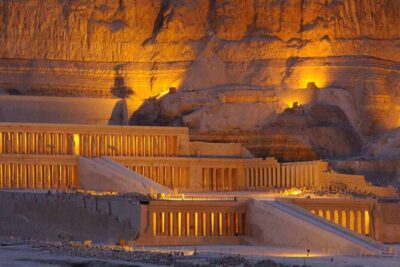
Once you’re there, you’ll visit the Valley of the Kings area, then continue to the impressive Queen Hatshepsut temple. Hatshepsut is one of those figures who turns temple visits into real human drama: she’s tied to power, politics, and the way rulers wanted to be remembered.
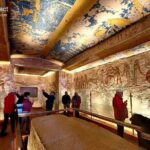
You’ll also stop at the Howard Carter House. It’s a great way to connect the sites you’re seeing with the person who helped open up Egypt’s most famous discoveries. One of the charming details in the Carter story is the anecdote about Carter responding yes, I see many great things when he was looking through a small opening before the tomb was opened. It’s the kind of story that makes the archaeology feel personal instead of like trivia.
Potential trade-off: This day can feel long, because you’re not just touring one temple—you’re stacking multiple West Bank stops. Wear comfortable shoes and expect heat and walking to matter.
Day 2: Hot air balloon over Luxor, Karnak, Luxor Temple, then cruise onward to Edfu
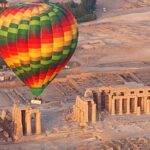
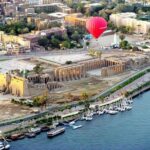
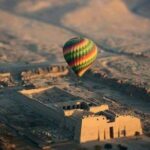
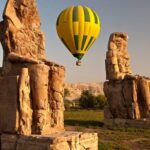
This is the day you earn your sunrise glasses. Early pickup takes you to the marine area, you take a motor boat to the West Bank, and then you fly by hot air balloon over Luxor’s ancient monuments. The point isn’t only the ride. It’s the change in scale. From above, Karnak and Luxor’s temple zones look like an intentional design sitting inside a living river valley.
After the balloon, the itinerary moves straight into the big classics:
- Karnak Temple, the massive complex that explains why ancient Egypt loved building on top of earlier meanings.
- Luxor Temple, a strong follow-up that gives you a more focused look at royal iconography.
Then your cruise portion begins in earnest. The ship starts sailing and you pass through the Esna area, including passing the Esna lock. You’ll cruise toward Edfu and sleep on board in Edfu.
What to expect: This day has less “floating” and more “do.” If you’re the type who wants downtime, plan for it to be later—on the ship deck after sightseeing.
Day 3: Edfu Temple by horse and carriage, then Kom Ombo at sunset
Morning starts with Egyptian culture and a traditional mode of travel: you’ll go by horse and carriage to see the Temple of Horus in Edfu. Back on the cruise, you continue sailing along the river corridor, passing scenery on both sides of the Nile, before arriving for Kom Ombo.
Around sunset, you visit Kom Ombo Temple, then sail onward toward Aswan and spend the night on the cruise.
This day is a nice rhythm break from the Luxor day: Edfu and Kom Ombo feel different in tone and layout, and Kom Ombo at sunset is a classic timing choice—temples look better when the light gets softer.
Important consideration from real feedback: Some guests didn’t like the horse carriage part, describing the horses as in poor condition and feeling uncomfortable supporting the practice. If that’s a deal-breaker for you, you should plan to opt out if an alternative is offered, or choose a cruise format that doesn’t include horse transport.



Day 4: Abu Simbel (around 5 a.m.), then Philae, Aswan High Dam, and end of service
You’ll start one of the earliest mornings in Egypt: around 5 a.m. it’s time for Abu Simbel. This is the moment many people sign up for, because Abu Simbel doesn’t feel like “another temple.” It feels like a journey to the far edge of the Nile story.
After returning and later around 1:30 p.m., the itinerary drives down toward the Nile again for a motor-boat ride to Philae Island Temple. You’ll then visit the Aswan High Dam and finish with transfers to Aswan airport, train station, or your hotel.
Why this timing works: Abu Simbel is about sun angle and heat management. Starting early keeps the day more comfortable and makes the long route feel more manageable.
Hot Air Balloon Over Luxor Sky: The One Thing You’ll Remember
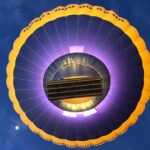
This balloon ride is the signature add-on. Even people who love temples still talk about this the most because it’s the only part of the trip that turns Egypt into a big aerial picture. The package includes the balloon flight over Luxor sky, and it’s scheduled as an early-morning activity.
A key reality check: balloon flights depend on weather. If the balloon trip is cancelled due to bad weather, you’ll receive a refund of $25 per person. The refund detail is useful because it turns “maybe it happens” into a defined outcome.
What you’ll love from this experience:
- You get a fast overview of how temple zones sit beside villages and fields.
- It feels like a once-in-a-lifetime view without needing extra independent planning.
One practical tip: The balloon part is ruled by timing, not your personal preference. Go with the flow, arrive early, and keep your morning expectations flexible.
Guides and Transfers: How Smooth the Days Feel
This cruise is built around guiding. Most guests praised the Egyptologist guide as the engine that makes the monuments understandable and fun, with names popping up repeatedly like Ravi, Talaat, Mahmoud, Mohamed Gobran, Michael, and guides such as Khaled and Mohammed described as friendly and helpful.
That matters because temple visits aren’t just walking in circles. A strong guide helps you:
- See patterns across different temples (royal messaging, religious symbolism, and how rulers wanted to look).
- Understand what to focus on so you don’t just stare at carvings without context.
Transfers are also a big deal on this route. The itinerary includes pickup, an air-conditioned coach, and boat rides for crossings. Instead of dealing with taxis and haggling, you get a coordinated schedule. It’s a simple quality-of-life upgrade that helps you conserve energy for the sightseeing.
Group size caps at 15 travelers. That’s not a mega-tour bus crowd, which usually means less chaos at each stop.
Small-group downside: If you want privacy or a quiet pace, you might find the schedule brisk. This is a “see a lot” trip, not a slow travel retreat.
Food, Cabins, and Boat Reality Checks (Including the Stuff You Should Plan For)
You get full-board meals: lunch starts the meal plan, then you have breakfast and dinner across the 3 nights, ending with breakfast. In plain terms, that means you won’t starve between temples.
Multiple reviews describe food as decent to good and plentiful, and you’ll likely appreciate the convenience of eating on board after a long day.
That said, your comfort depends on the specific ship experience. Some guests reported:
- Diesel fumes coming into cabins when engines were running nearby.
- Cabins that felt dated, with smells or broken fixtures.
- Issues with Wi-Fi not being free.
- Noise onboard at times.
None of that cancels the value automatically, but it’s worth weighing when you’re paying for a “5-star cruise” style product. If you’re sensitive to smells or noise, bring earplugs and consider asking questions about cabin location with your booking.
Drinks and water: plan for extra spending
One pattern from feedback: water was not consistently provided as part of the meal setup, and buying water separately can add up quickly in a hot climate. This isn’t just a tiny detail. When you’re sightseeing in heat, hydration affects how much you enjoy the day.
So I’d treat this as part of your budget, even if the program says meals are included.
Price and Value: Is $410 a Fair Deal?
At $410 per person, the price makes sense if you’re comparing it to the cost of doing this route independently. You’re paying for:
- 3 nights on the Nile
- Egyptologist-guided temple visits
- A hot air balloon ride over Luxor
- Major transport components (coach transfers, motor boats, and horse-and-carriage segment)
- Included meals (lunch to breakfast, plus dinner and breakfast across the cruise)
What’s not included is where many budgets get squeezed:
- Entrance fees for the mentioned sightseeing
- Tipping (recommended)
- Drinks like water if not included on board
Also, some itinerary notes say admission ticket free in certain spots, but the practical takeaway is to budget entrance fees anyway. You don’t want to arrive at a temple ready to scan your phone and discover you need cash on hand.
Tipping: it’s part of the rhythm
Officially tipping is recommended. In real-world terms, tipping is often woven into the day through guides, drivers, and small services. If you hate this, you’ll find it stressful. If you’re prepared with small bills and a simple plan, it becomes less annoying and more normal.
Who This Cruise Fits Best (and Who Might Want a Different Style)
This cruise fits best if you:
- Want to hit major Egypt highlights fast without arranging every transport step yourself.
- Enjoy a guided structure that explains what you’re seeing.
- Like variety: boat cruising, coach transfers, boat crossings, balloon flight, and temple hopping.
It may not fit if you:
- Are sensitive to noise or smells on boats.
- Want to avoid any uncomfortable activities tied to animal transport.
- Prefer totally predictable costs with no extra cash needed for entry and beverages.
Should You Book This Luxor to Aswan Cruise?
I’d book it if you want the classic Luxor-to-Aswan route done in one coordinated package, especially because the hot air balloon and Abu Simbel timing are real selling points. It’s also a good choice for first-time Egypt visitors who want guiding and transfers handled and still get meaningful free time on the ship deck between temple days.
I’d hesitate if you have a strict budget for “only what’s listed,” because entrance fees and on-board drinks can add up. I’d also weigh your comfort level with horse-and-carriage transport at Edfu, since some feedback made that part feel ethically uncomfortable.
If you go in prepared—cash for entry, small bills for tipping, and a flexible mindset about boat conditions—you’re likely to come away with the kind of Egypt memories that don’t fade: balloon views over temple ruins, an early Abu Simbel sunrise run, and a river journey paced by real guidance.
FAQ
What are the dates and how long is the experience?
The experience runs for about 4 days (3 nights on the cruise), traveling from Luxor to Aswan.
What’s included in the price?
You get 3 nights on a 5-star cruise with meals (lunch to breakfast), a cabin, an Egyptology tour guide, air-conditioned coach transport, motor boat rides, horse and carriage, hot air balloon flight over Luxor, and transfers with English-speaking representatives. Entrance fees are not included.
Are entrance fees included?
No. Entrance fees to the mentioned sightseeing are listed as not included, even though some itinerary lines may show admission ticket free.
Is the hot air balloon always guaranteed?
It’s included, but flights depend on weather. If the balloon trip is cancelled due to bad weather, you get a refund of $25 per person.
What happens if the balloon includes a child?
Children under 6 years old are not allowed for the balloon trip. Children ages 6 to 11 can share with parents (maximum 2 children in one room).
How do you visit Abu Simbel?
You go around 5 a.m. to Abu Simbel. The trip is part of a sharing small group with an English-speaking tour guide.
What kind of transport do you use between sights?
You’ll use an air-conditioned coach for transfers, plus motor boats for certain crossings, horse and carriage for one temple visit, and the cruise ship sailing between stops.
How many people are in the group?
The maximum group size is 15 travelers.
Can I cancel and get a full refund?
Yes. You can cancel up to 24 hours in advance for a full refund.