REVIEW · SAFAGA
Safaga port 2 Days tour to luxor with hot air balloon
Book on Viator →Operated by King TUT Tours · Bookable on Viator
Hot air over Luxor starts at dawn. This 2-day Safaga-to-Luxor plan is interesting because you get private guide time on both the East and West Banks, plus the big wow moment of a hot air balloon ride at first light.
I like the pacing: you’re not stuck in a frantic checklist, and you can move through major sights with guided commentary shaped to what you care about. I also like the practical setup for cruise passengers—pickup from Safaga Port and return drop-off so you’re not juggling taxis at the worst possible moment. One consideration: extra costs add up, especially entrance fees and the hot air balloon itself, and the second day starts very early.
In This Review
- Key highlights at a glance
- First Light in Luxor: The 4:00 am Balloon Wake-Up
- Day 1 East Bank: Karnak and Luxor Temple Without the Stress
- Karnak Temple Complex: Big enough to feel unreal
- Lunch break in Luxor: Egyptian food with real downtime
- Luxor Temple: Festival centerpiece energy
- Day 2 West Bank: Valley of the Kings and the Tomb Plan
- Valley of the Kings: 3 tombs, with Tutankhamun as an add-on
- Hatshepsut at Deir el Bahari: A queen’s story in stone
- Colossi of Memnon: Quick hit, still memorable
- Nile Lunch and a Short Boat Trip: The Downshift After Tombs
- Nile-view lunch in Luxor
- Boat trip
- Pickup, Return, and the Real Value for Cruise Passengers
- Price and What You’ll Actually Pay (Balloon + Entrance Fees Add Up)
- What’s included
- What costs extra
- Guide Quality: Why Mahmoud and Abdul Show Up in the Best Feedback
- Who This Tour Fits Best (And Who Should Think Twice)
- Should You Book This Safaga to Luxor Tour With a Balloon?
- FAQ
- What is the tour price per person?
- What is included in the price?
- Are entrance fees included for the main sights?
- What hot air balloon timing is involved?
- Is the Tutankhamun tomb included?
- How long is the transfer from Safaga to Luxor and back?
- Do I need my own language guide?
Key highlights at a glance
- 4:00 am start sets you up for the balloon ride with breakfast box timing
- East Bank anchors Day 1 with Karnak and Luxor Temple, two must-sees close together
- West Bank Day 2 focuses on the classics: Valley of the Kings, Hatshepsut at Deir el Bahari, and Colossi of Memnon
- Tutankhamun tomb is optional via an extra ticket, since your visit includes 3 graves excluding Tut
- Nile breaks are built in with a Nile-view lunch and a short boat trip
- Guides get praised by name: Mahmoud (certified Egyptologist) and Abdul (English clarity and care for your pace)
First Light in Luxor: The 4:00 am Balloon Wake-Up
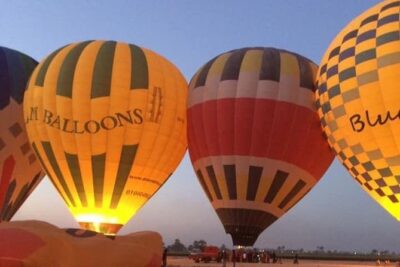
The whole experience tilts toward early mornings, and the hot air balloon day is the reason. Your start time is listed as 4:00 am, and on Day 2 you’ll be picked up from your Luxor hotel for the balloon. The tour notes a breakfast box for the ride, and you’ll check out before heading to the launch area.
Why this matters: a balloon ride isn’t like a normal sightseeing stop. It depends on conditions, and they need you ready on time. The tour also specifies that the experience requires good weather. If the weather is poor, you should expect the operator to offer a different date or a refund, so it’s smart to plan this with flexibility.
The payoff is the West Bank timing. Because you fly at dawn and then head out afterward, you still get your major Valley of the Kings and Hatshepsut stops without turning the day into a total rush.
Practical tip: bring something warm even in Luxor. Early starts can feel chilly before the sun climbs. Also, keep your camera strap secure and wear shoes you can walk in comfortably.
Day 1 East Bank: Karnak and Luxor Temple Without the Stress
Day 1 begins with pickup at Safaga Port and the transfer to Luxor. The drive time is listed at about 4 hours. That’s long, but it’s also the easiest way to make use of a short cruise stop window: you’re not trying to coordinate on your own.
Once you arrive, you hit two of the biggest East Bank hits back-to-back:
Karnak Temple Complex: Big enough to feel unreal
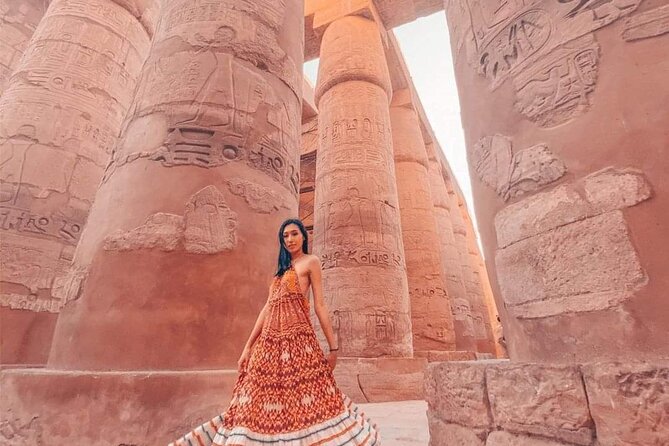
You’ll spend about 1 hour 30 minutes at Temple of Karnak. It’s described as the largest temple complex ever built by man, spread over about 247 acres and built up across many generations of builders and Pharaohs.
What you should expect on the ground: Karnak can feel overwhelming if you show up without a plan. This tour’s value is that your guide can point you to what to notice—major halls, the scale, and how the temple ties together the story of rulers across time. Even if you don’t consider yourself a museum person, Karnak is one of those places that makes you pause and look up repeatedly.
Entrance fees for this stop are not included; the tour lists sightseeing entrance fees as 120 per person overall.
Lunch break in Luxor: Egyptian food with real downtime
Lunch is served at an oriental restaurant. The stop is only about 30 minutes, but it’s scheduled so you don’t arrive at the next site exhausted.
If you’re the type who gets hangry on long drives, this matters. It’s a small buffer that keeps the day from turning into a blur.
Luxor Temple: Festival centerpiece energy
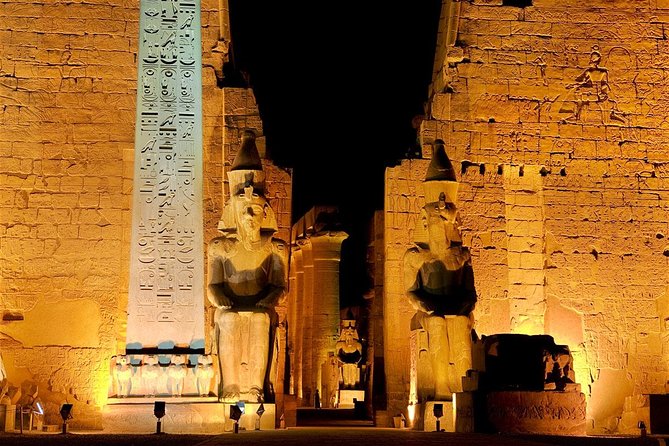
Next is Luxor Temple, with about 45 minutes on-site. It’s described as the center for the Festival of Opet, a reminder that these places weren’t just monuments—they were built for ceremonies and movement of people.
Entrance fees for Luxor Temple are also not included.
Balanced note: Luxor Temple is smaller than Karnak, so your brain may finally get to breathe. That makes it a good second act after all the scale of Karnak.
Day 2 West Bank: Valley of the Kings and the Tomb Plan
Day 2 is built around the most famous West Bank sights. After checking out and doing the balloon ride, you’ll head to the West Bank and start with the centerpiece:
Valley of the Kings: 3 tombs, with Tutankhamun as an add-on
You’ll spend about 1 hour 30 minutes at the Valley of the Kings. This is the final resting place of Egypt’s rulers, and the tour specifically calls out tombs tied to Ramses II and Tutankhamun.
Here’s the key detail that affects your decision-making: you’ll visit 3 graves excluding Tutankhamun, since the Tutankhamun ticket is extra (25 USD per person).
How to think about this:
- If you care most about the name on the tomb, budget for the additional fee.
- If you want the broader tomb variety, visiting 3 without Tut can still be plenty, especially when your time is compressed by the balloon schedule.
Entrance fees are not included, with the tour listing entrance costs as part of a combined estimate.
Hatshepsut at Deir el Bahari: A queen’s story in stone
Next up is Temple of Hatshepsut at Deir el Bahari, with about 40 minutes. The tour describes Hatshepsut as the queen who would-be king, and the temple is noted as one of the best-preserved examples of its type.
Why this stop is worth slowing down for: it’s not just another tomb site. Hatshepsut’s temple has a stronger “architectural mood,” and it often feels more human—someone planned this with intent, not only empire logistics.
Entrance fees are not included for this stop.
Colossi of Memnon: Quick hit, still memorable
You’ll finish the West Bank run at the Colossi of Memnon. The time here is short—about 10 minutes—and the tour explains these are remains of a destroyed mortuary temple, with the two statues still surviving.
Even in a short visit, it works if you treat it like a photo and perspective stop: two huge statues, the sense of scale, and a reminder that time has erased most of what once stood around them.
Nile Lunch and a Short Boat Trip: The Downshift After Tombs
After the main West Bank stops, you get a breather with food and a bit of movement.
Nile-view lunch in Luxor
You’ll enjoy an Egyptian lunch at a Nile-view restaurant for about 30 minutes. Lunch time here is built to restore energy after Valley-of-the-Kings walking and the sun exposure that usually comes with West Bank sightseeing.
Because the tour lists the lunch as included (and the earlier lunch on Day 1 as included too), this is a good value check: you’re not paying separately for meals while also paying separately for entrances.
Boat trip
Then there’s a 20-minute boat trip. It’s not a long cruise, but it’s a smart reset. When your brain is tired from tomb corridors and temple carvings, a quick ride on the Nile lets you reset your senses.
Pickup, Return, and the Real Value for Cruise Passengers
This tour is positioned for cruise travelers in a practical way: you’re picked up from your cruise ship at Safaga Port, taken to Luxor, and then returned afterward to Safaga.
Day 1 transfer Luxor-drive time is listed at about 4 hours, and Day 2 return is listed at about 3 hours. That means you should plan for a long travel day both ways. The good news: the tour handles the logistics, so you don’t have to spend your energy on arranging local transport at your own pace.
Private setup matters too. The tour description says it’s private for your group, meaning you’re not stuck doing the most awkward version of a group tour where everyone moves at different speeds.
Group discounts are mentioned, which can improve value if you’re traveling with others or can connect with people through the operator.
Price and What You’ll Actually Pay (Balloon + Entrance Fees Add Up)
The headline price is $200 per person, but the cost picture has layers.
What’s included
The tour includes:
- Breakfast
- 1 night accommodation in a Luxor hotel
- Pickup and return from Safaga Port
- Lunch (2)
That’s not nothing. One night in Luxor plus transport is often a big chunk of what you pay for, even before you consider entrance fees.
What costs extra
- Entrance fees to sightseeing: 120 per person
- Hot air balloon: 100 to 150 USD per person
- Tutankhamun tomb fee: 25 USD per person (if you choose it)
- Optional language guide: 55 USD extra
So the honest value question becomes: are you buying a guided 2-day Luxor plan plus a hotel night, then adding the balloon on top?
If yes, the $200 base can feel like a solid foundation. If you were hoping the balloon and entrances are fully covered in the base price, you’ll want to budget ahead so the math doesn’t surprise you at the last minute.
Guide Quality: Why Mahmoud and Abdul Show Up in the Best Feedback
What makes this kind of tour work isn’t just the sites. It’s the guide’s ability to turn stones into a story without turning it into a lecture.
The reviews you shared highlight two names:
- Mahmoud, described as a certified Egyptologist with very clear English. That combination matters when your time is short and you want your facts in the right order.
- Abdul, described as fantastic and attentive—someone who cares about what you want and makes sure you’re comfortable each day.
You also see a pattern in the feedback: guides are praised for communication and for caring about your pace, not just driving the schedule. That’s exactly what you need when the day starts at 4:00 am and the day is packed with major monuments.
Who This Tour Fits Best (And Who Should Think Twice)
This is a strong match if:
- You’re on a cruise and want a guided Luxor visit without managing transportation.
- You want a classic Luxor hit list across both banks: Karnak, Luxor Temple, Valley of the Kings, Hatshepsut, Colossi of Memnon.
- You’re willing to pay attention to timing because the balloon day is early.
You might think twice if:
- You hate early starts. Day 2 starts before sunrise.
- You’re trying to keep costs ultra-tight, because entrances and the balloon are extra.
- You prefer long, unhurried museum-style visits rather than a timed circuit.
If you’re traveling as a family or as a honeymoon pair, the private group setup can make the pace feel more personal. One review mentions a honeymoon, and another mentions family planning, which fits the idea of having a guide tailor what you focus on.
Should You Book This Safaga to Luxor Tour With a Balloon?
I’d book it if your priority list looks like this: classic Luxor monuments + guided context + one hotel night + you’re serious about the balloon experience.
Here’s a practical decision checklist:
- If you’re okay budgeting for entrances (120 per person) and the balloon (100 to 150 USD), the base price starts to feel like good structure.
- If the early 4:00 am start won’t ruin your trip vibe, you’ll get a major highlight without sacrificing the West Bank.
- If you want a smoother cruise-port day, the pickup and return from Safaga Port is the kind of convenience that makes the itinerary feel worth it.
If you’d like, tell me your travel month and whether you’re leaning toward adding Tutankhamun’s tomb. I can help you plan how to prioritize time and costs.
FAQ
What is the tour price per person?
The price is $200.00 per person.
What is included in the price?
It includes breakfast, 1 night accommodation in a Luxor hotel, pickup from Safaga Port and return, and two lunches.
Are entrance fees included for the main sights?
No. Entrance fees are listed as 120 per person for sightseeing.
What hot air balloon timing is involved?
The tour starts at 4:00 am, and on Day 2 you’ll be picked up from your Luxor hotel for a hot air balloon ride with a breakfast box.
Is the Tutankhamun tomb included?
Your Valley of the Kings visit includes 3 graves excluding Tutankhamun. Tutankhamun requires an extra ticket for 25 USD per person.
How long is the transfer from Safaga to Luxor and back?
The drive from Safaga to Luxor is about 4 hours, and the return drive back to Safaga is about 3 hours.
Do I need my own language guide?
A language guide is optional and costs 55 USD extra. The tour also notes private service for your group.