REVIEW · HURGHADA
Private Overnight Tour to Luxor from Hurghada with HotAir Balloon
Book on Viator →Operated by Luxor Egypt Tours · Bookable on Viator
A balloon flight over Luxor makes this tour feel special. You get hot air balloon time early the next morning, plus a focused East and West Bank day with an Egyptologist. I also like the private, door-to-door transfers that cut down stress when you’re traveling from Hurghada. One thing to plan for: entrance fees are not included in the tour price, so you’ll want to budget and confirm totals.
Communication tends to be easy, too. I like that the operator handles contact by WhatsApp, and one praised guide named Hussein made the whole flow feel smooth, along with a driver noted for safe driving.
Because this is an overnight, you’ll have an early wake-up for the balloon and a full sightseeing stretch. If you hate getting up early, this might be less fun than a slower vacation day.
In This Review
- Key highlights at a glance
- Entering Luxor the practical way: Hurghada to an overnight plan
- Valley of the Kings: where you learn to look fast
- Hatshepsut at Deir el-Bahari: a temple visit that feels personal
- Colossi of Memnon: quick West Bank storytelling
- Karnak Temple: Avenue of Sphinxes to the Great Hypostyle Hall
- Luxor Temple after your balloon morning: the clean close to the story
- Hot air balloon over Luxor: why this is the big-ticket moment
- Hotel night in Luxor and meals that keep the day moving
- Your Egyptologist guide and what private really means
- Price and logistics: what you’re paying for (and what you’re not)
- Who this Luxor overnight fits best
- Should you book this private Luxor overnight from Hurghada?
- FAQ
- What does the tour price include?
- Are entrance tickets included in the price?
- How long is the tour?
- Do I get hotel pickup and drop-off from Hurghada?
- What West Bank sites are visited?
- What East Bank temples are visited?
- Is there an option to visit King Tutankhamun’s tomb?
- Is the balloon ride included, and when does it happen?
Key highlights at a glance
- Hot air balloon at sunrise over Luxor, paired with a full morning-after itinerary
- Egyptologist-led visits that explain what to look for, especially where guides can’t enter tombs
- East and West Bank coverage in one trip: Karnak, Luxor Temple, Valley of the Kings, and more
- Overnight hotel in Luxor so you’re not rushing back the same day
- Door-to-door A/C vehicle pickup and drop-off from Hurghada
- Tomb options like King Tutankhamun are possible, but usually require an extra fee paid on-site
Entering Luxor the practical way: Hurghada to an overnight plan
This tour is built for one goal: getting you from the Red Sea base of Hurghada to Luxor fast enough that you still see the big sights without burning a whole day in transit. You’ll ride in an air-conditioned vehicle with hotel pickup, then head toward Luxor for your West Bank and East Bank schedule.
The big value is that you sleep in Luxor for one night. Instead of arriving and turning around immediately, you get a calmer pacing for sightseeing and the balloon ride the next morning. That matters, because Luxor is intense: heat, walking, and sites spread across two banks.
You’ll also have a real guide for context. It’s not just someone pointing at ruins. An Egyptologist helps you understand what you’re seeing and what details to notice at each stop, which makes the time feel like it’s actually going somewhere.
You can also read our reviews of more tours and experiences in Hurghada.

Valley of the Kings: where you learn to look fast
The Valley of the Kings is where Luxor’s rulers went for the afterlife, and it’s one of the places where good guidance really pays off. You start with a short pause at the visitors center, which is useful because tombs are not the same as temples: you’re moving through small spaces where ceiling and wall details are everything.
Here’s the key logistics point: guides are not allowed inside the tombs. That doesn’t mean your guide becomes useless. Your Egyptologist will tell you what to watch for before you go in, so when you’re inside, you’re not staring at every wall randomly. It turns the tomb experience from a checklist into something that makes sense.
The tour includes time for this stop, and you can also add King Tutankhamun’s tomb if you want. There’s an extra fee to pay directly for that option, so keep some cash ready and don’t wait until you’re already at the door to ask.
Practical tip: tombs can feel cooler than the outside, but you’ll still be walking in heat to get from one area to another. Comfortable shoes and sun protection are worth it, and a light layer can help if the tomb temperature feels a bit chilly.
Hatshepsut at Deir el-Bahari: a temple visit that feels personal
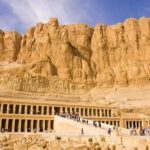
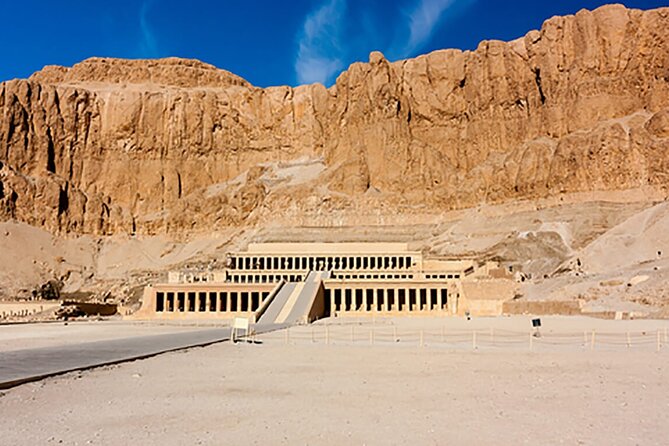
Temple of Hatshepsut at Deir el Bahari is the kind of stop where your photos will look good and your brain will work even better—if you know what you’re looking at. This visit is guided with background first, including the story of Queen Hatshepsut, a female pharaoh who is described as taking on a male identity to rule.
Then you get your own time to explore. I like this mix because you don’t feel rushed, but you still have the right context. You’ll walk through courtyards and see the hieroglyphs up close enough to appreciate how carefully they were placed.
This is also a temple where you can notice the architecture’s layout. The approach and terraces are part of the experience, not just the carved walls. If you love symmetry and design, this is one of your best chances to slow down.
Drawback to consider: you’ll be moving through one site after another over two days. If you want long, lazy temple wandering, you’ll probably need to keep your pace steady and choose what to focus on—because the schedule keeps moving.
Colossi of Memnon: quick West Bank storytelling
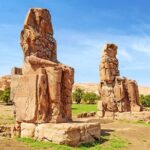
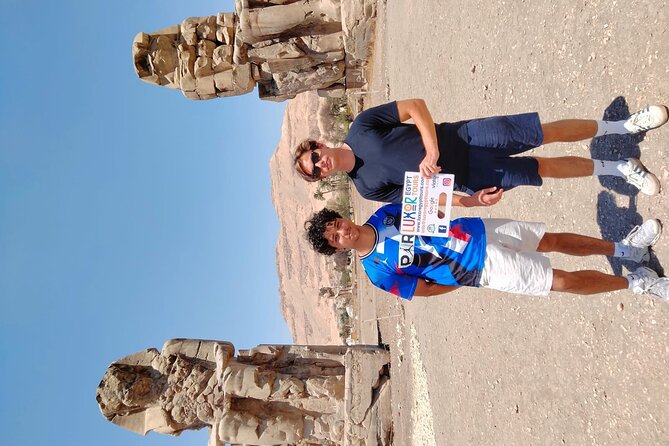
The Colossi of Memnon are two huge statues that sit in Luxor’s West Bank area. Even though the funerary complex they once belonged to is gone, these statues still help you understand what the old landscape of power felt like.
This stop is short, so don’t treat it like a long break. Instead, use the time to soak in scale: you’re looking at the only major surviving pieces from a much larger temple complex. If you like knowing how something used to look, the guide’s explanation helps you imagine the missing structure.
Quick tip: this is a good moment to pause, drink water, and reset before the bigger time blocks. It also gives you a chance to feel the West Bank vibe—less crowded than some of the temple zones, but still very much a sightseeing route.
Karnak Temple: Avenue of Sphinxes to the Great Hypostyle Hall
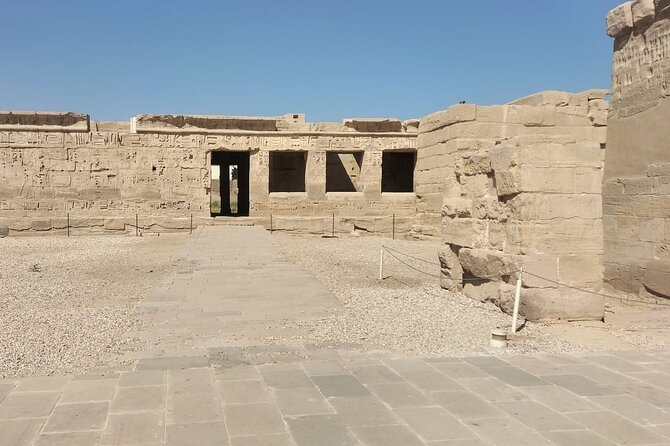
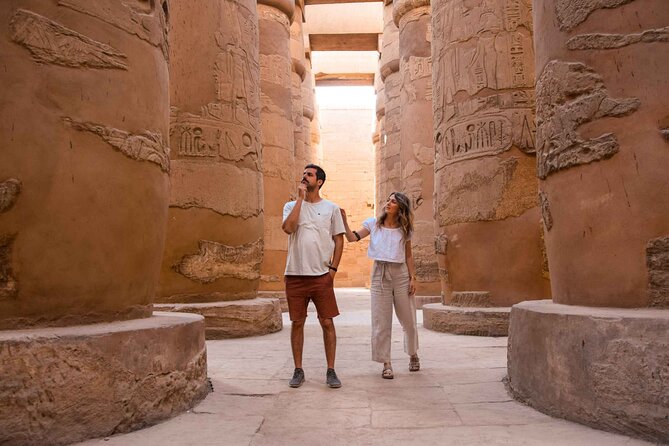
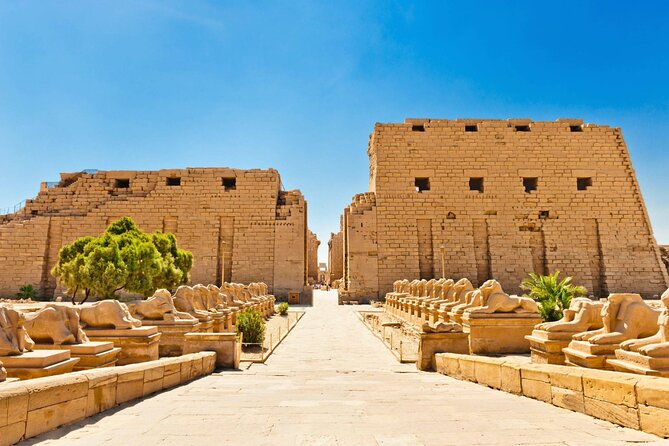
Karnak is one of those places where your first reaction is usually wow, then your second reaction is wait—how did they build this? You’ll walk the Avenue of Sphinxes, and your Egyptologist can talk through how the monumental facades were constructed and how different pharaohs added their layers over time.
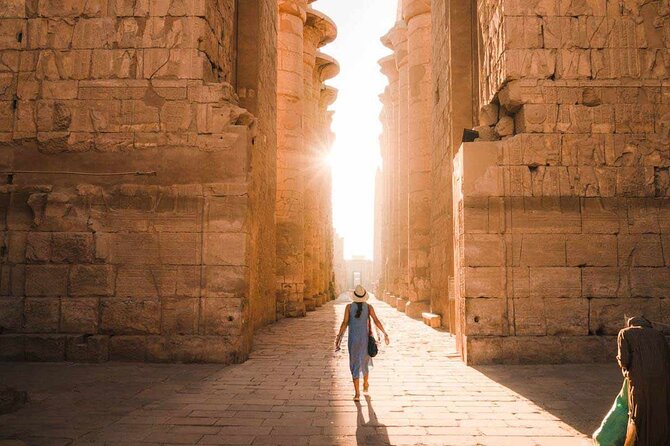
The visit includes time in the main complex, including the Great Court and the Great Hypostyle Hall. One of the most striking details you’ll hear is that the Hypostyle Hall has 134 columns. That number matters because it turns the hall into more than a pretty room. It becomes a scale lesson in how deliberate the architecture was.
Another detail worth noticing is the sacred lake in the rear of the complex. It was used for purification related to offerings, so it wasn’t just decoration. Small elements like that connect the architecture to ritual life.
What I like most is that this stop is long enough to do more than take quick snapshots. You have time to walk the space, look up, and notice how the carvings and inscriptions differ in areas. If you only skim Karnak, you’ll miss what makes it special.
Best approach: keep your priorities simple. Pick a couple areas to focus on (like the Hypostyle Hall and one outside courtyard view) and let the rest support your main focus. That keeps the day enjoyable instead of overwhelming.



Luxor Temple after your balloon morning: the clean close to the story
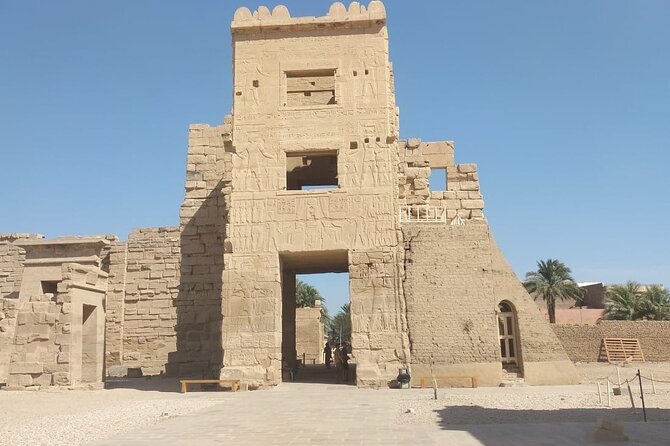
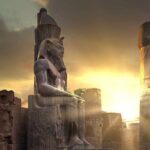
Luxor Temple is an East Bank counterpart that helps you connect the dots between pharaohs, the Nile, and the religious calendar. This temple complex is dedicated to the Theban Triad of Amun, Mut, and Khonsu. You’ll also hear that it was built mainly during the reign of Amenhotep III and later expanded by Ramses II.
As you walk through, you’ll see large sandstone columns, statues, and detailed reliefs. Even without getting lost in every carving, you can still appreciate how New Kingdom architecture was designed for ceremony and processions. The alignment with Karnak and the mention of the Opet Festival are also useful context. They explain why these temples are not random landmarks; they’re part of a bigger system.
This stop is around an hour in the schedule. I’d treat it as your chance to slow down after intense earlier blocks. If you’ve been looking at the West Bank for much of the day, Luxor Temple is a good mental reset.
Practical tip: bring a hat and keep water handy. Even if the temple is shaded in parts, the sun around and between monuments can be unrelenting.
Hot air balloon over Luxor: why this is the big-ticket moment
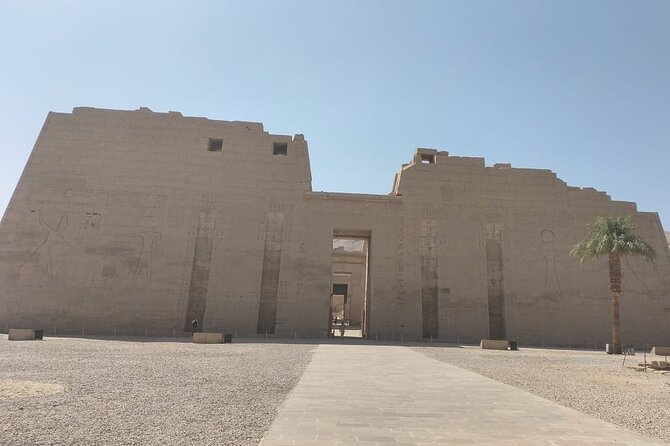
The hot air balloon ride is the headline act, and for good reason. You’ll do it early morning after breakfast. That timing is the safest bet for calm air and good visibility, and it also helps you avoid losing the whole day after you land back on the ground.
The balloon segment is scheduled for about an hour. That includes time in the activity window, but the most important part is what you see while airborne: Luxor’s layout and the way temples and tomb regions sit within the wider geography.
After the balloon finishes, you’ll connect again with the tour guide. That’s a smart piece of planning because it prevents that awkward situation where you’re trying to find your group right after landing.
If you’re sensitive to early starts, plan your evening before carefully. Set expectations for waking up fast. One of the strongest impressions from the experience is that the balloon ride feels very special—so it’s worth treating it like the main event, not a side activity.
Hotel night in Luxor and meals that keep the day moving
A lot of Luxor trips from Hurghada can feel like a race. This one avoids that by including one night of accommodation in Luxor, plus lunch and breakfast.
That matters more than it sounds. When you’re hopping between East and West Bank sites, you want at least one meal that’s reliably handled, and you want a place to reset in between. Here, your schedule includes lunch during the day block, then breakfast before the balloon.
The overnight also helps you manage the rhythm of the tour. You’re not trying to cram everything into one day and then drive back tired. Instead, you wake up in Luxor, do the balloon early, then finish sightseeing.
Your Egyptologist guide and what private really means
This is described as a private tour, meaning only your group participates. That’s a big deal in Luxor, where crowds can be intense and where tomb entry rules and site timing can make group pacing complicated.
A qualified Egyptologist guide is included, and the goal is interpretation. In the Valley of the Kings especially, your guide’s job is critical since they can’t go into tombs with you. Outside tombs, the guide helps you understand symbols, purpose, and what each monument connected to the larger story of Thebes.
One detail I appreciate from the experience feedback: communication via WhatsApp was described as easy, and the driver and guide pairing felt well organized. The guide named Hussein was specifically mentioned for making things work smoothly, which gives you a small confidence boost on the day itself.
Price and logistics: what you’re paying for (and what you’re not)
At $225 per person, this tour includes a lot of moving parts: hotel pickup and drop-off in Hurghada, transport by air-conditioned vehicle, one night accommodation in Luxor, lunch and breakfast, and the hot air balloon ride. It also includes Egyptologist guidance and “service charges and taxes.”
What is not included is entrance tickets. So even though the schedule lists admissions at stops, you should still expect additional entrance costs to be handled separately. This is the part to verify when you book, so you’re not surprised when you arrive.
Overall, the value is best if you’re the type of traveler who wants convenience and interpretation, not just a bus ride. If you’d rather buy everything yourself and skip the guide, you might find a cheaper approach. But if you want the full Luxor hit—plus a balloon—this package format is a strong option.
Who this Luxor overnight fits best
I think this tour is a good match for:
- First-timers who want East and West Bank highlights in one trip
- People who prefer a clear plan with an Egyptologist rather than self-guided wandering
- Anyone who wants the balloon but also doesn’t want to lose a whole day to travel
It may be less ideal for:
- Travelers who hate early mornings (the balloon is scheduled early after breakfast)
- People who want total freedom to stay longer at fewer sites
- Anyone who strongly dislikes paying separate entrance fees, since those are not included
Should you book this private Luxor overnight from Hurghada?
Book it if you want an organized Luxor experience with a balloon ride, a real guide, and enough time to see major sites without feeling like you’re sprinting. The overnight in Luxor plus door-to-door A/C transfers is a practical combo, and Karnak plus the Valley of the Kings is a pairing that usually delivers the biggest “I get it now” effect.
Skip or compare if entrance fees would be a deal-breaker for your budget, or if you’d rather do a slower schedule at fewer monuments. Also, if you know you’re not a fan of early starts, rethink the balloon timing.
If you do book, plan your day around the morning balloon, ask what entrance tickets you’ll need (and what’s extra for any optional tombs), and wear comfortable shoes. That’s the difference between a great day and a day you remember as “a lot of walking.”
FAQ
What does the tour price include?
The package includes a qualified Egyptologist guide, hotel pickup and drop-off, air-conditioned transport, service charges and taxes, one night of accommodation in Luxor, a hot air balloon ride, lunch, and breakfast.
Are entrance tickets included in the price?
No. Entrance tickets are listed as not included. You should plan to pay entrance fees separately.
How long is the tour?
The duration is listed as about 1 day 30 minutes, and it includes an overnight stay in Luxor.
Do I get hotel pickup and drop-off from Hurghada?
Yes. Hotel pickup and drop-off are included, using a private A/C vehicle.
What West Bank sites are visited?
You’ll visit the Valley of the Kings, the Temple of Hatshepsut at Deir el Bahari, and the Colossi of Memnon.
What East Bank temples are visited?
You’ll visit Karnak and Luxor Temple.
Is there an option to visit King Tutankhamun’s tomb?
Yes, you can visit if you choose that option, but it requires an extra fee paid directly.
Is the balloon ride included, and when does it happen?
Yes, the hot air balloon ride is included. It happens early morning after breakfast, and afterward you reconnect with the tour guide.