REVIEW · MARSA ALAM
Private Luxor OverNight With Hot Air Balloon Ride From Marsa Alam
Book on Viator →Operated by Nile Valley Tours · Bookable on Viator
Luxor hits different when the day starts before sunrise. This 2-day overnight from Marsa Alam pairs classic temple stops with a hot air balloon ride over the Valley of the Kings. It’s a simple plan with a clear payoff: you get to see the ancient sites up close and then watch the same area from above.
I love that the schedule is built around the big visual moments, not random stops. Karnak Temple and Hatshepsut at Deir el-Bahari are both 1-hour visits, which keeps things moving without making you rush through everything. I also like that you’re not just dropped off and sent away; you have an Egyptology guide, and one past guest specifically highlighted Prof Mahmoud El Esnawy for being so good at explaining what you’re looking at.
The main drawback to plan for is timing and extra costs. You start at 4:30 am, and balloon tours depend on weather, plus entrance tickets for Karnak, Hatshepsut, and the Valley of the Kings are not included (listed as EGP 1410).
In This Review
- Key things I’d plan around
- Luxor overnight from Marsa Alam: the idea that makes it work
- Day 1: Karnak Temple and Hatshepsut terraces at a smart pace
- Valley of the Kings: where the story changes from temple to tomb
- The Colossi of Memnon: short stop, big presence
- Day 2: your sunrise balloon over Luxor’s temples and valleys
- Price and logistics: what you’re really paying for
- Transfers, group size, and that early-morning reality
- The guide factor: when context turns ruins into a story
- Who should book this Luxor balloon + temples overnight
- Should you book this Luxor overnight with hot air balloon?
- FAQ
- Is pickup and drop-off included?
- What time does the tour start?
- How long is the tour?
- What’s included in the price?
- Which entrance tickets are not included?
- How long is the hot air balloon flight?
- Do I need to pay for the Colossi of Memnon?
- How big is the group?
- What if the weather isn’t good for the balloon?
- What type of ticket do I receive?
Key things I’d plan around
- 4:30 am start: you’ll be up early, then rewarded with sunrise views from the balloon.
- 45-minute balloon flight over Luxor’s temples and valleys for a different perspective than daytime sightseeing.
- Small group size (max 15) keeps the experience manageable during early-morning logistics.
- Egyptology guide on Day 1 helps you connect what you see at Karnak, Hatshepsut, and the Valley of the Kings.
- Entrance tickets extra: Karnak, Hatshepsut, and Valley of the Kings are EGP 1410.
- 4-star hotel + meals included (breakfast and lunch), so you’re not scrambling midday.
Luxor overnight from Marsa Alam: the idea that makes it work
If you’re coming from Marsa Alam, Luxor can feel like a long trip. This itinerary makes it worth it by turning two days into one connected story: daytime temples for context, then sunrise from the sky for wow-factor.
The best part is how the timing supports the experience. Day 1 is for the ground-level monuments—big columns, rock-cut tombs, and places tied to pharaohs and gods. Day 2 is when the Valley of the Kings stops being a name on a map and becomes something you can actually visualize as a whole area.
You’ll also get practical support that matters at these sites: pickup and drop-off, guided visits, and built-in meals. That reduces the usual stress of coordinating tickets, transport, and pacing on your own.
You can also read our reviews of more tours and experiences in Marsa Alam.
Day 1: Karnak Temple and Hatshepsut terraces at a smart pace
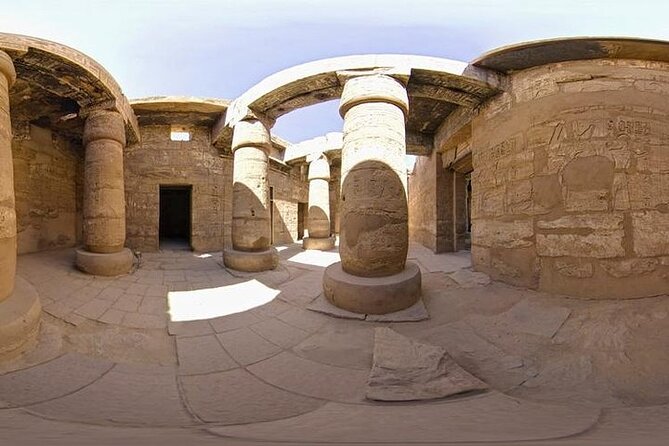
Your first major stop is Karnak Temple. This complex dates back roughly from 2055 BC to around 100 AD and was dedicated to Amun, Mut, and Khonsu. It’s also described as the largest religious building ever constructed in ancient times, so it can feel overwhelming fast.
That’s why I like that this is a focused visit rather than an open-ended roam. You get about 1 hour there, with the guide helping you prioritize what to notice—otherwise, Karnak’s scale can turn into a blur of stone.
Next comes Temple of Hatshepsut at Deir el-Bahari. This one is special because it’s built into the cliff face with three terraces connected by ramps, plus colonnades of squared pillars. Even if you know the basics, this temple makes Hatshepsut feel real. She was one of Egypt’s rare female pharaohs, and her monument is often described as a standout in the funerary tradition.
A useful note: the temple area is right by the Valley of the Kings region, so the geography clicks. You start to see the landscape as a planned burial-and-religion system, not just isolated ruins. (You’ll also see connections in the rest of the day.)
Valley of the Kings: where the story changes from temple to tomb
After Hatshepsut, you head to the Valley of the Kings, the royal burial ground for pharaohs from the 18th, 19th, and 20th dynasties. The names attached to these dynasties are exactly what people chase: Tutankhamun, Ramses II, Tuthmosis III, and Seti I.
This stop is listed as 2 hours. In practical terms, that’s enough time to enjoy the scale and layout without feeling like you’re power-walking through every possible corridor. The guide helps here because the Valley of the Kings isn’t only about visiting tomb entrances. It’s about understanding why this place was chosen and how it fits into the broader religious worldview.
There’s also a helpful realism to keep in mind: entrance tickets for the Valley of the Kings are not included. So if you want to avoid the last-minute scramble, keep money and/or a plan ready for the listed additional fee (EGP 1410 for Karnak, Hatshepsut, and the Valley of the Kings).
The Colossi of Memnon: short stop, big presence
Your last Day 1 highlight is the Colossi of Memnon (listed with the Arabic name Kom el-Hatan and the Roman association with the Temple of Memnon). This one is just 30 minutes, but it’s the kind of stop that makes people pause for photos and then—if you learn the story—pause again.
These two massive statues became famous in later tradition thanks to the legendary dawn sound that people associated with one of the figures, often called Vocal Memnon. Whether you take the story literally or more as ancient folklore, the point is the same: this site shows how memory and meaning get layered onto monuments over centuries.
What I like about placing Colossi at the end of Day 1 is pacing. Karnak and Hatshepsut are visually heavy. Colossi is heavy in a different way—less walking, more presence. You finish Day 1 with something iconic without running your legs into the ground.
Day 2: your sunrise balloon over Luxor’s temples and valleys
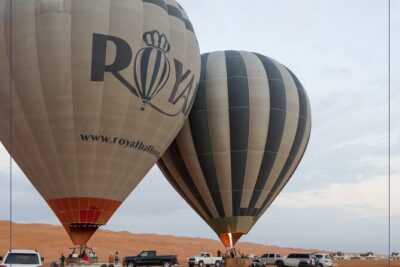
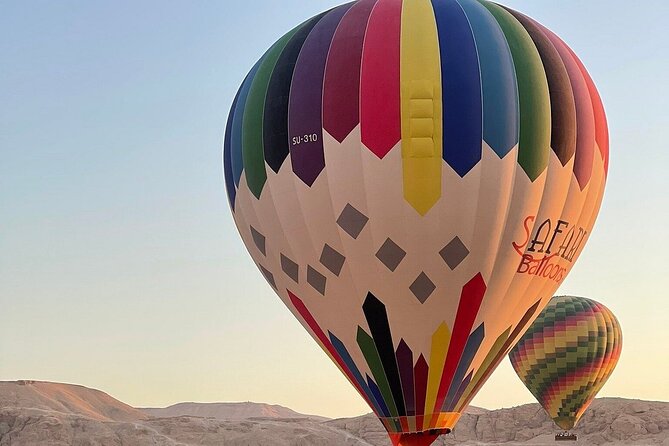
The balloon day starts early. The meeting time is 4:30 am, and the hot air balloon portion is built around a sunrise flight. The flight time is listed as 45 minutes, and the experience includes the balloon portion and viewing time from the takeoff area.
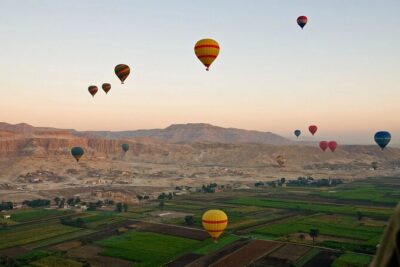
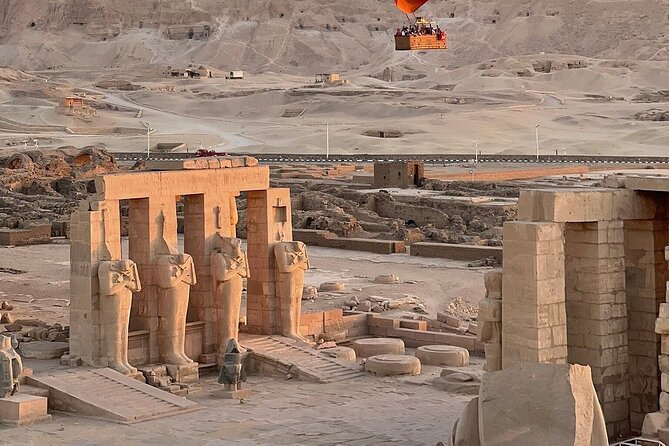
What you’re aiming for is not just a ride. It’s perspective. From above, the Valley of the Kings isn’t a single point of interest anymore—it’s a system of valleys, temples, and ruins spread across the Nile’s ancient activity zone. You get to see how the sites relate to each other.
One review singled out the view as making the whole area feel unusually green and fertile, like it was familiar. That’s the kind of detail you can’t fully capture on the ground, where everything becomes mostly stone and sand. In the air, the Nile region reads as a living setting around the monuments.
Practical note: the tour requires good weather. If conditions are poor, the experience can be canceled and you’ll be offered a different date or a full refund. Since balloons can’t fly whenever you wish, you should treat this day as a weather-dependent win.
Price and logistics: what you’re really paying for
At $280 per person for a 2-day Luxor overnight from Marsa Alam, the value comes from bundling the stuff that usually costs time (and sometimes stress) if you plan separately.
Here’s what’s included:
- Hotel accommodation in a 4-star property
- Breakfast and lunch
- Pickup and drop-off
- Egyptology guide
- Hot air balloon time listed as 45 to 60 minutes of flying (balloon portion is included)
Entrance tickets that are not included are specifically named:
- Karnak Temple
- Temple of Hatshepsut
- Valley of the Kings
These are listed as EGP 1410.
To judge value fairly, look at what you avoid. You avoid handling separate guides for each site, you avoid day-of transport coordination between Marsa Alam and Luxor, and you avoid the ticket juggling for multiple major attractions. You also don’t have to find food planning between temple stops, since lunch and breakfast are included.
If you already know you’re willing to pay for top-tier experiences, the pricing looks reasonable. If you’re the type who likes to book everything yourself down to the minute, then you may prefer a DIY approach—but you’ll likely spend that saved money in time and coordination.
Transfers, group size, and that early-morning reality
This is not an unlimited-mayhem group tour. It’s capped at 15 travelers, which usually means you’re not stuck in a cattle-car situation inside the temples. It also helps on the balloon morning, where logistics get tight fast.
Transfers are part of the deal: pickup and drop-off. That matters because Luxor’s sights aren’t always in one neat cluster, and morning travel timing can make or break your balloon schedule.
One more practical consideration: the tour asks for moderate physical fitness. That doesn’t mean you’re doing extreme hiking, but you are touring real sites, and you’ll be moving through uneven ground and museum-like spaces.
Also, go into the day with an early start mindset. A 4:30 am start is not a suggestion. Build in sleep the night before so you don’t spend Day 1 sightseeing with the energy level of a sleepy stone statue.
The guide factor: when context turns ruins into a story
The best Luxor days happen when the guide helps you connect details to bigger ideas. That’s exactly what stood out in the reviews for this tour.
One solo female traveler wrote that Prof Mahmoud El Esnawy was amazing and made her feel comfortable with both him and the driver. She also said she started recording because she couldn’t keep up with the explanations. Translation: you’ll likely learn a lot, and the pacing of information may be fast enough to surprise you—in a good way.
Even if you’re not trying to become an Egyptology student, you’ll benefit. A good explanation helps you notice what matters: temple function, the significance of royal burials, and how sites relate to each other.
Who should book this Luxor balloon + temples overnight
I think this tour fits best if you want a compact, high-impact Luxor experience without turning it into project management.
You’ll likely enjoy it if:
- You care about seeing Karnak, Hatshepsut, and the Valley of the Kings in one efficient plan
- You want a sunrise hot air balloon with a real guide-led day before it
- You want included meals and a 4-star hotel so the overnight feels comfortable
- You’re traveling solo and appreciate a guide who can make you feel at ease (one review explicitly called this out with Prof Mahmoud El Esnawy)
It may not be the best fit if:
- You hate early mornings and don’t want a 4:30 am start
- You strongly prefer fully included entrance fees (here, main temple/valley tickets are extra)
Should you book this Luxor overnight with hot air balloon?
If your goal is to see Luxor’s greatest hits and do it in a way that feels organized, I’d lean yes. The mix of temples on the ground + balloon views of the same region is the key reason. It turns ruins into a spatial experience, not just a checklist.
My advice is to go in knowing two things: entrances for Karnak/Hatshepsut/Valley of the Kings are extra, and the balloon depends on weather. If you can live with those realities, this package offers strong value because it includes the overnight comfort, meals, transport, and a guide—then adds the one moment you can’t easily recreate on your own.
If you want an Egypt trip that feels both practical and memorable, this is a solid way to do Luxor from Marsa Alam.
FAQ
Is pickup and drop-off included?
Yes. Hotel pick up & drop off are included as part of the experience.
What time does the tour start?
The meeting start time is listed as 4:30 am.
How long is the tour?
The experience is described as 2 days (approx.).
What’s included in the price?
Included items are lunch, breakfast, hotel pick up & drop off, an Egyptology guide, and balloon flying time (45 to 60 minutes).
Which entrance tickets are not included?
Entrance tickets for Karnak Temple, Temple of Hatshepsut, and the Valley of the Kings are not included. The listed additional cost is EGP 1410.
How long is the hot air balloon flight?
The balloon flight is listed as 45 minutes, with the overall flying time noted as 45 to 60 minutes.
Do I need to pay for the Colossi of Memnon?
For the Colossi of Memnon stop, the entrance ticket is listed as included.
How big is the group?
The tour has a maximum of 15 travelers.
What if the weather isn’t good for the balloon?
This experience requires good weather. If it’s canceled due to poor weather, you’ll be offered a different date or a full refund.
What type of ticket do I receive?
The tour includes a mobile ticket, and confirmation is received at the time of booking.